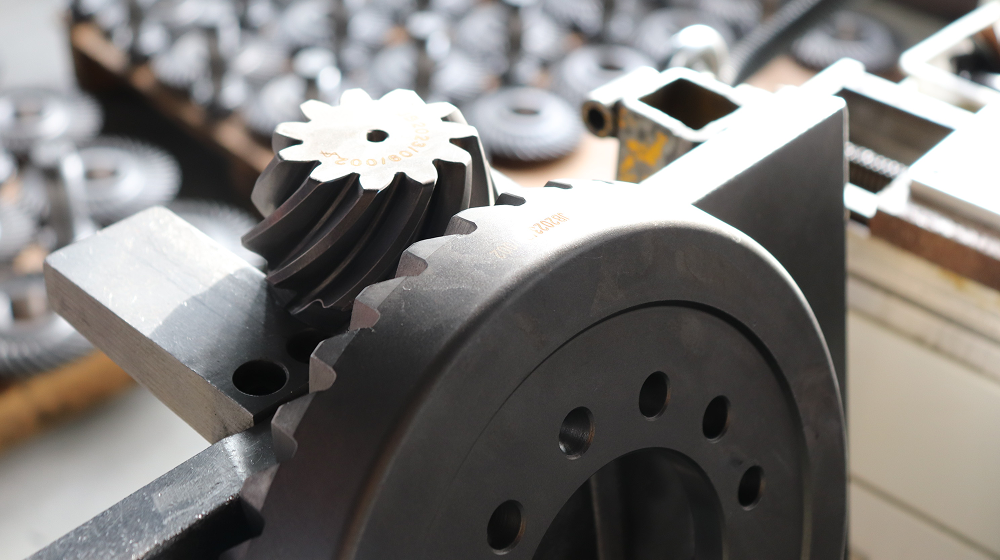

Straight bevel gears represent the bedrock of robust mechanical power transmission in mining and heavy material handling sectors, where equipment must endure relentless shock loads, abrasive dust, and extreme torque fluctuations on a daily basis. These gears are specifically engineered to transmit motion between intersecting shafts, predominantly at 90-degree angles, featuring straight, radially oriented teeth that diminish in height from the outer cone to the inner cone, thereby ensuring positive, slip-free engagement even under the most punishing operational regimes. Their geometric simplicity is not a limitation but a strategic advantage in heavy industries, because it enables straightforward manufacturing, uncomplicated field inspections, and cost-effective replacement programs, all of which are critical considerations for operations where equipment availability directly dictates production output and profitability. With a standard pressure angle of 20° and teeth aligned along the pitch cone generatrix, straight bevel gears provide predictable meshing behavior that translates into dependable torque transmission, minimal maintenance surprises, and consistent performance across the wide temperature swings and contamination levels commonly encountered in underground mines, open-pit quarries, and bulk terminal facilities.
In terms of operational performance, straight bevel gears distinguish themselves through exceptional tolerance to shock loading and momentary overloads, which are inherent characteristics of mining conveyors, crusher drives, stacker-reclaimers, and ship unloaders. The inherent tooth geometry ensures that impact forces are distributed across multiple teeth simultaneously, reducing the risk of localized plastic deformation or tooth fracture that could otherwise bring an entire production line to a standstill. Another pivotal attribute is their self-damping behavior under heavy loads, which arises from the sliding action along the tooth flanks during meshing, a feature that helps attenuate torsional vibrations emanating from prime movers and driven equipment, thereby protecting downstream components such as couplings, shafts, and bearings from premature wear. The minimal axial thrust generated during operation significantly reduces bearing housing complexity and eliminates the need for costly thrust-containment devices, an advantage that becomes increasingly valuable as gear sizes scale upward in high-torque applications. Furthermore, the conical geometry permits compact installation within confined machinery spaces, such as mobile crusher chassis or conveyor drive stations, allowing design engineers to achieve right-angle power transmission without compromising structural integrity or service accessibility. Their resilience to contamination is particularly noteworthy in bulk handling contexts, where particulate ingress is unavoidable, as the relatively simple tooth profile facilitates self-cleaning action during rotation, flushing debris away from the contact zone and reducing the rate of abrasive wear compared to more complex gear geometries.
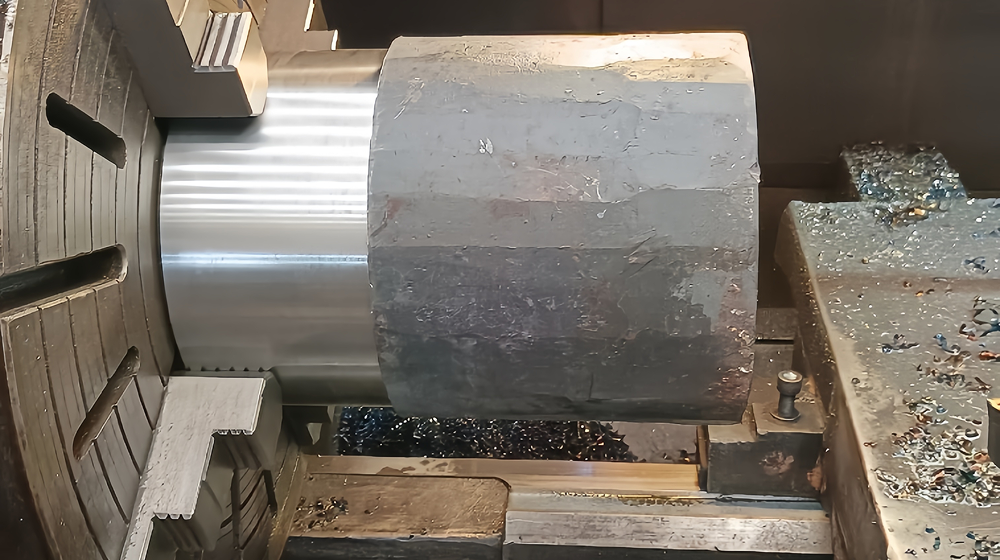
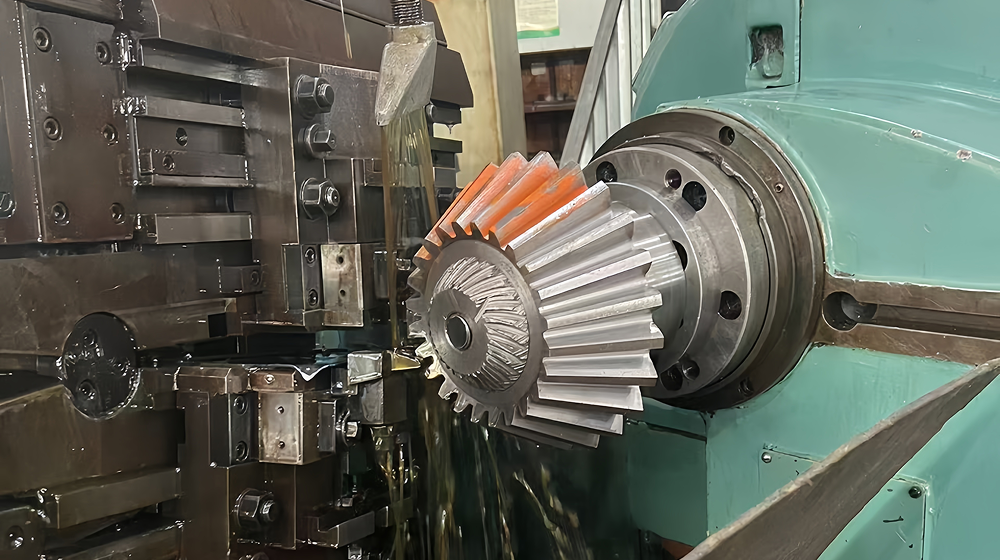
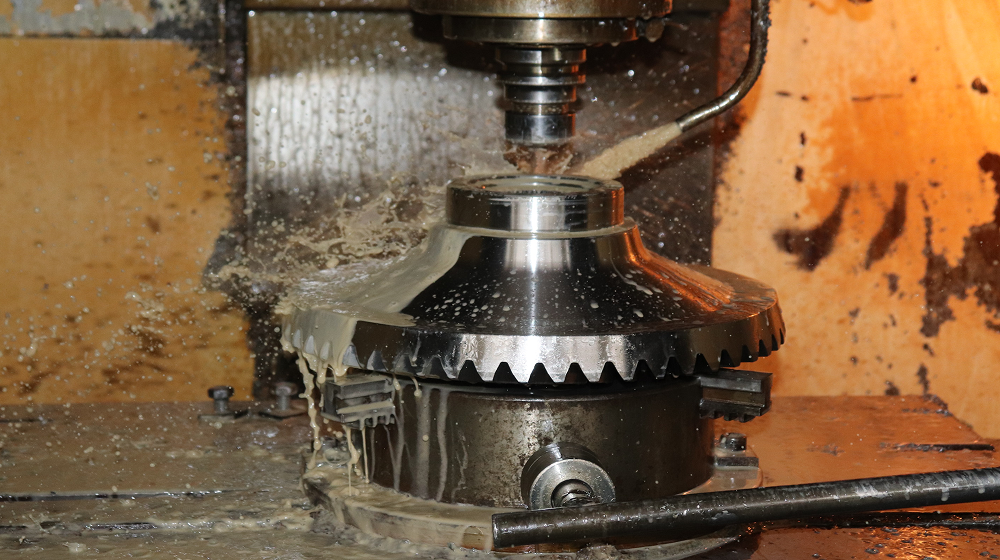
Manufacturing of straight bevel gears for heavy-duty applications employs two primary production routes, each selected based on volume requirements and service criticality. For small-batch, high-customization scenarios such as replacement gears for legacy mining equipment or prototype development for specialized mobile machinery, gear planing and shaping processes offer excellent flexibility, rapid tooling changeover, and cost-effective response to non-standard specifications. For high-volume standardized production, particularly in drive axles for off-highway trucks and wheel loaders, precision forging has become the dominant methodology, consistently achieving dimensional accuracies conforming to DIN grades 6 to 8 while delivering superior mechanical strength through uninterrupted grain flow, excellent repeatability, and outstanding cost efficiency at scale. The selection between these manufacturing approaches is ultimately dictated by application-specific demands, production quantities, and required precision levels, yet both pathways reliably yield gears that satisfy the rigorous performance criteria imposed by heavy industrial environments.