
Tooth Cutting
Gear Tooth Cutting Process
Tooth Cutting includes all processes specifically designed to create gear teeth after rough or fine machining. All the methods listed below are specific types of gear tooth cutting which is the first step for gear tooth performed. Each method shapes the teeth to ensure smooth and efficient power transfer, different type of gears used different methods for tooth cutting to assure it’s performance, strength, time efficiency and cost efficiency.
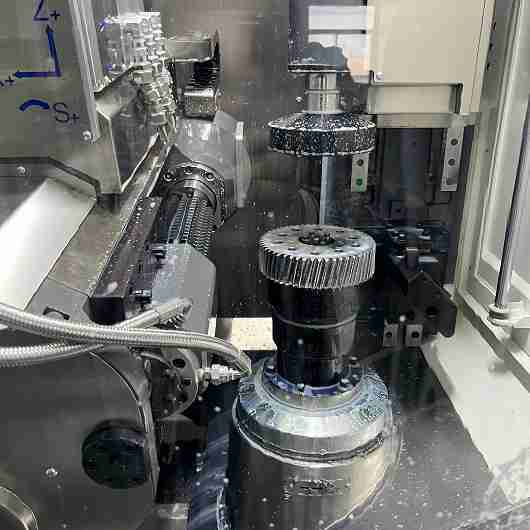
Gear Hobbing
Gear Hobbing is a gear cutting process that used a worm-like cutting tool called a hob cutter meshes with a gear blank in a continuous, synchronized motion (like a worm gear pair). It’s a generating process, meaning the hob’s shape and its motion relative to the blank “generate” the involute tooth form. The hob and gear blank turn together in a synchronized motion to gradually form the tooth spaces. Gear Hobbing is widely used for high-volume production of spur gears and helical gears.
Regular Used on:
- Spur Gears
- Helical Gears
- Internal Gears with big Modules
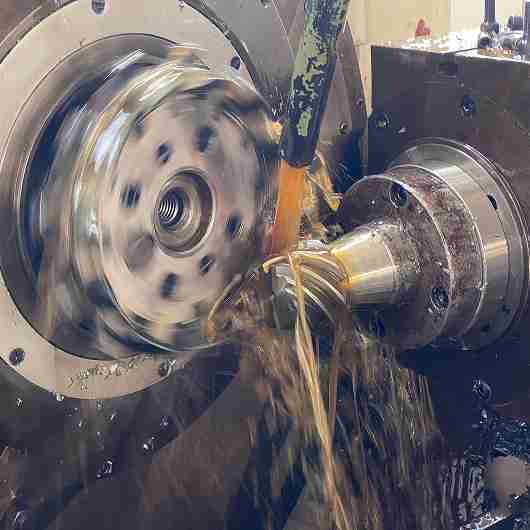
Gear Milling
Gear Milling is a gear cutting process that used a rotating from cutter shaped to match the exact space between two gear teeth is plunged into the gear blank. After cutting one tooth space, the blank is indexed to the next position. The speed for gear milling is not high, each module and number of teeth requires a separate cutters. Gear Milling is widely used for bevel gears like straight bevel gears, spiral bevel gears and also large module cylindrical gears, which is also suitable for low volume production, protype gears.
Regular Used on:
- Straight bevel gears
- Spiral Bevel Gears
- Cylindrical Gears with Big Modules
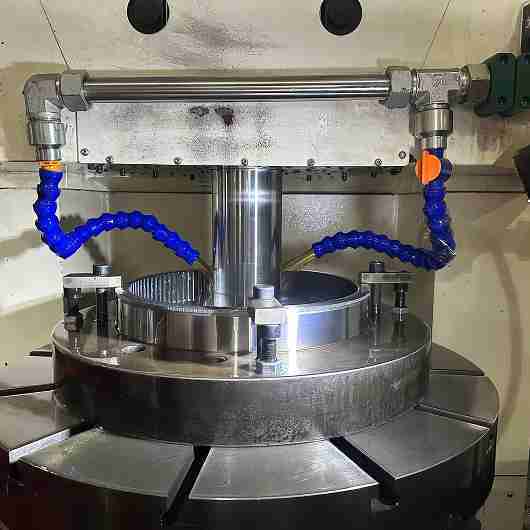
Gear Shaping
Gear shaping is a gear cutting process that used cutting tool that is essentially a “master gear” (with relieved cutting edges) reciprocates (moves in and out) while meshing in a synchronized rolling motion with the gear blank. The cutter is usually moving up and down. Gear Shaping is widely used for cylindrical external gears like spur gears, helical gears, especially effective for cutting internal gears, including splines.
Regular Used on:
- Internal Gears
- External gears (Spur Gears, Helical Gears)
- Splines
Gear Broaching
Gear Broaching is a gear cutting process that used cutting tool with multi-toothed, linear cutting tool (broach) is pushed or pulled across the gear blank. Each successive tooth on the broach is slightly larger, removing more material until the final shape is achieved in a single, linear stroke. Broaching speed is very quick to perform complete tooth profile, which has high accuracy and surface roughness. However broaching cutters are with complicated structure and cost are very high. That makes gear broaching is widely used for external spur gears with no shoulder including keyways, especially very high-volume mass production where the tooling cost is divided into unit cost to make it competitive.
Regular Used on:
- Internal Gears
- External gears without shoulders (Spur Gears, Helical Gears)
- Keyways
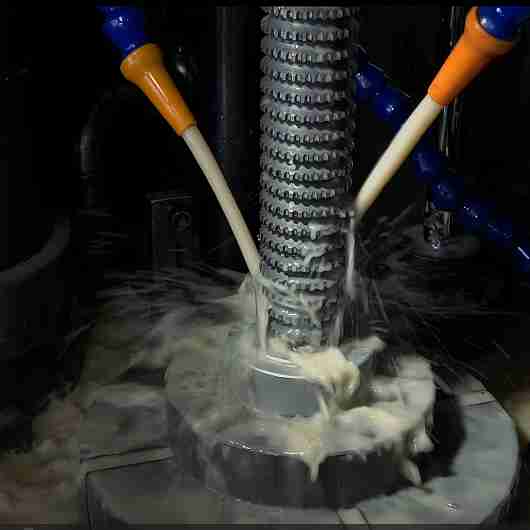
Gear Power Skiving
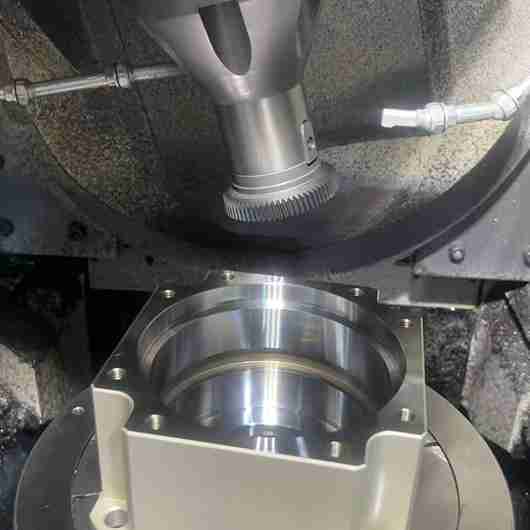
Power Skiving is a modern, highly productive continuous generating process which can be 5-10 times faster than gear shaping. It can be performed on modern multi-tasking CNC machines or dedicated skiving centers which is excellent for hard finishing (post-heat treatment) to achieve high geometric accuracy and surface finish. Power Skiving is widely used for External gears and Internal Gears especially on hard materials and for components like planet carriers.
Regular Used on:
- Internal Gears
- External Gears (Spur Gears, Helical Gears)
- Plant Carriers
Transmission Partner