Helical Gear
Why Choose BELON As Your Helical Gear Supplier
As one of the leading helical gear suppliers in China, BELON manufactures custom helical gears tailored to various applications of our customers. With more than 15 years of gear manufacturing experience, we have been serving clients in 35+ countries. We can fully understand every helical cut gear project with different requirements for performance, precision, manufacturability, lead time, and cost, and provides precise, durable, and reliable long-term manufacturing support.
Our production capabilities cover an expansive spectrum from light-load Module 0.2 to heavy-duty Module 45. We can customize tooth geometry, materials, heat treatment, and accuracy to meet specific requirements to make your gears operate stably and smoothly in your equipment.
- ISO 9001-Certified Quality Management
- 15+ Years of Precision Gear Expertise
- Serving Customers Across 35+ Countries
- 1,000+ OEM Gear Projects Delivered Annually
- Custom Helical Gears from Prototype to Mass Production
What Helical Gears BELON Can Make
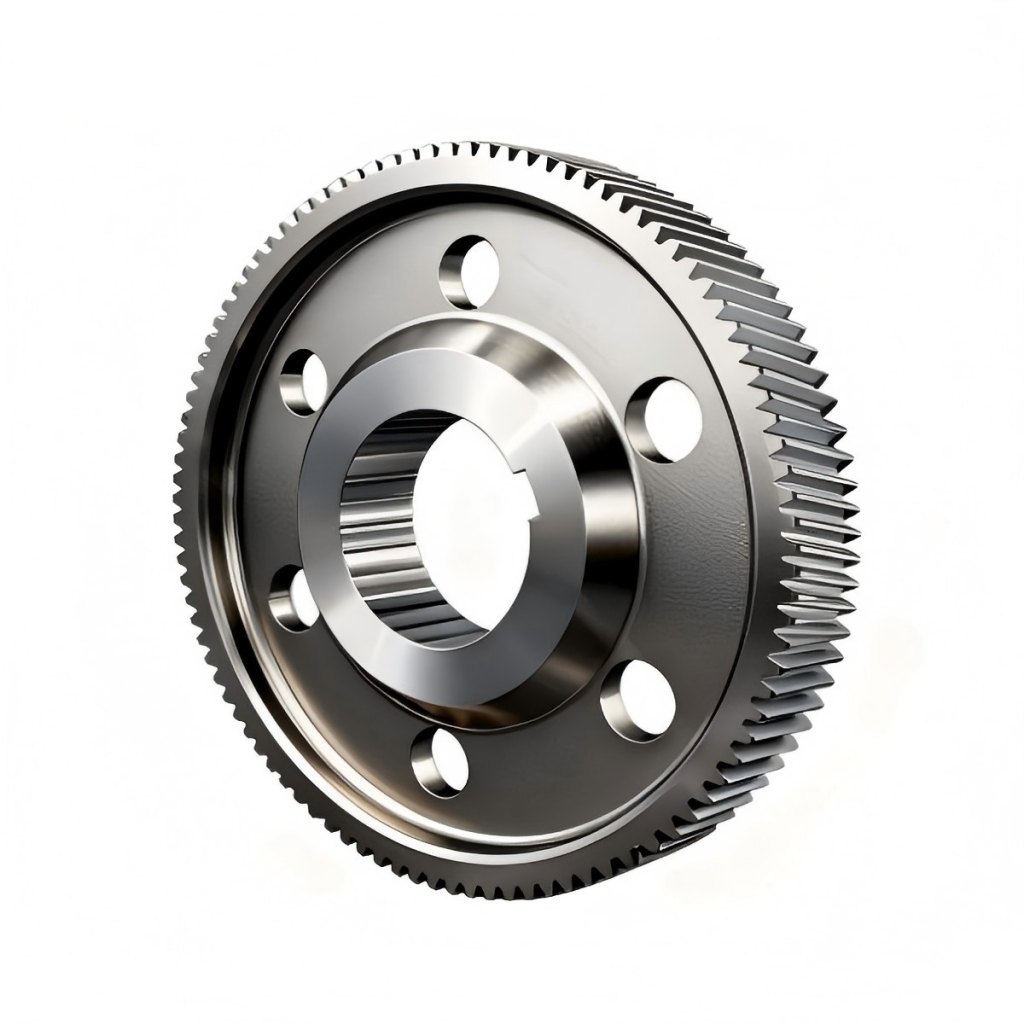
Helical gears are another type of cylindrical gears. They are similar to spur gears except that the teeth are at an angle to the shaft, rather than parallel to it as in a spur. The requesting teeth are longer than the teeth on a spur gear of equivalent pitch diameter. It’s simple to tell the difference in the comparison of spur gear VS helical gear in drawing. When it’s cylindrial shape and teeth are outside, the difference should focus on helix angle. If it has helix angle with outside gear, it’s helical gear. Otherwise, it is spur gear. The right hand and left hand helical gears mate as a set. But they must have the same helix angle.
Features:
(1) Higher strength compared with a spur gear.
(2) More effective in reducing noise and vibration compared with a spur gear.
(3) Gears in mesh produce thrust forces in the axial direction.
BELON provides a wide production range of helical gears from Module 0.2 to Module 45 to meet the diverse specifications in your various types of equipment, like gearbox helical gear.
Helical Gear Size:

Custom Made Helical Gears
- Material: 18CrNiMo7-6
- Heat treatment: Carburizing and quenching
- Accuracy: ISO 7


Integral Gear Shaft
- Material: 20CrMnTi
- Heat treatment: Carburizing and quenching followed by tempering at 180-220℃
- Accuracy: Grade 6

Precision Helical Gear
- Material: 18CrNiMo7-6
- Heat treatment: Case hardened (carburized) 60HRC
- Accuracy: Grade 6


How We Can Make Helical Gear
Belon offers a full range of helical gear manufacturing processes, including Gear Hobbing, Helical Gear Shaping, Power Skiving, Fine Hobbing, Grinding, and 5-Axis Machining – allowing us to meet various requirements in accuracy, performance, and cost efficiency. Every helical gear wheel is engineered to your specific drawings, and we recommend the most suitable process to match your precision, volume, and cost targets.
Helical gear hobbing
Helical gear grinding
How We Inspect Helical Gear
Helical Gear Magnetic Particle Testing
BELON applies appropriate non-destructive testing (NDT) methods to verify the integrity of critical helical gears without affecting their usability.
- Magnetic Particle Inspection (MPI): Detects surface and near-surface cracks, especially around gear teeth, fillets, and other stress-concentrated areas.
- Dye Penetrant Inspection (DPI): Identifies surface-breaking cracks and discontinuities, particularly for non-magnetic materials.
- Ultrasonic Testing (UT): Used for larger or critical gears to detect potential internal defects such as inclusions, voids, and internal cracks.
BELON will select the appropriate inspection method based on the material, module, gear size, heat treatment, application requirements, and customer specifications and provide corresponding quality documentation when required.
Helical Gear Accuracy Inspection
Precise geometry of helical gears is fundamental to guarantee smooth power transmission, uniform load distribution, low operating noise and long-term reliable service life.
BELON carries out gear precision inspections in line with specified accuracy grades, gear specifications and end application demands. Equipped with professional gear CMM measuring instruments, we test core geometric parameters including pitch, tooth profile, lead and tooth thickness. BELON delivers detailed gear inspection reports to validate that finished helical gears fully comply with defined technical standards and quality requirements.
Advantages of Our Helical Gear

Broad Module Range M0.2–M45
Made-to-Order OEM Gears
Application-Driven Manufacturing
Engineering & Reverse Engineering Support
Prototype to Production Flexibility
Proven Global OEM Experience
Download to Learn More about Us

Helical Gear FAQs
What is the best material for helical gears?
There is no single best material for every application. Alloy steels such as 20CrMnTi, 8620, and 18CrNiMo7-6 are common choices for industrial helical gears as they offer high strength and wear resistance after heat treatment.
BELON has the capability to produce helical gears made of different materials up to now, ranging from steel helical gears, brass helical gears, stainless steel helical gears and so on.
We offer the gear material selection service as well and our team is able to help you select materials based on load, speed, operating environment, service life, and required gear accuracy.
Are helical gears stronger?
Generally, helical gears can carry higher loads and transmit more torque than spur gears of similar size because multiple teeth engage progressively and share the load. However, actual strength should also consider the helical gear size, material used, tooth geometry, helix angle, heat treatment, and operating conditions.
What machines use helical gears?
Helical gears are widely used in industrial gearboxes, conveyors, machine tools, compressors, pumps, automation equipment, construction machinery, and other high-speed or high-load systems. Where smooth, quiet, and reliable power transmission is required, you can see helical gears.
Whether you want to purchase a replacement helical gear to change the original worn gear, or custom a non-standard helical gear, just send us the drawing/physical sample, we would love to offer our best engineering support.
What are the key differences between helical and screw gears?
Helical gears are primarily designed to transmit power between parallel or appropriately arranged shafts, while screw gears are typically used between non-parallel, non-intersecting shafts.
Screw gear drives generally have more sliding action and lower efficiency, whereas helical gears provide better load capacity and transmission efficiency in their intended configurations.
Can you explain the different types of helical gears and their specific uses?
Helical gears are categorized primarily by tooth orientation, mounting configuration and gear pairing. The main types and applications are as follows:
- Single Helical Gears (Single-helix Gears) Teeth are cut at a constant helix angle across the gear face. When engaged, they produce an axial thrust force along the shaft.
Uses: The most common type, widely applied in general gearboxes, conveyors, agricultural machinery, and medium-duty industrial reducers. Suitable for moderate-speed power transmission where thrust bearings can absorb axial force.
- Double Helical Gears / Herringbone Gears Two sets of helical teeth with opposite helix angles are machined side by side on one gear. The opposing helixes cancel out axial thrust completely.
Uses: Heavy-load, high-torque equipment without space for large thrust bearings, such as large compressors, rolling mills, marine propulsion systems and heavy mining gearboxes. They can run at high speeds under extreme loads.
- Crossed Axis Helical Gears (Skew Gears) Two helical gears mesh on non-parallel, non-intersecting shafts. They have point contact and lower load capacity.
Uses: Light-load auxiliary transmission, small instrument drives, low-power auxiliary mechanisms. Not recommended for heavy torque.
- Helical Bevel Gears (Spiral Bevel Gears, sometimes grouped under helical tooth type) Curved oblique teeth for intersecting shafts (typically 90°). Smooth meshing and high load capacity compared with straight bevel gears.
Uses: Vehicle differentials, construction machinery, heavy equipment where power needs to change transmission direction.
What are the main advantages of using helical gears over spur gears?
Helical gears outperform spur gears in several key aspects, though each type fits different operating scenarios.
- Smoother, quieter operation Helical gear teeth engage gradually rather than contacting the entire tooth face at once. This progressive meshing reduces impact and vibration, delivering quieter running especially at high speeds. Spur gears engage abruptly, creating more noise and shock.
- Higher load-carrying capacity The slanted tooth design provides a longer contact line during meshing. More tooth surface shares the load, so helical gears can transmit greater torque under the same dimensional constraints.
- Better transmission stability Multiple tooth pairs stay in contact simultaneously. This distributes loads continuously and lowers stress spikes, improving running stability and extending service life.
- Adaptability for high-speed applications Thanks to reduced shock and vibration, helical gears are widely preferred for high-speed gearboxes. Spur gears are normally limited to lower-speed equipment.
Helical Gear Partner