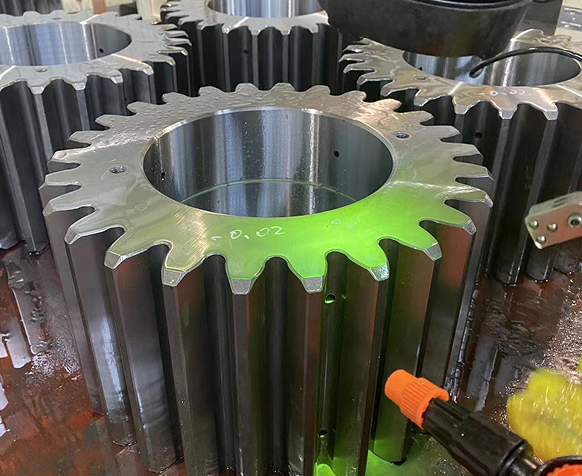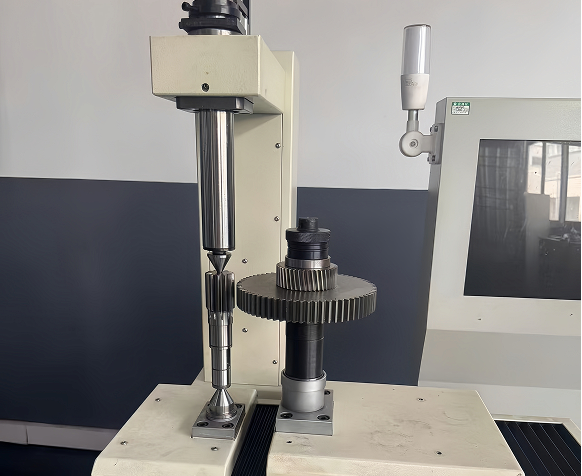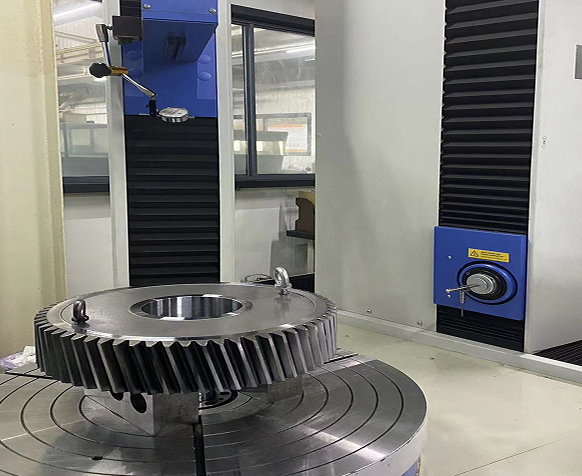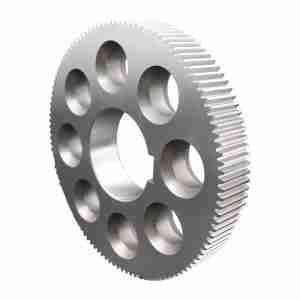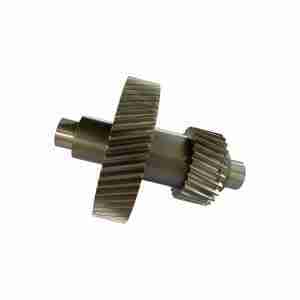

Helical gears belong to cylindrical gears. Their tooth surfaces are helical curved surfaces, machined with tooth traces inclined at a certain angle to the gear axis. When the gear rotates, contact starts from one end of the tooth and gradually expands to form linear contact. Unlike spur gears, the entire length of a helical gear tooth never engages fully at the same time.
Helical gears feature excellent load capacity and much smoother meshing. Their transmission runs more stably, which reduces impact loads, noise and vibration. Therefore, they are ideal for high-speed operating conditions with strict noise reduction requirements, widely applied in medical equipment, electric vehicles, printing, textile, plastic processing, food processing and other industries.