

Abstract:A gear rack is a linear toothed component that meshes with a pinion gear to rotary motion into linear motion. Rack and pinion systems are widely used for precise movement and power transmission in mechanical equipment.
This guide explains what a gear rack is, how it works, its main types, key specifications, applications, and manufacturing considerations.
What Is a Gear Rack?
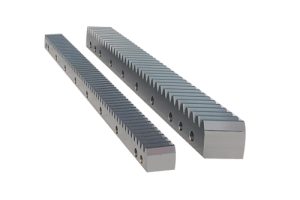
A gear rack is a straight mechanical component featuring gear teeth machined along its length. Unlike a conventional circular gear, a gear rack does not rotate around its own center. Instead, it moves linearly when its teeth engage with a rotating pinion gear.
The rack and pinion together form a rack and pinion drive system, which converts rotational motion of the pinion into the linear motion of the rack.
The basic operational sequence can be described as:
Rotational Motion → Pinion → Tooth Engagement → Linear Motion
The performance of a gear rack depends on factors such as module, pressure angle, tooth profile, material, rack length, and manufacturing precision. Furthermore, the rack and pinion must have compatible tooth geometry to ensure proper meshing and reliable transmission.
For precision applications, manufacturing quality is particularly critical. Tooth accuracy, surface finish, heat treatment, and dimensional control can all influence positioning accuracy, noise levels, wear characteristics and service life.
How Does a Gear Rack Work?
A gear rack works together with a pinion gear to convert rotary motion into linear motion. As the pinion rotates, its teeth engage with the teeth of the rack, driving the rack to move along its length.
The basic transmission process is:
Pinion Rotation → Gear Tooth Engagement → Linear Rack Movement

The direction of the rack’s movement depends on the rotation direction of the pinion. Reversing the pinion also reverses the direction of the rack.
- Rack and Pinion Motion
When the pinion rotates, each tooth moves the rack forward by a distance corresponding to the rack’s tooth pitch. Consequently, the linear displacement of the rack is directly related to the rotation of the pinion.
For a standard rack and pinion system, the linear displacement can be determined from the pinion’s pitch circumference and rotation angle. By leveraging this relationship, engineers can control linear position by precisely controlling the rotational movement of the pinion.
- Gear Ratio and Linear Motion
Unlike a conventional gear pair, where both gears rotate, the rack remains a linear component. The module, number of pinion teeth, and rotational speed collectively determine the relationship between pinion rotation and rack movement.
Generally, a larger pinion produces greater linear displacement per revolution, while a smaller pinion provides finer movement and can offer greater mechanical advantage depending on the system design.
Types of Gear Racks
Gear racks can be classified according to their tooth geometry, manufacturing requirements, and transmission characteristics. The appropriate type depends on various factors, such as the required motion, load, speed, positioning accuracy, and operating conditions.
1. Straight Gear Rack
A straight gear rack has teeth arranged perpendicular to the direction of linear motion. It is the most basic rack configuration and is typically paired with a spur pinion.
Key characteristics include:
- Reliable power transmission
- Straightforward manufacturing
- Simple tooth geometry
- Suitable for basic linear motion systems
The rack and pinion must have matching module and pressure angle to ensure proper meshing.
2. Helical Gear Rack
A helical gear rack has inclined teeth and is designed to mesh with a corresponding helical pinion. Compared with a straight rack, the angled tooth engagement provides a more gradual contact between the mating teeth.
Key characteristics include:
- Smoother tooth engagement
- Improved load distribution
- Reduced vibration and operating noise
- Higher contact ratio
Helical racks require matching helix angles and tooth geometry between the rack and the pinion to ensure proper meshing.
3. Precision Gear Rack
Precision gear racks are manufactured to stricter standards for dimensional and tooth accuracy, designed specifically for applications requiring precise and repeatable linear motion.
Their performance depends on factors such as:
- Tooth pitch accuracy
- Surface finish
- Tooth profile accuracy
- Straightness
- Dimensional tolerance
Precision manufacturing and finishing processes help minimize issues such as positioning errors, backlash, vibration, and uneven tooth contact.
Key Parameters of a Gear Rack
When selecting or manufacturing a gear rack, careful consideration must be given to its tooth geometry, dimensions, material, and accuracy. These parameters determine how well the rack meshes with the pinion and how reliably the system performs under operating conditions.
1.Module
Module is one of the most important specifications for a metric gear rack, defining the relationship between the gear tooth size and pitch diameter.
The rack and pinion must have the same module to mesh correctly. A larger module generally implies larger teeth that can accommodate higher loads, whereas a smaller module is typically used where compact dimensions and finer motion are required.
For custom gear rack manufacturing, the appropriate module should be selected according to the transmission load, available space, and matching pinion. [Request A Gear Quote]
2.Pressure Angle
The pressure angle defines the angle at which the force is transmitted between meshing gear teeth.
Common pressure angles include 20°, though other values may be used according to the gear system design.
The rack and pinion must have compatible pressure angles to achieve proper tooth engagement and force transmission.
3.Tooth Profile and Pitch
The tooth profile determines how the rack teeth mesh with the pinion. Accurate tooth geometry is crucial for smooth movement and consistent load distribution.
Pitch refers to the spacing between corresponding points on adjacent teeth. Consistent tooth pitch helps maintain accurate and stable engagement between the rack and pinion.
For precision rack and pinion systems, deviations in tooth profile or pitch can lead to backlash, vibration, positioning errors, and uneven wear.
4.Rack Length
The rack length determines the available linear travel of the system. Longer racks provide greater travel distances, whereas shorter racks are suitable for compact mechanisms.
For custom applications, rack length should be determined together with the required travel distance, installation space, and pinion movement.
5.Accuracy
Gear rack accuracy is particularly important in systems requiring precise and repeatable linear positioning.
Important accuracy factors can include:
- Tooth pitch accuracy
- Surface finish
- Straightness
- Dimensional tolerance
- Tooth profile accuracy
Higher manufacturing accuracy helps reduce backlash, vibration, positioning errors, and uneven tooth contact.
6.Material and Heat Treatment
The material of a gear rack should be selected according to the required load, wear resistance, operating speed, and service environment.
Alloy steels are typically considered for applications requiring high strength and durability. Depending on specific application requirements, its hardness, wear resistance, and fatigue performance can be further enhanced through heat treatment.
For demanding transmission systems, material selection and heat treatment should be considered together with the rack’s tooth geometry and required accuracy.
Gear Rack Applications
Gear racks are used when machinery requires controlled linear motion, positioning, or force transmission. By combining a gear rack with a suitable pinion, engineers can convert rotary motion into linear motion while precisely controlling travel and speed.
1.Industrial Automation
Gear rack and pinion systems are used in automated machinery where controlled linear movement is required. Their relatively simple structure and ability to provide continuous linear travel make them suitable for various automated positioning mechanisms.

Typical requirements include:
- Accurate positioning
- Controlled speed and travel
- Reliable operation under continuous cycles
- Repeatable linear movement
2.Robotics
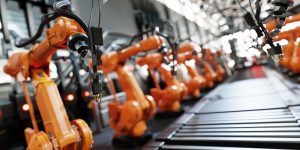
In robotics and motion control equipment, gear racks provide linear motion for positioning mechanisms and moving assemblies.
For these applications, precision, backlash control, and smooth tooth engagement are particularly important because positioning errors can affect the accuracy of the entire system.
3.CNC Machines
Gear rack systems can be used in CNC machinery to provide linear movement along machine axes.
Based on the machine design, the the rack and pinion system needs to provide a balance among the following aspects:
- Load capacity
- Rigidity
- Positioning accuracy
- Linear travel speed
- Long-term durability
Precision manufacturing of both the rack and pinion is important to maintain consistent motion during machining operations.
4.Automotive Steering Systems
One of the best-known applications of rack and pinion mechanisms is automotive steering.
In a rack-and-pinion steering system, the steering input rotates the pinion, which moves the rack linearly. This linear movement is then transferred to the steering linkage to change the direction of the wheels.
The compact structure and direct conversion of rotary input into linear motion make the mechanism suitable for vehicle steering systems.
5.Material Handling Equipment
Gear racks can also be used in equipment requiring controlled linear motion for positioning or transferring components.
Depending on the design, rack and pinion mechanisms can provide long travel distances while maintaining a relatively straightforward transmission structure.
6.Construction and Industrial Machinery
Heavy-duty machinery may use rack and pinion systems when linear movement and high mechanical loads are required.
For these applications, factors such as load capacity, material strength, tooth surface hardness, lubrication, environmental conditions, and service life must be considered when selecting gear racks.
Gear Rack Manufacturing Process
The performance of a gear rack depends not only on its design but also on the quality and consistency of its manufacturing process. For custom gear racks, factors such as material selection, tooth cutting, heat treatment, finishing, and inspection all contribute to the final accuracy, durability, and service life.
1.Material Selection
The material should be selected according to the required load capacity, wear resistance, operating conditions, and expected service life.
For demanding industrial applications, alloy steels may be selected for their combination of strength, toughness, and machinability. The material specification should also be considered together with the planned heat treatment and finishing processes.
2.Machining and Tooth Cutting
After the raw material is prepared, the rack body is machined to the required dimensions before the teeth are produced.
The tooth cutting process must maintain consistent tooth spacing, profile, and geometry along the entire rack. For precision gear racks, accurate machining is essential to achieve proper engagement with the mating pinion.
Important factors include:
- Surface quality
- Tooth profile accuracy
- Rack straightness
- Tooth pitch consistency
- Dimensional tolerances
3.Heat Treatment
Depending on the material and application requirements, heat treatment can be used to improve the mechanical properties of the gear rack.
Processes such as carburizing, quenching, tempering, or other suitable heat treatments can increase surface hardness and wear resistance while maintaining the required core properties.
The appropriate process depends on the material, rack dimensions, load conditions, and required performance.
4.Grinding and Finishing
For applications requiring higher accuracy, additional finishing processes may be used after heat treatment.
Gear grinding and other precision finishing processes enhance tooth accuracy, surface finish, and consistency. These processes are particularly important when gear racks must mesh with precision pinions to achieve accurate and repeatable linear motion.
5.Inspection and Quality Control
The final gear rack should be inspected to verify that its dimensions and tooth geometry meet the specified requirements.
Depending on the project, inspection may include:
- Tooth profile inspection
- Straightness measurement
- Dimensional inspection
- Surface finish inspection
- Hardness testing
- Pitch inspection
For precision gear racks, inspection is particularly important because small deviations in tooth geometry or rack straightness can affect the meshing condition, positioning accuracy, noise, and service life of the complete rack and pinion system.
Need a gear rack solution tailored to your specific application? Contact our engineering team now to discuss with us at once.
FAQs
1.What is the difference between a gear rack and a gear?
A conventional gear has teeth arranged around a circular body and primarily transmits rotational motion. A gear rack has teeth arranged along a linear body and converts rotational motion from a pinion into linear motion.
2.What is the module of a gear rack?
The module is a key specification that defines the size and spacing of gear teeth in metric gear systems. A gear rack and its mating pinion must have compatible modules to achieve proper tooth engagement.
3.What factors should be considered when selecting a gear rack?
Important factors include load, linear speed, module, pressure angle, rack length, accuracy, material, heat treatment, lubrication, and operating environment. The rack and pinion should also be selected as a matched system to ensure reliable performance.
4.Can gear racks be customized?
Yes. Custom gear racks can be manufactured according to specific requirements such as module, pressure angle, rack length, material, heat treatment, tooth accuracy, and application conditions. Detailed drawings and technical specifications can help manufacturers determine the appropriate manufacturing and inspection processes.