

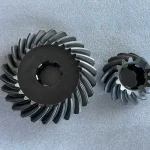
Abstract:Bevel gear manufacturing involves a series of precision processes, from material preparation and gear cutting to heat treatment, finishing, and inspection. Each process affects the final tooth geometry, accuracy, strength, and transmission performance of the gear.
This guide explains how bevel gears are manufactured, the main manufacturing processes and bevel gear types, material and heat treatment schemes, and how finished gears are inspected for quality and accuracy.
What Is Bevel Gear Manufacturing?
Bevel gear manufacturing is the process of producing gears with conical tooth surfaces, used to transmit motion and power between intersecting or skew axes. Compared with cylindrical gears, bevel gears require more complex control of tooth geometry, cone geometry, and tooth contact.
The manufacturing process typically starts with a gear blank and progresses through machining, tooth cutting, heat treatment, hard cutting or finishing, and final inspection. The specific process depends on the bevel gear type, material, required accuracy, size, and application.
Different bevel gear designs require different manufacturing approaches. Straight bevel gears, spiral bevel gears, Zerol bevel gears, and hypoid gears have different tooth geometries and therefore require appropriate cutting and finishing methods.
For precision bevel gears, manufacturing accuracy is especially important. Variations in tooth profile, tooth thickness, pitch, alignment, or surface finish can affect tooth contact, noise, vibration, load distribution, and service life.
Bevel Gear Manufacturing Process
The manufacturing process for a bevel gear depends on its tooth geometry, material, dimensions, accuracy requirements, and intended operating conditions. Although specific process may vary, precision bevel gear manufacturing generally involves several key stages from gear blank preparation to final inspection.
1.Material Selection
Material selection is the first important consideration in bevel gear manufacturing. The material needs to provide the required combination of strength, toughness, wear resistance, machinability, and heat-treatment performance.
Alloy steels are commonly used to manufacture bevel gears for demanding transmission applications. Materials such as 20CrMnTi, 18CrNiMo7-6, 20MnCr5, and SAE 8620 may be selected depending on the required mechanical properties and application.
The material should be selected together with the planned heat treatment. For example, carburizing and quenching can provide a hard wear-resistant surface while maintaining a tougher core.
2.Gear Blank Preparation
Before tooth cutting, the raw material is formed and machined into the required gear blank.
Depending on the gear design and production requirements, the blank may be prepared through forging followed by machining, or through other suitable manufacturing methods.
At this stage, critical dimensions such as the outside diameter, inner bore, face width, and reference surfaces are prepared to provide accurate references for subsequent gear cutting process.
3.Preliminary Machining
Subsequently, prior to gear tooth machining, the gear blank undergoes machining to achieve the required geometry.
Turning, boring, facing, and other machining operations may be used depending on the design. Accurate reference surfaces are particularly important because the positioning of the blank during tooth cutting directly affects the final gear geometry.
4.Bevel Gear Tooth Cutting
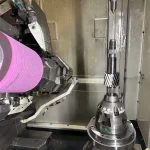
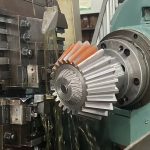
Tooth cutting is one of the most critical stages in bevel gear manufacturing.
Unlike cylindrical gears, bevel gear teeth are generated on a conical surface. Consequently, the cutting process requires precise control of the gear geometry, machine setup, cutting parameters, and tool position.
Different bevel gear designs may require different tooth-cutting methods. Straight bevel gears, spiral bevel gears, and other specialized bevel gears are manufactured according to their specific tooth geometry and production requirements.
Modern CNC gear-cutting equipment can provide precise control over the cutting process, helping manufacturers achieve consistent tooth geometry and accurate tooth spacing.
5.Heat Treatment
After tooth cutting, bevel gears may undergo heat treatment to achieve the required hardness, strength, and wear resistance.
Common processes include:
- Carburizing
- Quenching
- Tempering
- Other application-specific heat treatments
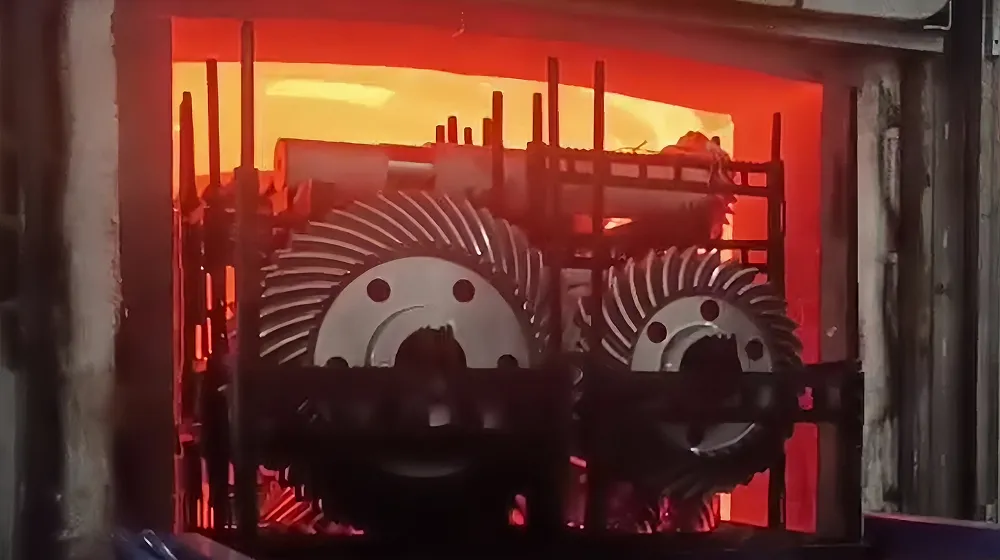
For carburized bevel gears, the process creates a hardened surface layer while maintaining high core toughness. This combination enhances resistance to wear, contact fatigue, and repeated loading.
Heat treatment also introduces the possibility of dimensional distortion. Therefore, controlling the heat-treatment process is particularly important for precision bevel gears, as excessive distortion can affect tooth geometry and subsequent finishing operations.
6.Hard Cutting, Lapping, and Grinding
After heat treatment, additional finishing processes may be required depending on the required accuracy and gear design.
Hard cutting can be used to remove material after heat treatment and improve the final tooth geometry.
Lapping is commonly used for certain bevel gear pairs to improve tooth surface quality and optimize the contact pattern between mating gears.
Tooth grinding provides a higher level of finishing and dimensional accuracy for applications with demanding gear performance requirements.
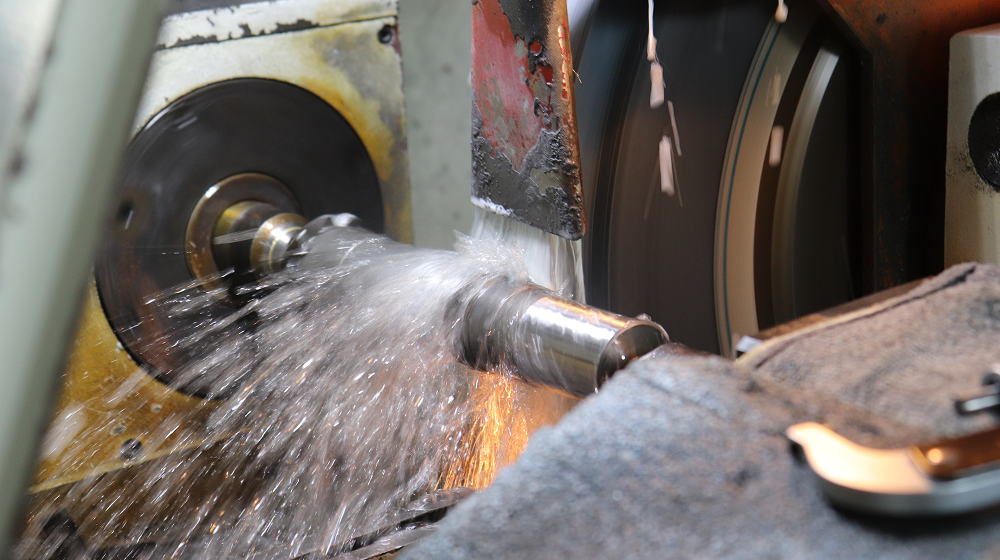
The appropriate finishing method depends on the gear type, precision requirements, production volume, and intended application.
Types of Bevel Gears and Their Manufacturing Methods
Bevel gears are available in various designs, with differences in tooth geometry, shaft arrangement, contact pattern, and manufacturing requirements. Selecting the appropriate manufacturing method depends on the specific bevel gear type, required accuracy, load, speed, and operating conditions.
1.Straight Bevel Gears

Straight bevel gears feature straight teeth that extend toward the apex of the gear cone. Their relatively simple tooth geometry makes them easy to manufacture and suitable for applications where moderate speed and load requirements are involved.
The manufacturing process typically includes bevel gear tooth cutting followed by heat treatment and, when required, hard finishing. The accuracy of tooth spacing, tooth profile, and mounting dimensions is important for achieving consistent meshing.
2.Spiral Bevel Gears

Spiral bevel gears have curved teeth that engage progressively during rotation. Compared with straight bevel gears, this tooth geometry generally provides smoother engagement, higher contact ratio, and improved load-carrying capability.
Manufacturing spiral bevel gears requires precise control over tooth geometry and cutting parameters. Depending on the required performance and accuracy, finishing methods such as lapping, hard cutting, or grinding may be used.
Spiral bevel gears are commonly selected for applications where smooth operation, higher loads, and reduced noise are important.
3.Zerol Bevel Gears

Zerol bevel gears combine characteristics of both straight bevel gears and spiral bevel gears. Their curved teeth have a nominal spiral angle close to zero, while still providing a gradual tooth engagement.
The manufacturing process requires specialized control of tooth geometry to achieve the intended contact pattern and transmission characteristics. Depending on the application and required accuracy, suitable cutting and finishing processes can be selected.
4.Hypoid Gears

Hypoid gears are a specialized type of bevel gear in which the pinion and gear axes are offset rather than intersecting.
The offset allows hypoid gears to achieve high gear ratios, smooth operation, and high load capacity. However, their complex tooth geometry makes manufacturing and tooth-contact control more demanding.
Hypoid gear production requires precise control of the cutting process, tooth geometry, surface finishing, and final contact pattern. Proper lubrication is also particularly important because hypoid gears experience significant sliding between mating tooth surfaces.
5.Miter Gears

Miter gears are a special application of bevel gears in which the mating gears typically have the same number of teeth and transmit motion between intersecting shafts, commonly at 90 degrees.
Since the gear ratio is generally 1:1, miter gears primarily change the direction of rotation rather than increase or reduce speed.
Their manufacturing process follows bevel gear principles, with tooth cutting, heat treatment, and finishing selected according to the required accuracy and operating conditions.
Different bevel gear types require different levels of manufacturing control. Straight bevel gears may have relatively simple tooth geometry, while spiral bevel, Zerol, and hypoid gears require more sophisticated control of tooth geometry and contact conditions.
Therefore, when manufacturing precision bevel gears, it is crucial to select a manufacturer equipped with the appropriate capabilities for gear cutting, lapping, grinding, heat treatment, and inspection.
Materials and Heat Treatment for Bevel Gears
Material selection and heat treatment directly affect the strength, wear resistance, fatigue performance, and service life of a bevel gear. The appropriate combination depends on the gear size, transmitted load, operating speed, working environment, and required accuracy.
1.Common Bevel Gear Materials
Alloy steels are widely used for bevel gears due to due to the excellent balance they offer among strength, toughness, machinability, and heat-treatment performance.
Common material options may include:
- 20MnCr5 — commonly selected for case-hardened gear components
- SAE 8620 — suitable for applications requiring a hard wear-resistant surface and tough core
- 20CrMnTi — commonly used for carburized transmission gears
- 18CrNiMo7-6 — suitable for demanding applications requiring high strength and fatigue resistance
- 20CrMnTi — commonly used for carburized transmission gears
Material selection should not be based on hardness alone. The material’s core strength, toughness, machinability, heat-treatment response, and operating conditions should all be considered.
2.Carburizing and Quenching
Carburizing is a common heat-treatment process for high-performance bevel gears. Carbon is introduced into the surface layer of the gear, followed by quenching to achieve high surface hardness.
This produces a combination of:
- Tougher core properties
- High surface hardness
- Improved wear resistance
- Good contact fatigue resistance
This combination is particularly useful for bevel gears subjected to repeated loads and demanding transmission conditions.
3.Tempering
After quenching, tempering may be performed to reduce excessive brittleness and stabilize the mechanical properties of the gear.
The final hardness and mechanical properties depend on factors such as material grade, carburizing depth, quenching conditions, and tempering parameters.
For precision bevel gears, heat treatment must also be strictly controlled, as the process can cause dimensional changes and tooth distortion.
4.Heat Treatment and Gear Accuracy
Heat treatment improves the mechanical performance of bevel gears, but it can also introduce dimensional changes. For this reason, the manufacturing process often includes additional hard cutting, lapping, or grinding after heat treatment.
The finishing method is selected according to the required gear accuracy and performance.
For example, a bevel gear requiring a higher level of tooth accuracy may require precision tooth grinding after heat treatment, while other gear pairs may use lapping to achieve the required tooth contact and surface condition.
Therefore, material selection, heat treatment, and finishing should be considered as an integrated manufacturing process rather than as isolated, independent steps.
Bevel Gear Accuracy and Quality Control
The quality of a bevel gear depends not only by its material and manufacturing process but also by the accuracy of its final geometry. Proper inspection and quality control help ensure that the gear meets the required all requirements regarding dimensional, tooth, hardness, and transmission performance specifications.
1.Dimensional Inspection
Dimensional inspection verifies that the finished bevel gear conforms to the specified drawing and manufacturing requirements.
Depending on the gear design, inspection may include:
- Mounting dimensions
- Bore diameter
- Tooth thickness
- Face width
- Mounting dimensions
- Outside diameter
- Bore diameter
- Overall gear geometry
Accurate dimensional control is critical for proper installation and alignment within the transmission system.
2.Tooth Profile and Pitch Inspection
The geometry of the bevel gear teeth directly affects how the mating gears contact each other.
Important inspection items may include:
- Tooth profile
- Runout
- Tooth pitch
- Tooth thickness
- Lead or flank geometry
- Tooth alignment
For precision bevel gears, deviations in tooth geometry can result in uneven contact, increased noise, vibration, backlash, and accelerated wear.
3.Gear Accuracy Standards
Bevel gear accuracy may be specified according to standards such as ISO, DIN, or AGMA, depending on the partner’s requirements and target market.
The selected accuracy grade should be appropriate for the gear’s operating speed, load, noise requirements, and application.
It is important to note that different standards use different classification systems, so an accuracy grade should always be evaluated according to the specific standard being referenced rather than directly comparing grade numbers between standards.
4.Hardness Inspection
After heat treatment, hardness testing helps verify whether the gear has achieved the required mechanical properties.
Depending on the specification, inspection may include:
- Surface hardness
- Heat-treatment condition
- Case depth
- Core hardness
For carburized bevel gears, controlling surface hardness and core properties is crucial. Excessive hardness without sufficient core toughness can adversely affect the gear’s resistance to impact and fatigue.
5.Tooth Contact and Meshing Inspection
For bevel gears, checking tooth contact is particularly important because the performance of the gear pair depends on how the mating tooth surfaces engage.
Mesh testing allows for the evaluation of the contact pattern between the bevel gear and its mating pinion.
The inspection can identify potential issues such as:
- Excessive backlash
- Uneven load distribution
- Misalignment
- Incorrect tooth ontact
A properly controlled contact pattern helps promote smoother transmission and more consistent load distribution during operation.
6.Final Quality Verification
Before shipment, inspection results must be verified against the drawings, technical specifications, and agreed quality requirements.
A complete quality-control process may therefore include:
Dimensional Inspection → Tooth Accuracy → Hardness Testing → Heat Treatment Verification → Meshing Test → Final Inspection
For custom bevel gears, inspection requirements should be established before production begins. This allows the manufacturing and quality teams to align the production process with the required performance and acceptance criteria.
Need a custom bevel gear quote?
Are you working on a new transmission upgrade or replacement project? We manufacture straight, spiral, hypoid, zerol, miter bevel gears with high‑precision heat treatment to withstand harsh operating conditions. Simply share your drawings, key specs, preferred material and expected order volume. Our team will assess your application needs and send you a detailed no‑obligation quotation without unnecessary delay. Reach out to us now.
FAQs
1.How are bevel gear accuracy and quality inspected?
Bevel gears may undergo dimensional inspection, tooth profile and pitch inspection, hardness testing, runout measurement, and tooth contact or meshing testing. Depending on the project, accuracy requirements may be specified according to standards such as ISO, DIN, or AGMA.
2.How are bevel gears manufactured?
A typical bevel gear manufacturing process includes material selection, gear blank preparation, machining, tooth cutting, heat treatment, hard cutting or finishing, and final inspection. Different bevel gear types may require different cutting and finishing methods.
3.What is the difference between lapped and ground bevel gears?
Lapping improves the tooth surface condition and contact pattern between a matched bevel gear pair, while tooth grinding is used to achieve a higher level of tooth accuracy and surface finish. The appropriate finishing method depends on the gear design, accuracy requirements, and application.
4.What materials are commonly used for bevel gears?
Common material options include 20CrMnTi, 18CrNiMo7-6, 20MnCr5, and SAE 8620. The appropriate material depends on factors such as load, speed, wear requirements, fatigue performance, and heat-treatment requirements.
5.Why is heat treatment important for bevel gears?
Heat treatment can improve the hardness, wear resistance, fatigue performance, and service life of bevel gears. Processes such as carburizing, quenching, and tempering can provide a hard surface with a tougher core. Heat-treatment distortion must also be controlled to maintain the required gear accuracy.