
Abstract: For OEMs, gearbox manufacturers, machinery builders, and industrial equipment companies, choosing the right worm gear manufacturing company in China can largely provide access to custom components, competitive production costs, and scalable manufacturing support. To help international buyers identify suitable suppliers, this guide reviews top 10 worm gear manufacturing companies in China in 2026. The companies are evaluated based on their publicly available manufacturing capabilities, product range, customization options, OEM experience, quality control, and application coverage.
What is worm gear manufacturing?
Worm gear manufacturing is the process of producing a worm gear transmission, consisting of a worm and a worm wheel, to transmit motion and torque between non-parallel, non-intersecting shafts. The worm resembles a screw, while the worm wheel is a toothed gear to mesh with the worm.
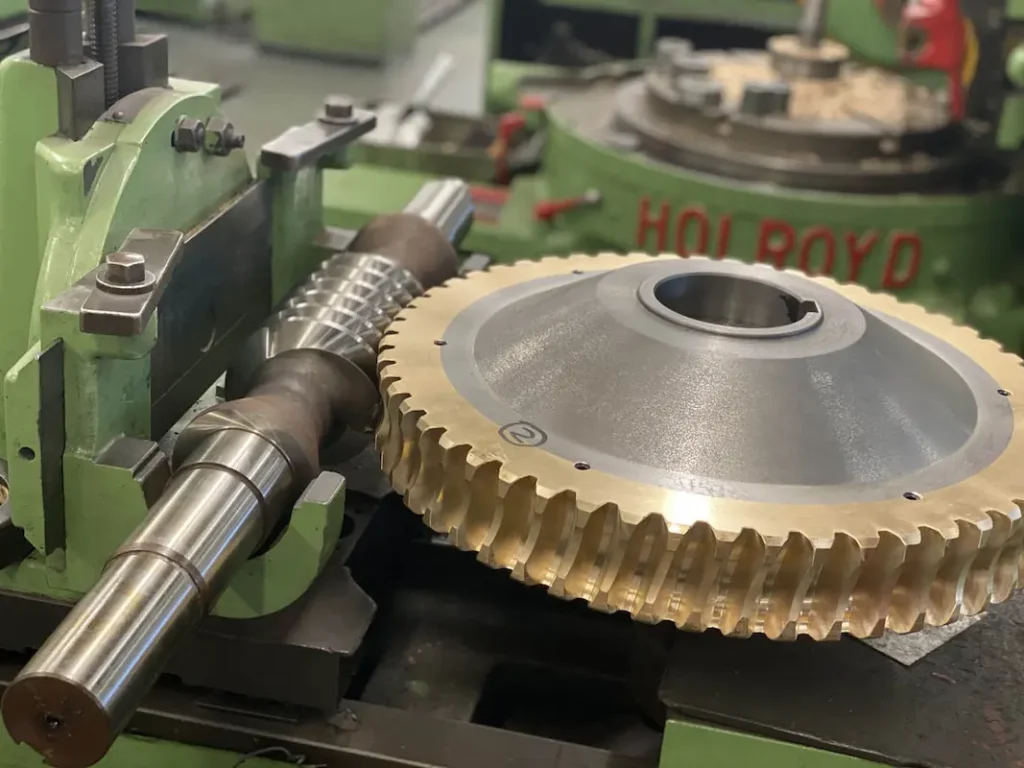
A common worm gear manufacturing process includes:
Material Selection → Cutting & Forging → Rough Machining → Gear Cutting → Heat Treatment → Finish Machining/Grinding → Inspection → Worm & Wheel Meshing Test → Cleaning & Packaging
Quick comparison of China’s Top 10 Worm Gear Manufacturing Companies
China has a broad range of worm gear manufacturers, from large-scale automotive gear suppliers and precision gear manufacturers to specialized worm gearbox producers and custom OEM suppliers. Their capabilities are not identical: some focus on high-volume automotive transmission components, while others are better suited for industrial machinery, custom gears, replacement parts, or complete worm gear reducers.
The following table provides a quick comparison of 10 representative worm gear manufacturing companies in China based on their publicly available product and manufacturing information. If you are in urgent need of looking for a right worm gear manufacturer matching your need, review this table from a few aspects to make the rapid comparison:
| Company | Core Strength | Production Scale | Worm Gear / Worm Wheel | Custom / OEM | Other Gear Types | Typical Applications | Best For |
| Shanghai Belon Machinery Co., Ltd. | Custom precision OEM gears and reverse engineering from sample or worn/broken gears | Medium / flexible production | ✓ | ✓ | Spur, helical, internal, bevel, hypoid, planetary, shafts | Industrial OEM, mining, agriculture, construction, automation, robotics | Custom worm gears and industrial OEM projects |
| Zhejiang Guangjin Intelligent Technology Co., Ltd. (GRANGIN) | Broad custom transmission components | Medium–large | ✓ | ✓ | Spur, helical, bevel, sprockets, pulleys, couplings | Industrial machinery, automation, power transmission | Custom transmission components |
| Zhejiang Shuanghuan Driveline Co., Ltd. | Large-scale automotive & industrial OEM manufacturing | Large-scale | ✓ | ✓ | Spur, helical, bevel, and other transmission gears | Automotive, EV, rail transit, robotics, industrial equipment | High-volume OEM production |
| JinHua JingGong Automotive Gear Co., Ltd. | Automotive and industrial gear manufacturing | Large-scale | ✓ | ✓ | Spur, helical, transmission shafts, mainly for automotive and agricultural applications | Automotive, agricultural machinery, mining, industrial equipment | OEM transmission gears |
| Zhejiang FORE Intelligent Technology Co., Ltd. | Precision gears and intelligent transmission systems | Large-scale | ✓ | ✓ | Spur, planetary, spiral bevel and other precision gears | Automotive, EV, reducers, agriculture, robotics | Precision transmission components |
| China Gear Motions | Custom precision gear manufacturing | Medium | ✓ | ✓ | Spur, helical, bevel, pump gears, splines, sprockets | Industrial, mining, oil & gas, robotics, material handling | Custom precision gears |
| CHUANQI GEARS Co., Ltd. | Flexible custom gear and OEM production | Medium | ✓ | ✓ | Spur, helical, bevel, pinion, timing pulleys, shafts | Automation, packaging, logistics, actuators | Custom gears and automation components |
| Wenling Zhongyi Machinery Co., Ltd. | Custom transmission gears and drawing/sample-based production | Medium | ✓ | ✓ | Bevel, oil pump gear, reduction gear, spiral gear and other transmission gears | Industrial machinery, reducers, agricultural equipment | Custom and replacement gears |
| Shenzhen Hefa Gear Machinery Co., Ltd. | Precision gear customization | Medium | ✓ | ✓ | Spur, helical, laser gear, gear shafts | Automation, robotics, medical, industrial machinery | Small-to-medium precision gear projects |
| EVER-POWER | Broad mechanical transmission product range | Large-scale | ✓ | ✓ | Spur, bevel,agricultural gears, racks & pinions | Agriculture, industrial transmission, machinery | Agricultural and general transmission |
Top 10 Worm Gear Manufacturing Companies in China
Considering a diverse ecosystem of worm gear and precision gear manufacturers in China, finding an appropriate worm gear manufacturer here is a better choice than other countries.
The following companies are selected based on their publicly available worm gear capabilities, customization and OEM services, manufacturing experience, product range, and industries served. You can learn more details about these companies in this section. The order is not intended to represent an absolute ranking.
1. Shanghai Belon Machinery Co., ltd
Company Overview
Shanghai Belon Machinery Co., Ltd. (https://www.belonmachinery.com/) is a custom gear manufacturer specializing in high-precision OEM gears, shafts, and transmission components. The company was founded in 2010 and has served customers across more than 35 countries and over 20 industries. BELON has developed more than 1,000 projects annually, including various projects based on customer drawings and reverse engineering from physical samples.
Its product range includes worm gears, spur gears, helical gears, straight and spiral bevel gears, hypoid gears, planetary gears, internal gears, gear shafts, and spline shafts. This broad product portfolio means BELON has the capability to support customers who need more than a single worm gear component.
Worm Gear Manufacturing Capabilities
BELON has a dedicated worm gear manufacturing capability covering worm gears, worm wheels, worm shafts, matched worm gear sets, and also worm drives.
BELON’s worm gear manufacturing range covers approximately module 0.2 to module 45. Worm shafts can be milled, hobbed, and ground, and grinding can achieve DIN4 accuracy for worm shafts. Its worm gear manufacturing processes include worm gear casting, worm shaft baiting, turning or machining, hobbing, milling, grinding, and worm gear/worm wheel meshing inspection.
BELON also has experience in producing worm gear sets using materials such as tin bronze for worm wheels and alloy steel for worm shafts, as well as worm gear set inspection for center distance, backlash, and mating performance.
Customization and OEM Capabilities
BELON’s business model is strongly oriented toward customized OEM production.
Customers can provide:
- Technical drawings
- CAD files
- Physical samples
- Existing gear sets
- Technical specifications
To better serve more customers, BELON also provides reverse engineering, design optimization, feasibility analysis, prototype development, and flexible project support. This makes the company particularly relevant when a buyer needs a non-standard worm gear, replacement worm wheel, matched worm gear set, or gear reproduced from an existing sample.
Main Industries Served
BELON’s application areas include:
- Industrial gearboxes and reducers
- Mining
- Agriculture
- Construction machinery
- Robotics and automation
- Automotive
- Marine
- Railway
- Pumps and valves
- Wind power
- Cement
- Metallurgy
- Food and beverage
- Chemical equipment
The company specifically presents worm gear and broader custom gear solutions for industrial transmission applications.
Why Consider This Manufacturer?
BELON is particularly suitable for OEM buyers who need custom special worm gears rather than only standard worm gearboxes. Its combination of worm gear manufacturing, matched-set inspection, reverse engineering, and a broad range of other precision gears helps customers source multiple transmission components from one supplier. [Request A Quote Now]
2. Zhejiang Guangjin Intelligent Technology Co., Ltd.
Company Overview

Zhejiang Guangjin Intelligent Technology Co., Ltd., (https://www.ggn-gear.com/) operating under the GRANGIN brand, is a Zhejiang-based manufacturer of precision transmission components.
The company focuses on worm gears and other mechanical transmission components, including spur gears, helical gears, sprockets, pulleys, and couplings. Its materials emphasize precision machining, material selection, heat treatment, surface treatment, and quality inspection.
Worm Gear Manufacturing Capabilities
GRANGIN specifically identifies worm gears and worm wheels/worm gear pairs as core products. Its manufacturing method highlights CNC machining, worm grinding, tooth-surface treatment, and inspection of worm gear mating accuracy.
Customization and OEM Capabilities
GRANGIN provides customized worm gears and other transmission components based on customer requirements. It can also provide customization of worm gears, auxiliary gears, couplings, and pulleys.
Main Industries Served
Its applications include:
- Industrial automation
- Robotics
- Lifting equipment
- Conveying systems
- Logistics equipment
- Precision equipment
- Medical equipment
- Heavy machinery
Why Consider This Manufacturer?
GRANGIN’s main advantage is its broad transmission-component portfolio combined with custom worm gear manufacturing. It may be a good option for buyers sourcing worm gears together with other mechanical transmission components.
3. Zhejiang Shuanghuan Driveline Co., Ltd.
Company Overview

Zhejiang Shuanghuan Driveline Co., Ltd.(https://www.gearsnet.com/en/index.html) was founded in 1980 and has more than 40 years of experience in gear-component R&D and manufacturing. Shuanghuan focuses on gear components for mechanical driveline systems, making it one of the larger-scale manufacturers in this list.
Worm Gear Manufacturing Capabilities
Shuanghuan has broad gear-component manufacturing capabilities. It is more appropriate to position the company as a large-scale gear and transmission-component manufacturer with worm gear capability, rather than as a pure worm gear specialist.
Customization and OEM Capabilities
Its scale and long-standing involvement in global mechanical transmission supply chains make it particularly relevant to OEM customers requiring consistent production and supplier integration.
Main Industries Served
Its business areas include:
- Automotive
- New-energy vehicles
- Rail transit
- Industrial transmission
- Robotics
- Mechanical driveline systems
Why Consider This Manufacturer?
Shuanghuan’s strongest advantage is large-scale OEM manufacturing and long-term experience in gear components. It is more suitable for customers prioritizing production scale and established OEM supply-chain capabilities than for highly specialized low-volume custom worm gear projects.
4. JinHua JingGong Automotive Gear Co., Ltd.
Company Overview

JinHua JingGong Automotive Gear Co., Ltd. (https://www.jinggonggear.com/) was established in 1992 in Zhejiang.
The company manufactures gears and gear shafts and serves commercial vehicles, agricultural machinery, electric drive systems, and mining machinery. It has an integrated gear and gear-shaft manufacturing line and a professional gear testing center.
Worm Gear Manufacturing Capabilities
JingGong can manufacture both standard and custom worm gear designs. Its product specifications include:
- Maximum diameter: 400 mm
- Module: 1–12
- Materials: steel, aluminum, stainless steel
- Meshing grades including GB 6, ISO 6, JIS 6, DIN 6 and AGMA grades
- OEM and ODM availability
Customization and OEM Capabilities
JingGong supports:
- Custom worm gear designs
- OEM/ODM
- Drawing-based production
- Application-specific dimensions and materials
Main Industries Served
- Commercial vehicles
- Agricultural machinery
- Electric drive systems
- Mining machinery
- Conveyors
- Robotics
Why Consider This Manufacturer?
JingGong is attractive for customers looking for a combination of worm gear customization, established gear manufacturing, and relatively clearly defined production specifications.
5. Zhejiang FORE Intelligent Technology Co., Ltd.
Company profile

Zhejiang FORE Intelligent Technology Co., Ltd. (https://www.cn-fore.com/) was founded in 1995 and focuses on gears, precision reducers, lightweight pneumatic tools, and intelligent drive systems.
Worm Gear Manufacturing Capabilities
FORE is particularly strong in precision and small-module transmission technologies. Its manufacturing system includes gear hobbing, gear grinding, honing, spiral bevel gear cutting and grinding, and other precision gear processes.
Customization and OEM Capabilities
FORE provides customized products for customers and has entered the supply chains of international companies. Its manufacturing model integrates R&D, production, and engineering support.
Main Industries Served
- New-energy vehicles
- Industrial reducers
- Construction machinery
- Agricultural machinery
- Industrial robots
- Humanoid robots
- Medical equipment
- Power tools
- High-speed rail
- UAVs
Why Consider This Manufacturer?
FORE’s major advantage is its precision transmission technology and large-scale intelligent manufacturing capability, particularly for small-module and precision gear applications.
6. China Gear Motions
Company Overview
China Gear Motions (https://chinagearmotions.com/index.html) specializes in custom precision gear manufacturing and serves customers requiring both standard and non-standard gear components.
Its product portfolio extends beyond worm gears to other cylindrical and transmission gear types.
Worm Gear Manufacturing Capabilities
China Gear Motions manufactures worm gears in both standard and custom sizes. Its manufacturing methods include machining processes for worm gears and worms, supported by a broad equipment base.
Customization and OEM Capabilities
Its strongest positioning is custom production. Customers can specify gear dimensions, tooth geometry, materials, and other technical requirements.
Main Industries Served
- Industrial machinery
- Mining
- Oil & gas
- Material handling
- Robotics
- Conveying
Why Consider This Manufacturer?
China Gear Motions stands out for custom precision gear manufacturing and a broad range of gear types. It is particularly relevant for OEM buyers that need non-standard gears rather than only catalog products.
7. CHUANQI GEARS Co., Ltd.
Company Overview

CHUANQI GEARS Co., Ltd. (https://www.pulleygears.com/) was established in 2006 and is based in Zhejiang.
The company focuses on gears, timing belt pulleys, timing belts, and other transmission components.
Worm Gear Manufacturing Capabilities
CHUANQI’s product range includes worm gears and related transmission components. Its manufacturing capabilities include CNC machining and gear processing, with products manufactured for different industrial applications.
Customization and OEM Capabilities
The company supports customized production based on customer requirements and provides OEM-oriented transmission components.
Main Industries Served
- Industrial automation
- Packaging machinery
- Logistics
- Electric actuators
- General transmission equipment
Why Consider This Manufacturer?
CHUANQI’s main advantage is flexible custom gear production combined with a broad transmission-component portfolio. It is particularly relevant for automation and machinery manufacturers looking for custom components in addition to worm gears.
8. Wenling Zhongyi Machinery Co., Ltd.
Company Overview
Wenling Zhongyi Machinery (https://www.zhongyimachinery.com/) is a China-based transmission-component manufacturer offering customized mechanical components for different industrial applications.
Its positioning is more focused on custom transmission components than on complete worm gearboxes, making it relevant to buyers looking for individual gears.
Worm Gear Manufacturing Capabilities
Its product range includes worm gears and related transmission components. The company presents worm gear manufacturing for customized applications and supports production according to customer technical requirements.
Customization and OEM Capabilities
Its customer-oriented manufacturing model supports:
- Drawings
- Samples
- Custom dimensions
- Material requirements
- OEM production
Main Industries Served
- Industrial machinery
- Agricultural equipment
- Transmission systems
- Automation equipment
- Mechanical equipment
Why Consider This Manufacturer?
Zhongyi is worth considering when the buyer needs custom transmission gears or replacement components rather than a complete reducer assembly.
9. Shenzhen Hefa Gear Machinery Co., Ltd.
Company Overview

Shenzhen Hefa Gear Machinery Co., Ltd.(https://www.ihfgear.com/) specializes in precision gear manufacturing and customized gear components.
Its positioning is closer to a precision gear customization supplier than a standard worm gearbox manufacturer.
Worm Gear Manufacturing Capabilities
Hefa’s product scope includes worm gears alongside other precision gear products. Its manufacturing capabilities cover customized gear components for different mechanical transmission applications.
Customization and OEM Capabilities
The company focuses on customized production and can support OEM customers requiring non-standard gear dimensions and specifications.
Main Industries Served
- Industrial automation
- Robotics
- Precision machinery
- Medical equipment
- General industrial equipment
Why Consider This Manufacturer?
Hefa’s primary advantage is precision gear customization, making it a potential supplier for OEMs with specialized gear requirements and relatively complex transmission components.
10. EVER-POWER
Company Overview

EVER-POWER (https://www.ever-power.net/) is a Chinese mechanical transmission supplier with a broad portfolio covering gears, gearboxes, agricultural gearboxes, worm gear reducers, and other power-transmission products.
Compared with manufacturers focused exclusively on individual precision gears, EVER-POWER has a broader mechanical transmission product portfolio.
Worm Gear Manufacturing Capabilities
EVER-POWER offers worm gear and worm gear set products, including customized worm gear sets for OEM applications. This makes it more relevant to this list than suppliers that only offer complete standardized worm gearboxes.
Customization and OEM Capabilities
Its OEM/custom offering can include:
- Custom worm gears
- Worm gear sets
- Customer drawings
- Sample-based requirements
- Agricultural transmission components
Main Industries Served
- Agricultural machinery
- Industrial transmission
- Mechanical equipment
- Conveying
- General power transmission
Why Consider This Manufacturer?
EVER-POWER’s major advantage is its broad mechanical transmission portfolio, more useful for customers who need worm gears alongside agricultural gearboxes, other gears, and transmission components.
How to Choose the Right Worm Gear Manufacturing Company in China
Finding a worm gear manufacturer is relatively easy. But among many gear manufacturers, finding the right one for your application is much harder.
A supplier may have “worm gear” listed in its product catalog but still be unable to manufacture the gear you actually need. Some companies mainly supply complete worm gearboxes, while others manufacture individual worms, worm wheels, shafts, or matched gear sets. The difference matters when you are dealing with a replacement gear, a non-standard design, or an OEM project.
Before sending a drawing and asking for a quotation, it is worth checking the following points.
1. Match the Manufacturer to Your Worm Gear Type
Start with the part itself. “Worm gear” can mean different things depending on the supplier.
You may need:
- Worm gear– the toothed wheel that meshes with the worm
- Worm wheel– another common name for the driven gear in the gear pair
- Worm shaft– the screw-like driving component
- Worm gear pair– a matched worm and worm wheel
- Worm gear set– usually supplied as a complete matched set
- Worm gearbox – a complete transmission assembly containing the worm gear mechanism, housing, bearings, shafts, and other components

This distinction is easy to overlook when comparing suppliers online. A company selling a complete worm gearbox may not manufacture replacement worm wheels individually. Conversely, a precision gear manufacturer may be able to produce a worm and wheel from your drawing without supplying the complete gearbox.
2. Check Custom Worm Gear Manufacturing Capability
Standard worm gears are relatively easy to find. The situation changes when your existing component does not match a catalog specification.
As for a custom worm gear, check whether the manufacturer can work with the following parameters such as:
- Module
- Pressure angle
- Lead angle
- Center distance
- Outside diameter
- Root diameter
- Bore diameter
- Keyway dimensions
- Tooth geometry
- Worm shaft dimensions
- Face width
- Material
- Surface hardness
Center distance deserves particular attention. It is determined by the relationship between the worm and worm wheel, so changing the wheel diameter or worm geometry without considering the complete pair can cause meshing problems.
The same applies to the bore and keyway. These may look like simple machining details, but they determine whether the finished gear can actually be installed on your existing shaft.
If you are replacing an obsolete gear or developing new equipment, a custom worm gear manufacturer is usually more useful than a supplier that only offers standard catalog sizes.
For OEM projects, it is also worth asking whether the manufacturer can review your design before production. A good supplier should be able to identify obvious issues in the drawing rather than simply manufacture whatever dimensions appear on it.
3. Evaluate Material and Heat Treatment Capabilities
Material selection should be considered as a worm-and-wheel combination, not as two completely independent parts.
The worm is often manufactured from hardened steel or alloy steel because it is subjected to repeated sliding contact. The worm wheel commonly uses bronze or other copper-based alloys where good wear resistance and compatibility with the worm are required.
The final choice, however, depends on the working conditions.
Consider:
- Load: Higher loads increase tooth contact stress and wear.
- Speed: Higher sliding speed can increase friction and heat generation.
- Wear: Material pairing has a direct influence on service life.
- Lubrication: A suitable material combination cannot compensate for inadequate lubrication.
- Operating temperature: Temperature affects lubricant performance and material behavior.
- Service life: A low-cost material may become expensive if the gear needs frequent replacement.
Heat treatment is another point to investigate. According to the worm material and application, processes may include carburizing, hardening and tempering, induction hardening, or nitriding.
4. Check Gear Accuracy and Inspection Equipment
A worm gear can meet every basic dimensional requirement and still perform poorly when it is paired with the worm.
For this reason, dimensional inspection alone is not enough for demanding applications. Ask what the manufacturer checks during production and final inspection. Depending on the required accuracy, this may include:
- Tooth profile
- Tooth lead
- Pitch
- Radial runout
- Bore accuracy
- Gear geometry
- Backlash
- Hardness
- Center distance
- Contact pattern
- Worm-and-wheel meshing
See how meshing test works in worm gear sets by Belon:
The inspection equipment matters as well. Depending on the manufacturer’s capability, you may see:
- CMM (Coordinate Measuring Machine)
- CNC gear measuring machines
- Gear profile and lead measuring equipment
- Hardness testers
- Runout measuring equipment
- Meshing test equipment
For a worm gear set, I would ask you to pay particular attention to backlash and contact pattern.
Backlash that is too small can lead to binding and excessive heat. Too much backlash can increase positioning error, noise, and impact during operation. The contact pattern gives another indication of whether the worm and wheel are actually meshing as intended.
If your application is critical, ask the manufacturer to provide an inspection report with the shipment rather than accepting a simple statement that the parts are “100% inspected.”
5. Evaluate OEM and Reverse Engineering Capability
Not every project starts with a perfect CAD drawing. Only few customers have the drawing totally meeting the requirements of manufacturers.
Sometimes the only thing available is an old worm wheel removed from a machine. Sometimes the original supplier has disappeared. In other cases, the gear is damaged badly enough that some of the original dimensions are no longer obvious. This is where reverse engineering becomes useful.
A capable manufacturer may be able to work from:
- 2D drawings
- 3D CAD models
- Physical samples
- Worn or broken gears
- Existing worm shafts
- Mating gears
- Photographs and dimensional information
The last two cases require some care.
If the worm wheel is badly damaged, the mating worm may provide valuable information about the original tooth geometry. Likewise, if the worm is unavailable, measurements from the existing wheel can help reconstruct the pair.
A manufacturer offering reverse engineering should normally go beyond simply copying visible dimensions. The process may involve measuring the part, identifying its material and geometry, checking the mating relationship, and then determining manufacturable replacement dimensions. For obsolete equipment, this capability can be more valuable than having the lowest unit price.
6. Consider Production Volume and Lead Time
The “best” manufacturer for a prototype may not be the best manufacturer for a production order. Your required quantity should therefore be discussed at the beginning of the project.
Prototype
For one or a few pieces, look for a manufacturer willing to support drawing review, material confirmation, prototype machining, sample inspection and design modifications Prototype work often requires more engineering communication than production itself.
Small Batch
Small-batch production is common for replacement parts, maintenance programs, and specialized machinery.
At this stage, ask whether the supplier can maintain the same material, heat treatment, tooth geometry, and inspection standards across repeated batches.
Medium Batch
For recurring OEM orders, production consistency becomes more important. The supplier should have a stable manufacturing process, documented inspection procedures, and sufficient machine capacity.
Mass Production
Large-volume programs require a different set of questions:
- What is the monthly production capacity?
- Are critical processes performed in-house?
- How is process consistency controlled?
- What is the quality acceptance rate?
- Can the supplier maintain delivery schedules?
- Is there backup capacity for critical processes?
Do not judge capacity simply by factory size. A smaller manufacturer with flexible production may be a better fit for a 200-piece custom order than a very large factory whose production system is designed around much higher volumes.
7. Check Export and Communication Capability
For overseas buyers, manufacturing capability is only part of the equation.
A technically capable factory can still become difficult to work with if communication, documentation, or shipping is unreliable. Before placing an order, check whether the supplier can provide the documents you actually need, such as:
- Commercial invoices and packing lists
- Material certificates
- Heat-treatment records
- Dimensional inspection reports
- Gear inspection reports
- Hardness reports
- Certificates of conformity
- Export packaging
- Shipping documentation
Technical communication deserves equal attention. A supplier that regularly works with overseas OEM customers will generally have a clearer process for drawings, approvals, inspection documentation, packaging, and international delivery.
A Practical Checklist Before Choosing a Worm Gear Manufacturer
Before sending your RFQ, it helps to compare suppliers against the same questions:
| What to Check | Questions to Ask |
| Product type | Do you manufacture individual worms and worm wheels, or only complete worm gearboxes? |
| Customization | Can you manufacture from drawings, CAD files, or physical samples? |
| Gear geometry | Can you produce the required module, lead angle, center distance and tooth geometry? |
| Materials | Which worm and worm wheel materials do you recommend for this application? |
| Heat treatment | Which heat-treatment processes are available? |
| Accuracy | What gear accuracy can you achieve and inspect? |
| Inspection | Can you provide profile, lead, runout, backlash and hardness inspection? |
| Meshing | Do you inspect the worm and wheel as a matched pair? |
| Reverse engineering | Can you reproduce an obsolete or damaged gear from a sample? |
| Production volume | Can you support prototypes, small batches and recurring production? |
| OEM | Do you have experience manufacturing for international OEM customers? |
| Export | Can you provide inspection documents and export-ready packaging? |
Custom Worm Gear Manufacturer vs. Worm Gear Supplier
When sourcing a worm gear, it is easy to treat “manufacturer” and “supplier” as interchangeable terms. They are not always the same. A supplier may be the right choice when you need a standard part quickly. A manufacturer becomes more important when the gear has to match your drawing, equipment, or existing component.
The difference is mainly about what happens before you place the order: are you selecting an existing product, or are you asking a company to manufacture something specifically for your application?
What Is a Worm Gear Supplier?
A worm gear supplier typically focuses on selling existing products rather than developing and manufacturing every component to the customer’s specifications.
Their business may include:
- Standard worm gears
- Stock components
- Standard worm gear sets
- Worm gearboxes and reducers
- Distribution of products from different manufacturers
- Replacement parts with standard dimensions
This model works well when you already know the exact part number or specification you need. For example, if your equipment uses a standard worm gearbox and you simply need another unit with the same specifications, a supplier may offer the fastest and most economical solution.
But there is a limitation. If your existing worm wheel has a non-standard bore, unusual center distance, modified tooth geometry, or an obsolete specification, a catalog-based supplier may have few options.
What Is a Custom Worm Gear Manufacturer?
A custom worm gear manufacturer produces the gear according to the requirements of the application rather than limiting the customer to a predefined catalog.
Depending on its capabilities, the manufacturer may support:
- Manufacturing from 2D drawings
- Manufacturing from 3D CAD models
- Non-standard dimensions
- Custom module and center distance
- Custom bore and keyway
- Worm and worm wheel matching
- Material selection
- Heat treatment
- Tooth geometry customization
- OEM production
- Prototype and small-batch production
- Reverse engineering from physical samples
This becomes particularly useful when the original gear is no longer available. For example, suppose a machine has been operating for 15 years and its worm wheel is worn out. The original manufacturer no longer supplies the part. You have the damaged wheel, but no drawing.
A custom manufacturer may be able to measure the sample, analyze its geometry, reproduce the critical dimensions, and manufacture a replacement. That is very different from simply finding a similar worm gear in a catalog.
Which One Is Right for Your Application?
The decision is actually quite simple:
- Need an existing product? → Start with a supplier.
- Need a gear made specifically for your equipment? → Look for a manufacturer.
The distinction becomes even more important for OEM projects. A manufacturer can be involved before production begins—reviewing drawings, discussing materials and tolerances, checking manufacturability, producing samples, and then moving into repeat production.
For buyers looking for custom worm gears, worm wheels, or OEM worm gear sets, the manufacturer’s engineering and inspection capabilities are usually more important than simply finding the lowest quoted price.
What Information Should You Provide to a Worm Gear Manufacturer?
The more complete your technical information is, the less back-and-forth there will be before a manufacturer can quote your worm gear. You do not necessarily need a perfect drawing, though. If some dimensions are missing, a good manufacturer should be able to tell you what else is needed.
Basic Gear Dimensions
Start with the dimensions that define the worm wheel itself: module, number of teeth, outside diameter, root diameter, face width, bore, and center distance. If the gear is already installed in your machine, provide the keyway dimensions and any relevant shaft dimensions as well.
For a replacement gear, do not assume that measuring only the outside diameter is enough. Tooth geometry and the relationship between the worm and wheel can be just as important.
Worm Parameters
The worm needs to be specified together with the wheel whenever possible. Useful information includes the lead angle, number of starts, worm diameter, overall length, shaft diameter, and mounting dimensions.
The number of starts and lead angle directly affect the transmission ratio, sliding conditions, and efficiency. If you are replacing only the worm wheel, providing the existing worm—or its measurements—can make the matching process much more reliable.
Operating Conditions
Tell the manufacturer what the gear actually has to do. At minimum, provide the transmitted torque, rotational speed, power, duty cycle, and operating temperature. Lubrication method and lubricant type are also worth mentioning.
A worm gear running continuously at high speed has very different requirements from one that operates for a few minutes per hour at low speed. Without this information, material and heat-treatment recommendations are largely guesswork.
Material and Heat Treatment Requirements
If you already have a specified material, provide it. Otherwise, describe the working conditions and let the manufacturer recommend a suitable combination for the worm and wheel.
Typical considerations include worm material, worm wheel material, surface hardness, core hardness, carburizing, nitriding, or induction hardening. For many worm gear sets, material pairing matters as much as the individual material grade because the two components operate under substantial sliding contact.
Drawings, Samples, or Existing Parts
A complete 2D drawing or 3D CAD model is the easiest starting point, but it is not the only option.
If the original drawing is unavailable, you can provide an existing gear, worn gear, broken gear, worm shaft, or mating component. Photographs with key dimensions can also help during the initial assessment.
This is where reverse engineering works. A manufacturer such as BELON can inspect an existing component, measure its critical geometry, examine the mating relationship, and use the collected data to develop a replacement gear.
Why Choose BELON as Your Custom Worm Gear Manufacturer?
BELON has focused on high-precision OEM gears and shafts since 2010. The company currently serves customers in more than 35 countries and more than 20 application areas. Its product range also extends well beyond worm gears, covering spur, helical, internal, planetary, straight bevel, spiral bevel, hypoid, herringbone and other gears, as well as shafts.
Custom Worm Gear and Worm Wheel Manufacturing
BELON manufactures custom worm gears, worm wheels, worm shafts and matched worm gear sets according to drawings, samples, or technical specifications.
For worm gears and worm shafts, the manufacturing range is Module 0.2–45. The company uses casting, hobbing, milling, turning/machining, grinding among its available manufacturing methods. For worm shafts, its figures reach DIN 4 after grinding.
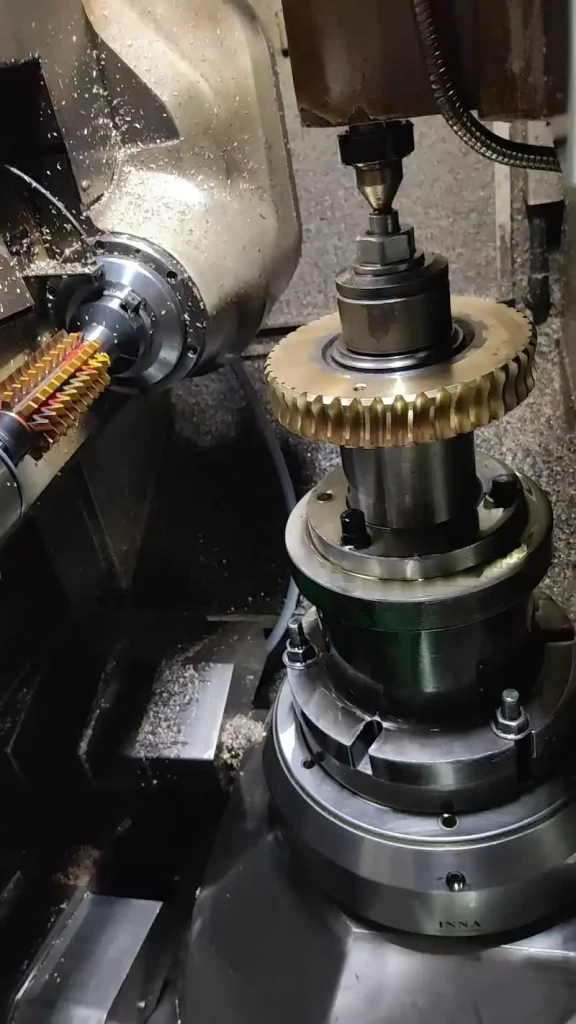
Material selection can also be adapted to the application. BELON’s published worm gear examples include tin bronze, brass, alloy steel and stainless steel, with one worm gear set using tin bronze for the wheel and alloy steel for the shaft.
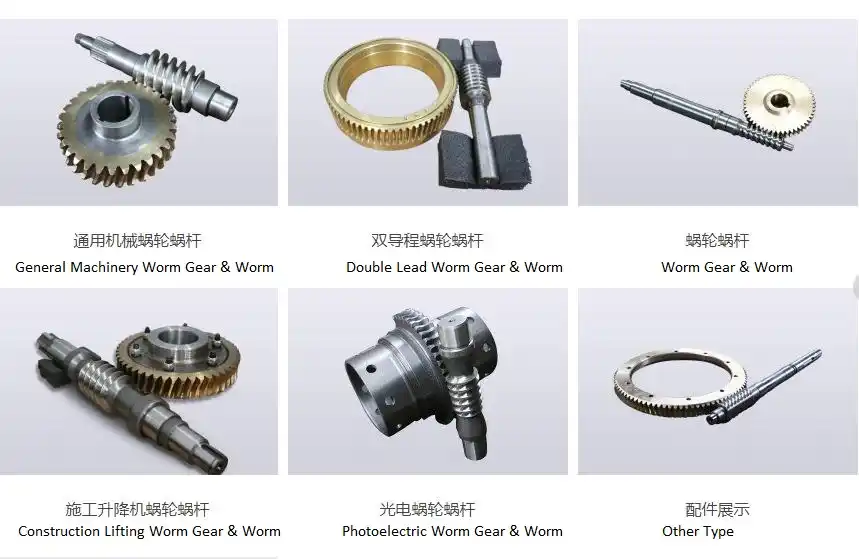
This is useful when the requirement is make this particular worm wheel to fit your existing worm, shaft and equipment.
Integrated Manufacturing and Quality Control
For custom gears, process control matters because a worm gear can look dimensionally correct and still perform poorly when paired with its mating worm.
BELON’s manufacturing process covers raw material preparation, machining, gear cutting, heat treatment, grinding and final inspection. The company also performs a set of strict worm-and-wheel meshing inspection, including checking center distance and backlash.
That last step is worth highlighting. A worm wheel should not be evaluated entirely on its own; the quality of the mating pair determines how the transmission actually behaves.
OEM and Reverse Engineering
BELON provides reverse engineering, feasibility analysis, design optimization and flexible project support as part of its service offering.
For a worm gear project, the starting point can therefore be:
- A 2D drawing
- A 3D CAD model
- An existing worm wheel
- A worn or damaged gear
- A mating worm
- A complete worm gear set
This is particularly relevant for obsolete gear replacement. If the original supplier no longer produces the part, the physical component and its mating part can provide valuable information for reconstructing the required geometry.
Flexible Production for Different Order Volumes
BELON does not position its manufacturing around one fixed order size. Its service model includes flexible project support, which is helpful for customers moving from a first prototype to recurring OEM orders.
A typical project can therefore progress through:
Prototype → Small Batch → Medium Batch → Repeat Production
This matters for custom worm gears because the first order is often relatively small. Once the gear has passed installation and performance testing, the requirement may become a recurring production order.
BELON’s manufacturing plant covers approximately 200,000 m² and is equipped with production and inspection equipment for large and small-batch requirements.
Quality Documentation and Inspection Reports
Depending on the project, BELON’s quality documentation and inspection reports to be provided before shipment include:
- Dimensional inspection report
- Material certificate
- Heat-treatment report
- Accuracy report
- Magnetic particle testing (MT)
- Ultrasonic testing (UT)
- Meshing test report
For example, BELON’s worm gear production range specifies Module 0.2–45 and diameters from 10–2,600 mm for a customized worm gear set, while worm gear accuracy can reach ISO standards and higher-accuracy ground worm shafts around DIN 4.
Seeking A Right Worm Gear Manufacturing Company?
In summary, the right worm gear manufacturing company should be selected based on more than price.
Are you looking for a custom worm gear or worm wheel manufacturer in China? Contact our engineering team, send BELON your drawing, sample, or gear specifications for evaluation and quotation, and our engineering team will respond to you as soon as possible.
FAQs
Q1: What is a worm gear manufacturer?
A worm gear manufacturer is a company that manufactures worm gears, worm wheels, worm shafts, or matched worm gear sets, rather than simply reselling standard products. A manufacturer may produce parts according to drawings, CAD files, samples, or specific technical requirements.
For custom projects, manufacturers can also provide material selection, heat treatment, gear machining, inspection, and OEM production.
Q2: How do I choose a worm gear manufacturer in China?
Start by checking whether the company actually manufactures individual worm gears and worm wheels, rather than only selling complete worm gearboxes. Then compare its customization capability, manufacturing accuracy, materials, heat treatment, inspection equipment, OEM experience, production capacity, and export experience.
For a non-standard or replacement gear, it is also worth asking whether the manufacturer can work from drawings, samples, or worn components.
Q3: How much does a custom worm gear cost in China?
There is no fixed price for a custom worm gear. The cost depends mainly on size, module, material, accuracy, heat treatment, machining process, quantity, and inspection requirements.
A small, standard-accuracy worm wheel may cost relatively little, while a large or high-precision worm gear set with grinding, special materials, and detailed inspection can be considerably more expensive. The fastest way to get an accurate quotation is to provide a drawing or sample together with the required quantity and application details.
Q4: Can a manufacturer produce a worm wheel separately?
Yes. A custom worm gear manufacturer can produce a worm wheel separately when its dimensions and tooth geometry can be determined accurately.
However, the manufacturer should know the specifications of the mating worm whenever possible. Providing the existing worm, its drawing, or key parameters such as module, lead angle, number of starts, and center distance helps ensure that the new worm wheel meshes correctly with the existing component.
Q5: What materials are commonly used for worm gears?
The worm is commonly manufactured from alloy steel, carbon steel, or other steels selected according to load, speed, wear requirements, and heat treatment.
For demanding applications, the worm may be surface hardened through processes such as carburizing, induction hardening, or nitriding. The specific material and hardness should be selected together with the worm wheel material rather than independently.