
Tooth Grinding
Gear Tooth Grinding Process
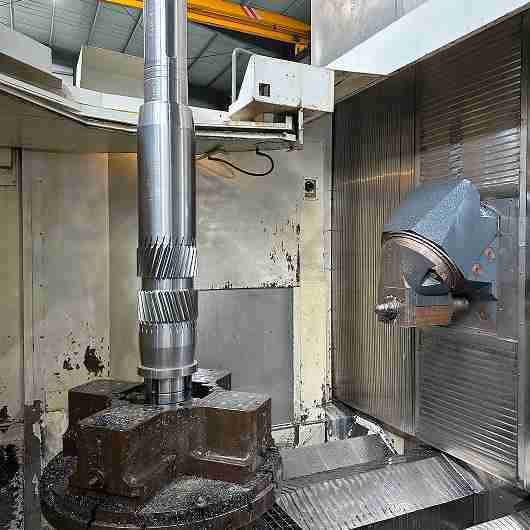
Tooth Grinding are the final processes are applied after heat treatment to correct distortion, improve geometry, and achieve the final surface finish necessary for quiet, efficient power transmission.
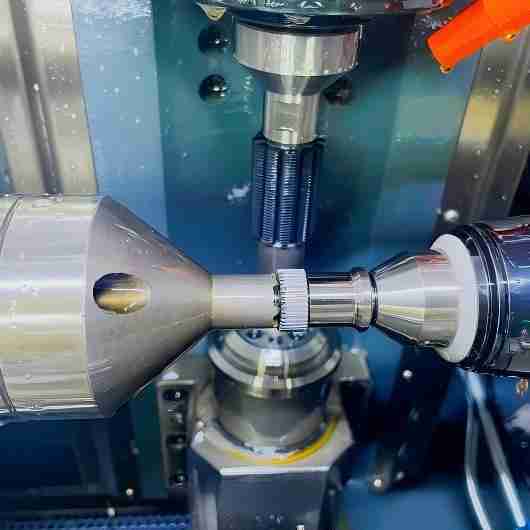
Fine Hobbing / Hard Hobbing
Fine Hobbing is a process that is performing the hobbing operation in a single setup with two different tools: a roughing hob and a finishing hob. This achieves exceptional accuracy and finish before heat treatment, minimizing the required post-hardening finishing allowance.
Hard Hobbing is using a PCBN or carbide hob to cut teeth directly into a hardened blank (approx. 45-60 HRC). This aims to eliminate heat treatment distortion issues entirely by making the gear net-shape in its final hardened state.This process revolution for medium-precision, high-volume gears, where it significantly reduces the production chain (no grinding needed).
Module: M3.0-M6.0
Diameter: 10-400mm
Accuracy: DIN5-6
Gear Lapping
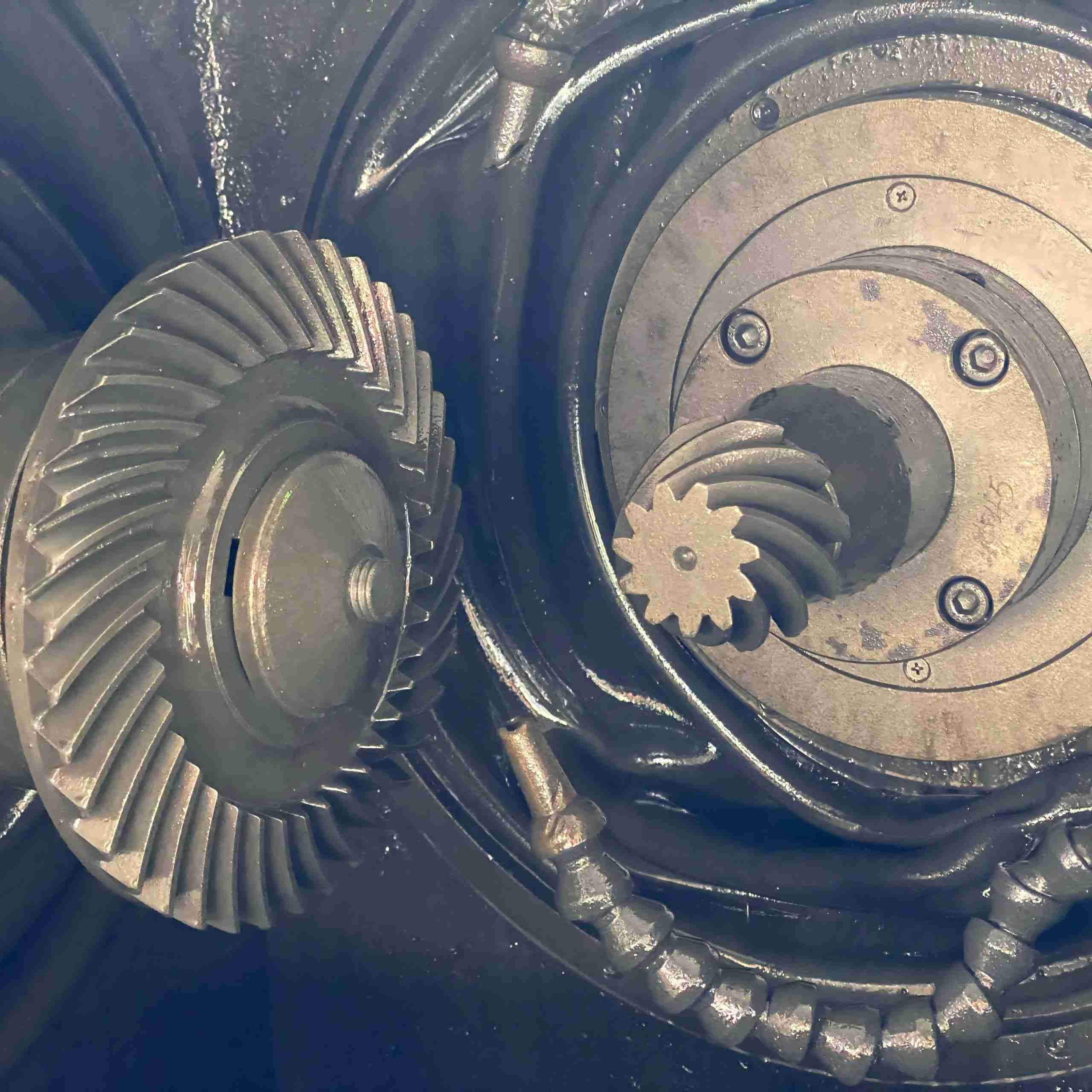
Gear lapping is a process for for finishing hardened bevel gears under gleason profile. This process can greatly improve surface finish and noise, however which could not correct geometric errors. It’s often done in paired sets (gears are lapped together and must remain matched). That is usual to use in high-volume bevel gears, where quiet operation is paramount.
Module: M3.0-M15
Diameter: 10-700mm
Accuracy: DIN7-8
Gear Grinding
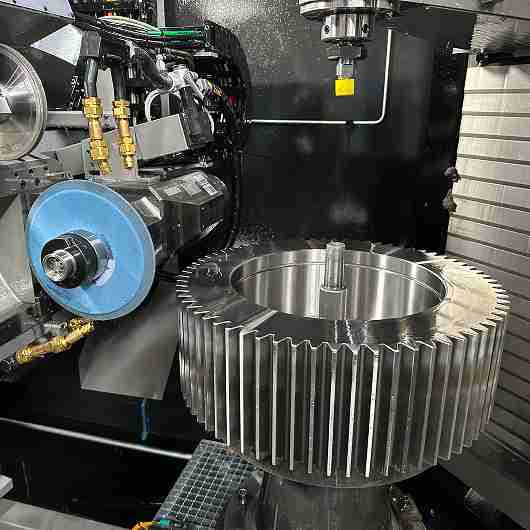
Gear Grinding is the most common high-precision method for finishing hardened gears under gleason profile. There are two methods to use an abrasive grinding wheel removes material from the tooth flanks.
1. Profile Grinding: A CNC-dressed wheel shaped to the exact tooth space profile and grinds each flank independently. The method is extremely accurate which can correct any profile modification.
2. Generative Grinding (Worm Wheel Grinding): A worm-shaped grinding wheel meshes with the gear in a continuous rolling motion (like hobbing) to generate the involute. This method is very productive for medium-to-high volumes.The gear grinding process is for correcting heat treatment distortion, achieving micron-level accuracy on tooth geometry (profile, lead, pitch), and producing a fine, consistent surface finish.
Module: M3.0-M30
Diameter: 10-1600mm
Accuracy: DIN5-6
Hard Cutting
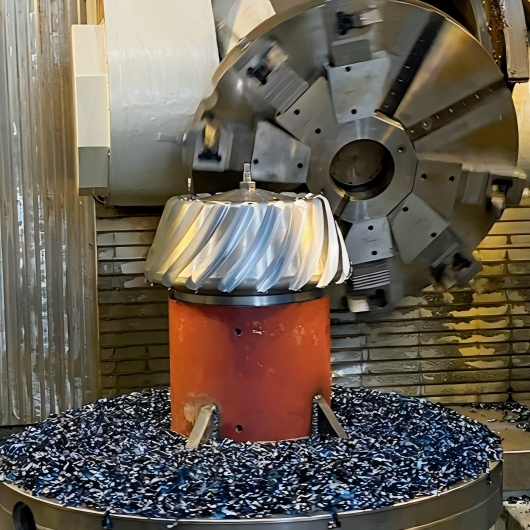
Hard Cutting is a most common high precision method for klingelnberg bevel gears which is in order to replace or reduce grinding by performing finishing operations, it is a dry or near-dry process.
Module: M3.0-M30
Diameter: 200-2600mm
Accuracy: DIN5-6
5-Axis Machining
5-Axis machining enables the direct milling of non-cylindrical gears (e.g., face gears, bevel gears, crown gears) and gearboxes as single components. It can complete part in one setup to machine all features of a complex gear housing—bore, flange, bolt holes, and even the gear teeth themselves—without re-fixturing. This guarantees unmatched positional accuracy. This is the ultimate solution for manufacturing complex gear prototypes or specialized gears in low quantities directly from a solid block or more often used for low volume or complex spirial bevel gears.
Transmission Partner