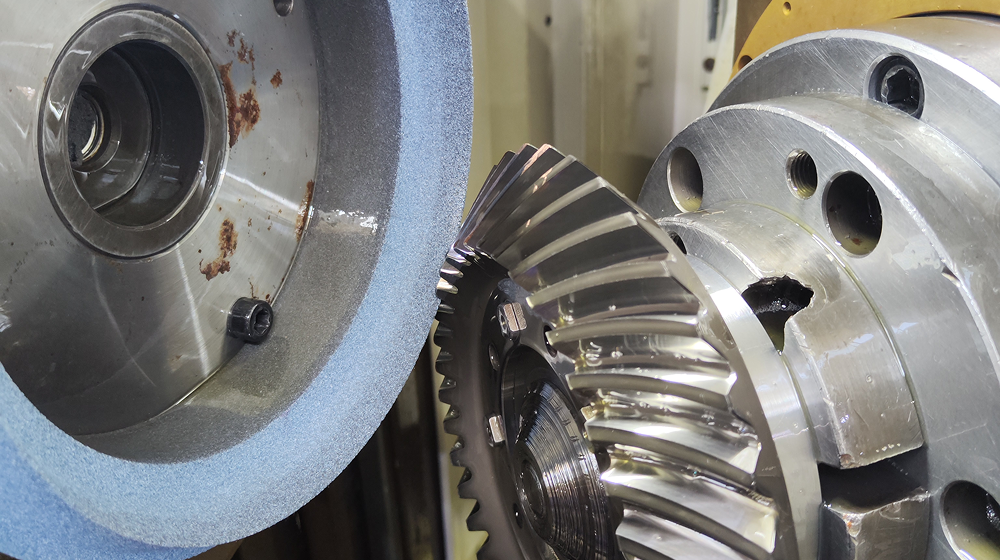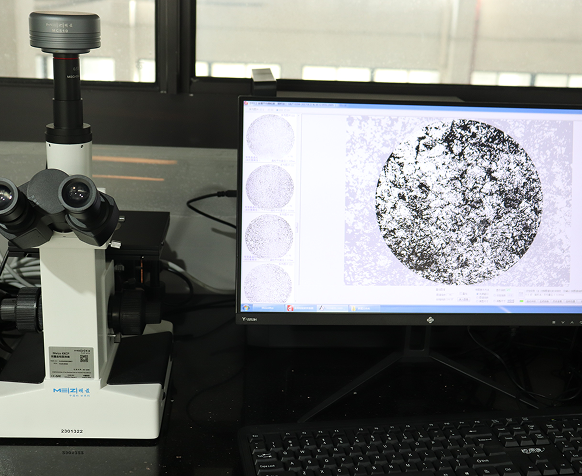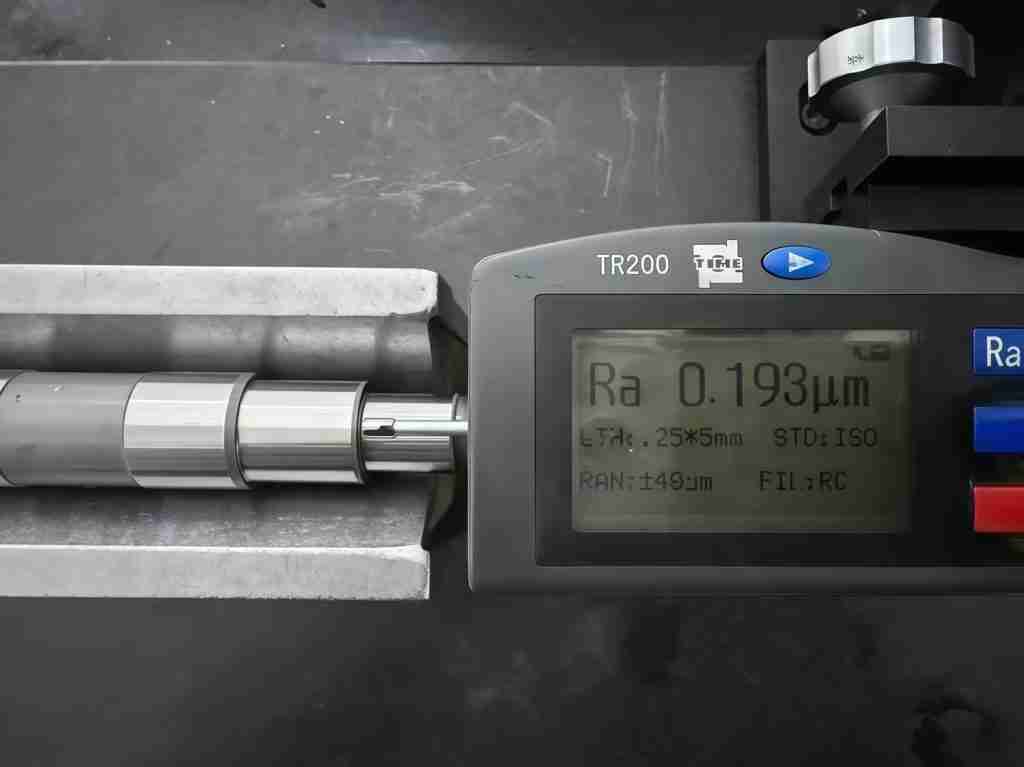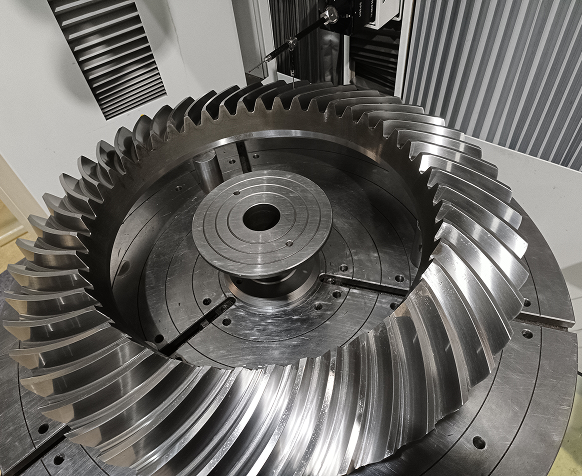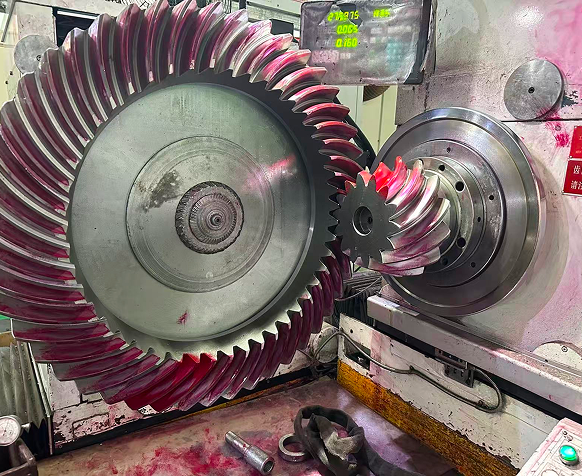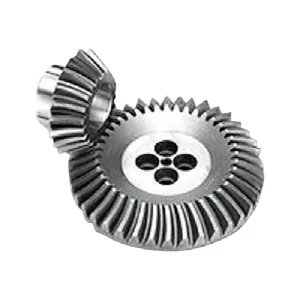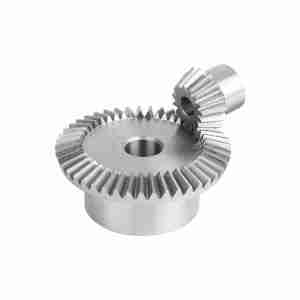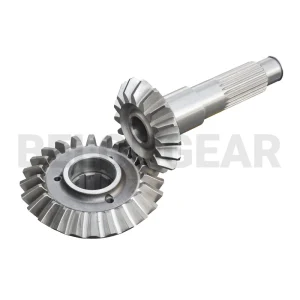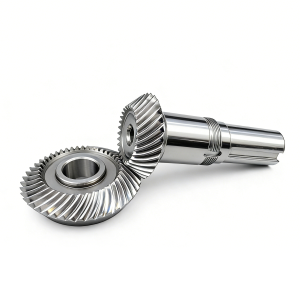
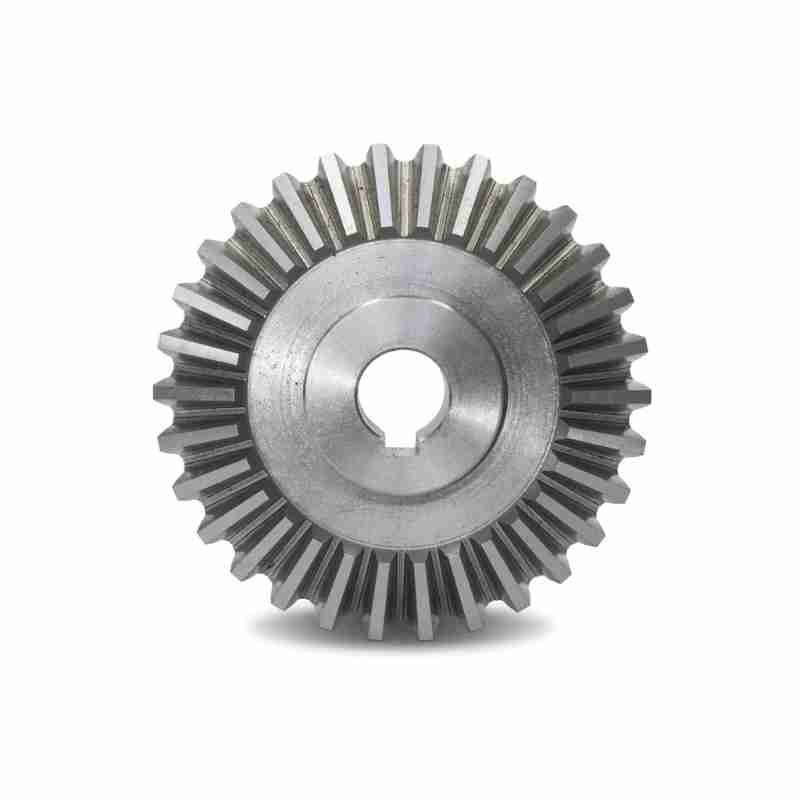
The tooth profile of a Zero Degree (Zerol) Bevel Gear lies between that of a straight bevel gear and a spiral bevel gear. Its core feature is that the spiral angle is approximately 0°, combining the high efficiency and low noise of straight bevel gears with the smoothness of spiral bevel gears. Its main applications are concentrated in high-precision, low-noise, and compact mechanical transmission scenarios:
- Spatial Directional Transmission
Transmits motion between intersecting shafts (typically 90°), changing the direction of power (e.g., right-angle drive). Typical scenarios include:- Automotive Differentials (especially high-end models, for noise reduction);
- Aerospace Equipment (e.g., satellite attitude control, aircraft landing gear transmission);
- Medical Devices (surgical robot joints, CT scanner rotating gantries, dental CBCT turntables).
- High-Precision and Low-Noise Transmission
The tooth surfaces engage progressively (smoother than straight bevel gears), resulting in extremely low noise and vibration (a reduction of 5–10 dB). Suitable for environments with strict noise requirements:- Precision Machine Tools (e.g., spindle drives in machining centers);
- High-End Medical Devices (operating room and imaging suite equipment);
- Office Automation Equipment (e.g., drives in high-end printers and scanners).
- High Load Capacity and Compact Structure
Compared to straight bevel gears, Zerol gears have a higher contact ratio, enabling them to withstand greater impact loads and torque while maintaining a compact structure. Suitable for:- Construction Machinery (e.g., slewing mechanisms in small cranes);
- Exoskeleton Robots (joint drives);
- Pump Equipment (e.g., medical infusion pumps, chemical metering pumps).
- Compensation for Installation Errors
The tooth design can compensate for minor axis intersection angle deviations or installation errors, improving transmission stability.