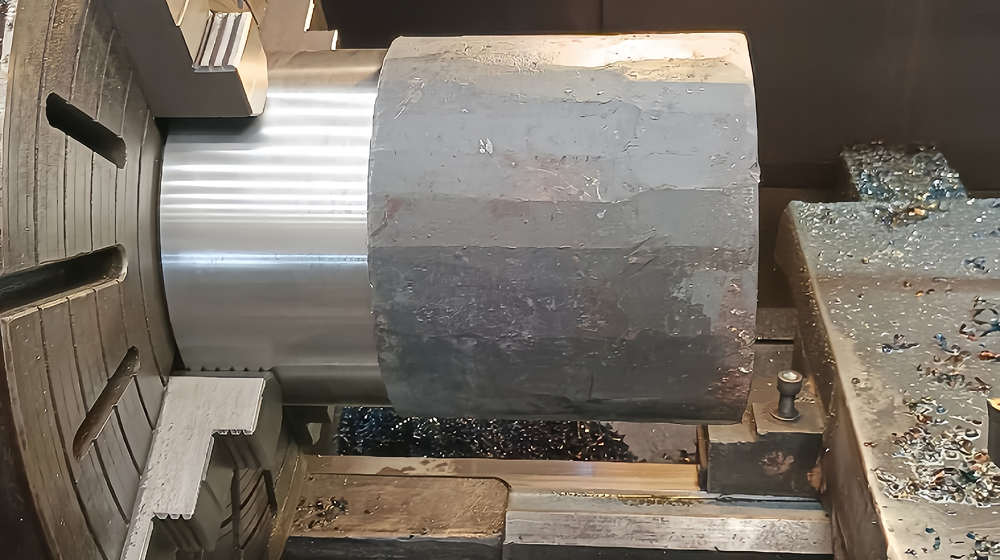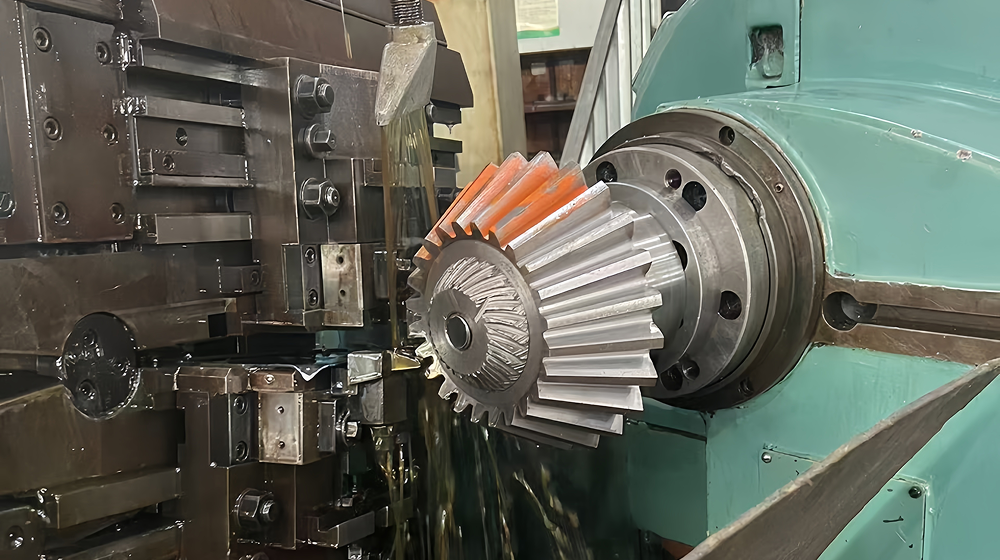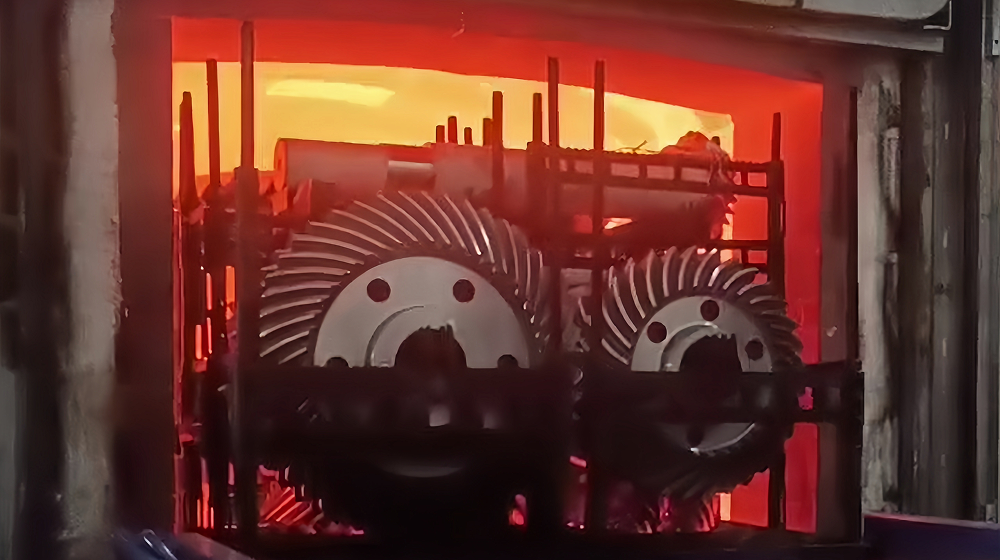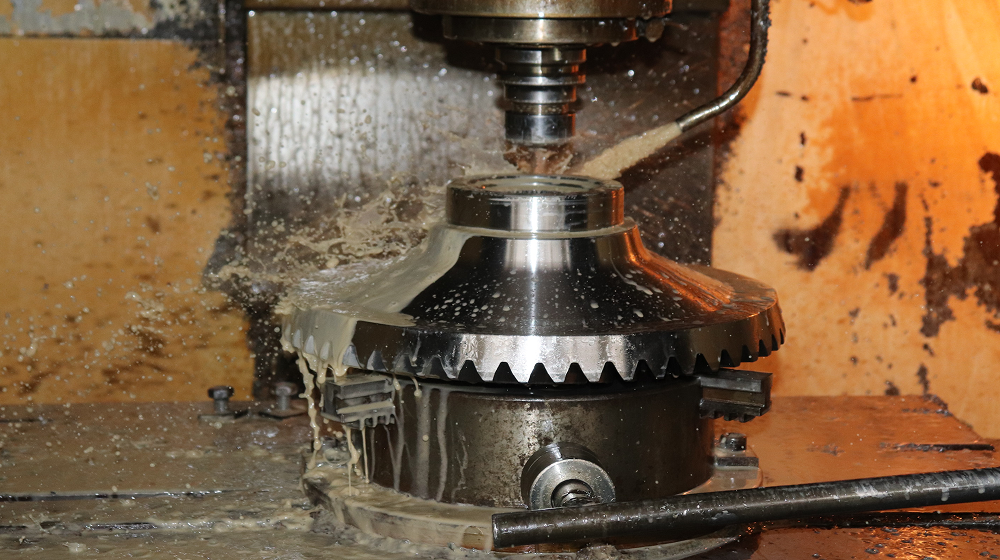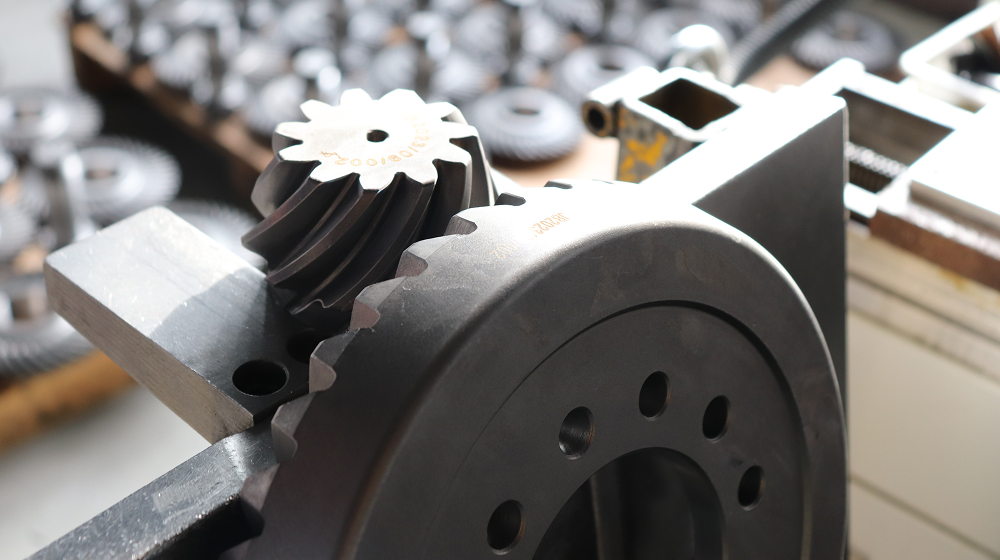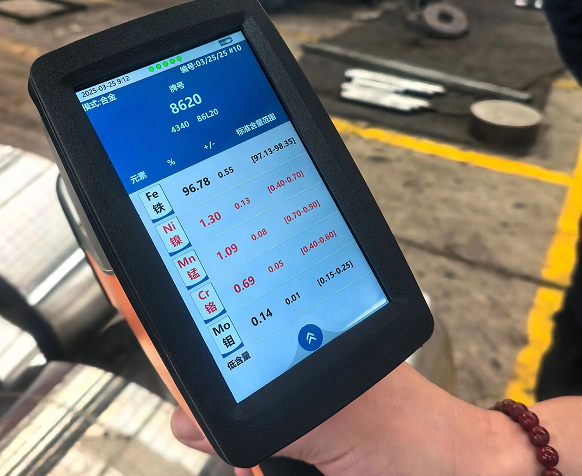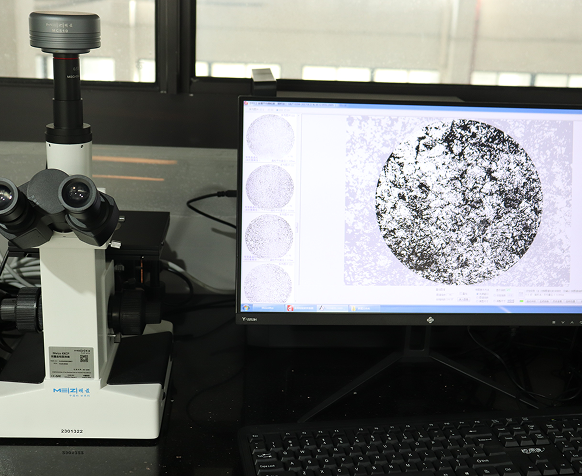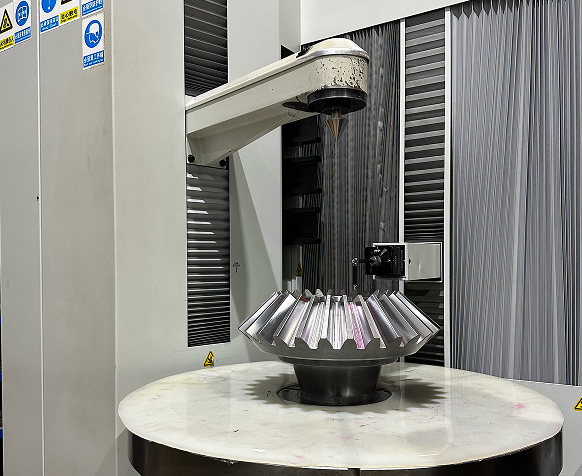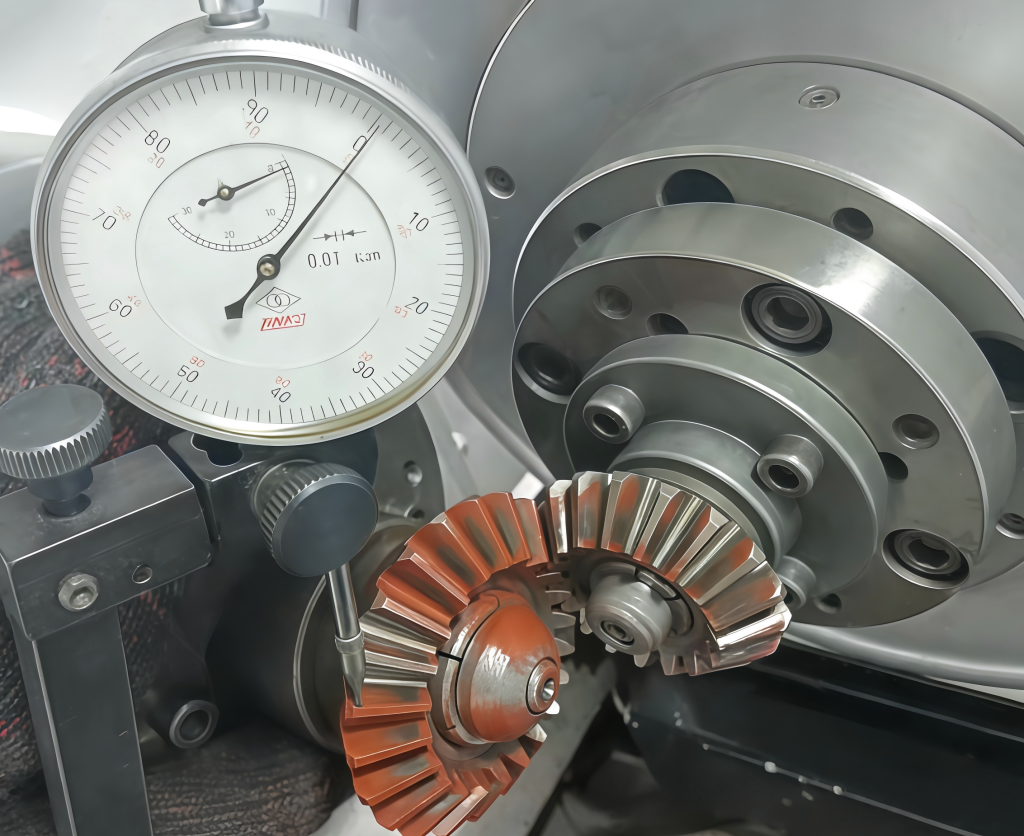

A bevel gear with shaft is a pre-assembled unit of bevel gear and shaft for power transmission between intersecting shafts. This component is an integral straight bevel gear with shaft, commonly referred to in mechanical design as a bevel gear shaft. Its teeth are arranged in straight, radial lines across a conical surface, facilitating power transmission between intersecting shafts—most typically at a 90-degree angle.
The Shaft (Key Differentiator)
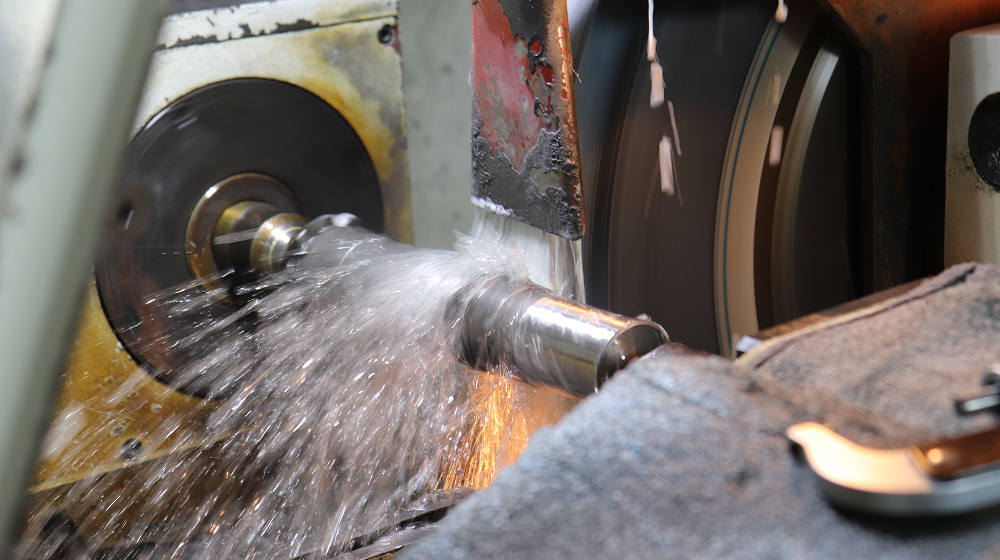
A smooth, polished shaft extension (featuring a journal or shoulder structure) is prominently visible on the left side of the image. This design signifies that the gear body and the shaft are integrated into a single unit. This integration can be achieved through one-piece forging/cutting or via an interference fit (press-fit) assembly.
Central Bore
The gear face retains a central bore. This aperture may serve multiple purposes: acting as a pilot hole during assembly, functioning as a weight-reduction (lightening) hole, or providing a clearance hole for specific locking mechanisms.
Advantages of the “Shaft-Integrated” Design
Consolidating the gear and shaft into a unified or semi-unified structure offers substantial practical benefits in industrial applications:
- Reduced Assembly Complexity
It eliminates the need for secondary operations such as machining internal bores and keyways, followed by thermal fitting or press-fitting the gear onto the shaft. This removes assembly-induced clearances and backlash, significantly enhancing transmission accuracy.
- Superior Rigidity
The monolithic structure exhibits higher bending strength and overall rigidity, delivering superior performance under heavy torque and impact loads.
- Ready-to-Install Convenience
Upon receipt, the customer only needs to mount support bearings at the designated bearing seats on both ends. This greatly streamlines the assembly process of the end equipment.