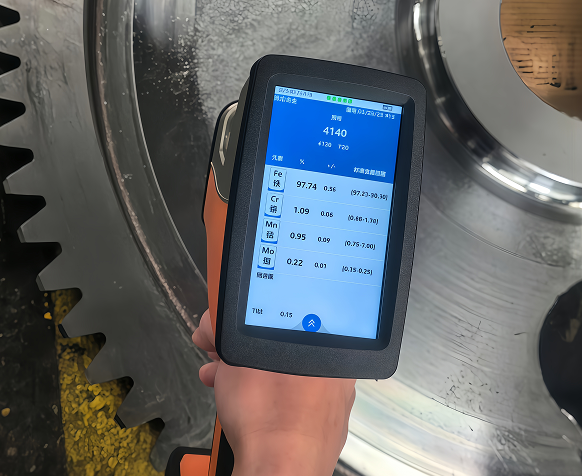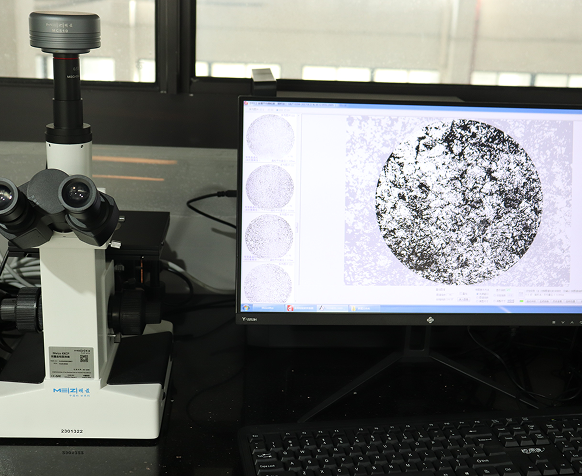

A precision spur gear is a cylindrical gear with straight, parallel teeth cut and finished to a controlled accuracy grade such as DIN 5–6, so it transmits motion on parallel shafts with minimal backlash, low vibration and predictable tooth-to-tooth consistency.
Core characteristics
- No axial thrust — teeth run parallel to the axis, so the mesh produces only tangential and radial loads. Bearing arrangements stay simple with no thrust bearings needed, which is the most practical engineering advantage over a helical gear.
- Simple to make and inspect — hobbing or shaping forms the teeth, inspection covers fewer items, and cutters are universal, so cost and lead time beat a helical gear of the same accuracy.
- Lower contact ratio, higher noise and impact — transverse contact ratio is only about 1.5–1.8, with no overlap ratio, so vibration and noise run higher than a helical gear of equal size and torque capacity is lower. This is a limitation worth stating plainly.
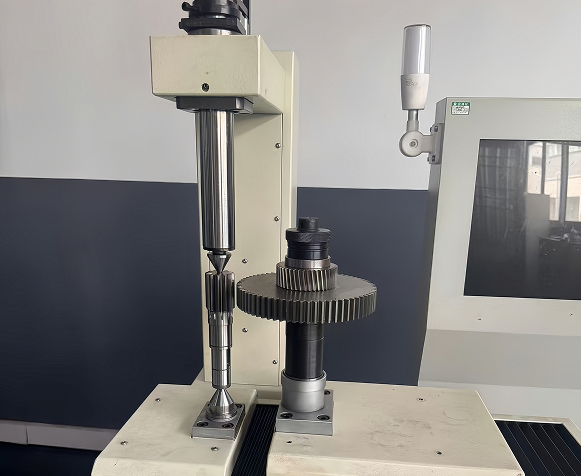
- Accuracy lives in four indices — total cumulative pitch deviation, total profile deviation, total lead deviation and radial runout. A precision gear requires all four to converge at once, especially lot-to-lot consistency after grinding.
- Controllable backlash — precision spur gears can be matched to a backlash class, which suits servo axes, indexing and robot joints where lost motion matters.
- Grinding after heat treatment is the precision gate — carburising distorts the part, and grinding is the necessary step to hold DIN 5–6, lead accuracy and runout.
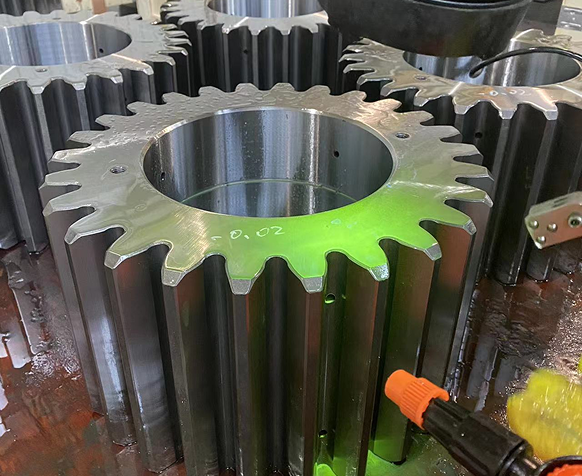
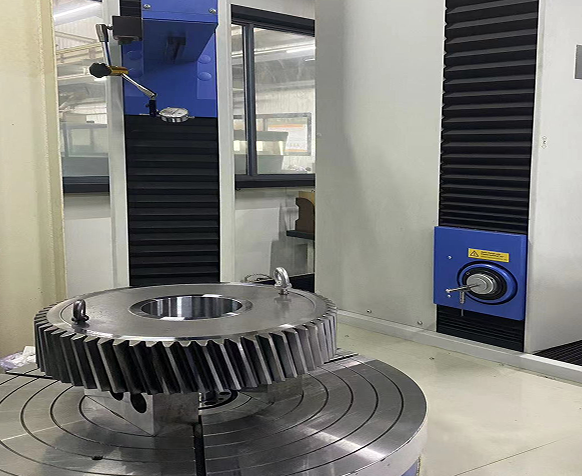
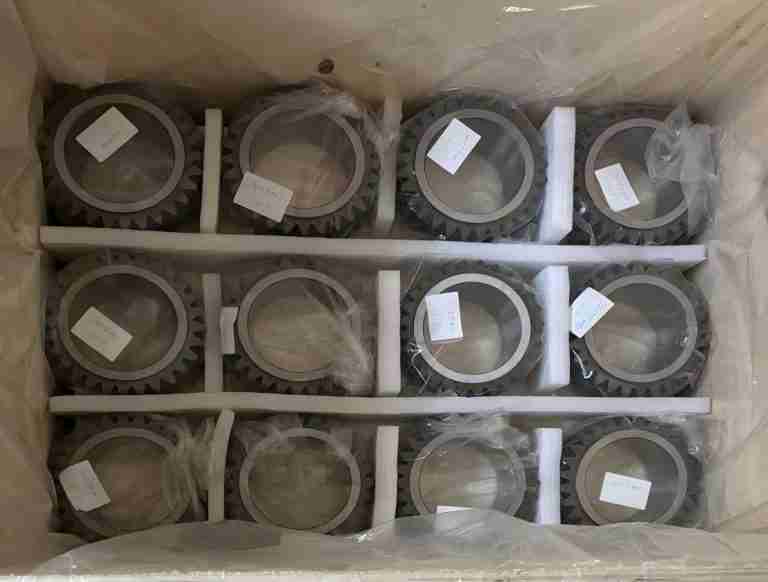
With rich experience in custom gear manufacturing field, BELON can provide you with precision spur gears based on your application requirements and also can provide you with reverse engineering support for your existing sample. The gear shown in the photo is made by BELON used for robot. It is manufactured from 18CrNiMo7-6 and reaches precision of DIN 6.