Applications Of Planetary Gears In Robotics
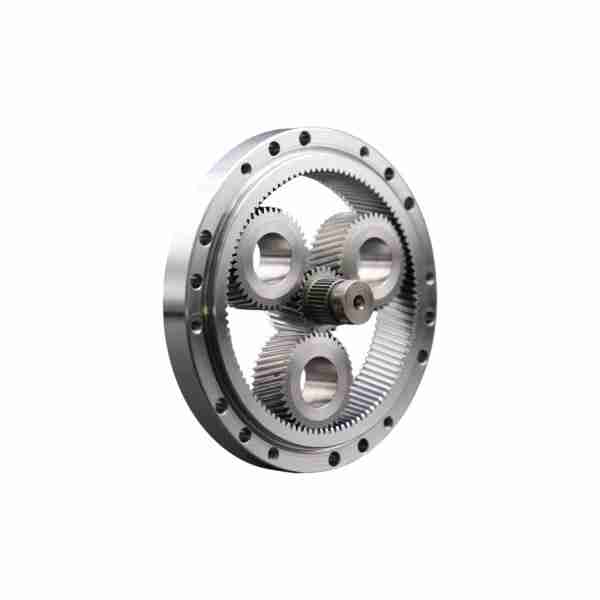
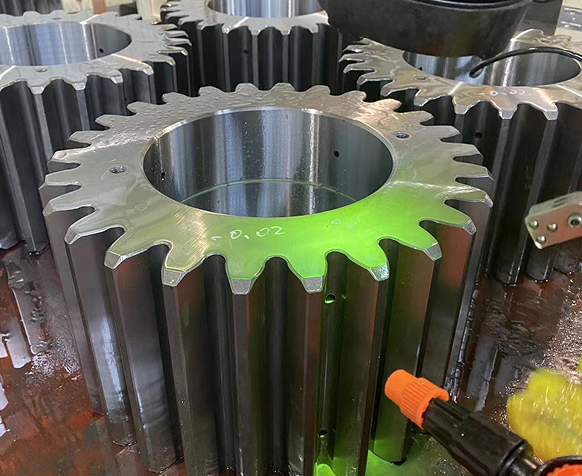
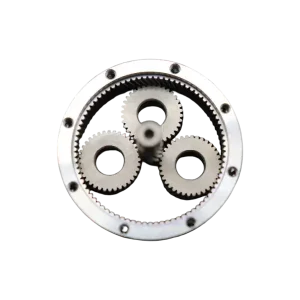
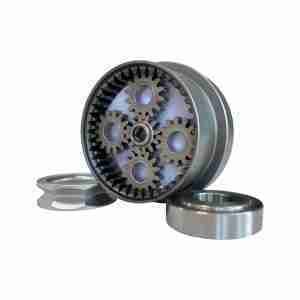
Planetary gear systems, also known as epicyclic gearing, have become indispensable in modern robotics due to their unique combination of high torque density, compactness, and exceptional positioning accuracy. Unlike traditional parallel-axis gears, planetary gears feature a central sun gear, multiple planet gears, a ring gear, and a planet carrier. The structure offers significant advantages for robotic applications where space, weight, and performance are critical.
One of the most prominent applications is in robot joint actuation. In articulated robotic arms, each joint requires a compact gearbox capable of providing high torque while maintaining precise motion control. Planetary gears excel in this regard, offering high reduction ratios within a small footprint. This allows motors to be mounted directly alongside the joints, reducing overall size. Furthermore, compared to simpler gear systems, the load sharing among multiple planetary gears results in higher stiffness and less backlash, which is crucial for repetitive tasks such as pick-and-place or assembly.
Collaborative robots (cobots) increasingly rely on planetary gearboxes as well. Cobots require lightweight, backdrivable transmissions for safe human-robot interaction. Advanced planetary designs with reduced friction enable force-sensitive applications such as polishing or medical assistance. Additionally, planetary gears are found in mobile robot drivetrains. For example, wheel hub drives of autonomous guided vehicles (AGVs) or service robots use planetary gearboxes to enabling smooth start-stop motion and efficient climbing of ramps.
Another emerging use is in robotic exoskeletons. These wearable devices demand extremely compact, high-torque actuators for hip, knee, and elbow joints. Planetary gears offer the necessary power density while maintaining a low moment of inertia, which improves the exoskeleton’s response to human movement. In legged robots, such as quadruped or bipedal platforms, planetary gears also plays an important role.
Furthermore, planetary gears are often combined with other drive components. For example, a harmonic drive may be paired with a planetary pre-stage in surgical robots to achieve ultra-high reduction with zero backlash. However, planetary gears remain the preferred choice where cost, durability, and simplicity are paramount.