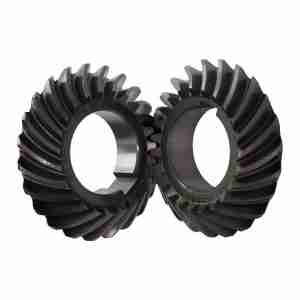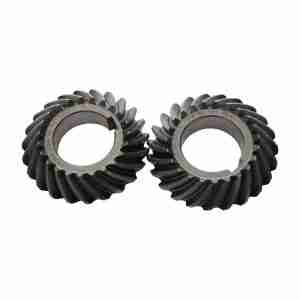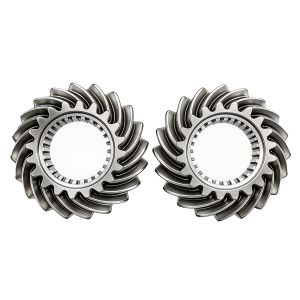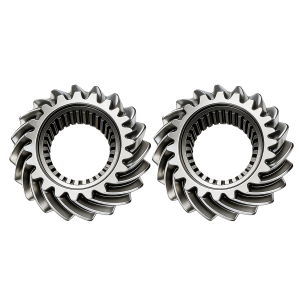
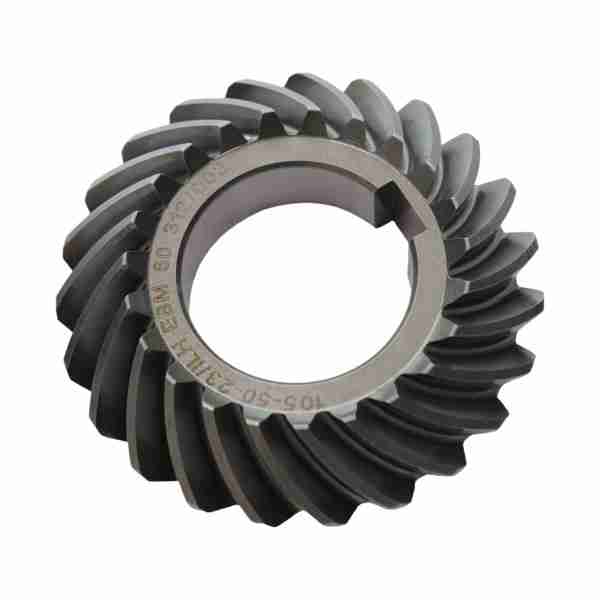
Miter Gears have the following advantages:
Compact 90-degree redirection: Achieves a right-angle change in power direction within a confined space, simplifying layouts.
Constant speed transmission: Output speed is predictable, making system logic straightforward.
Simplified design matching: Symmetrical parameters make design and selection confirmation easier.
High transmission efficiency: Minimal power loss.
Limitations/Challenges of Miter Gears:
Only changes direction, no speed or torque variation: This is an inherent characteristic, not a drawback.
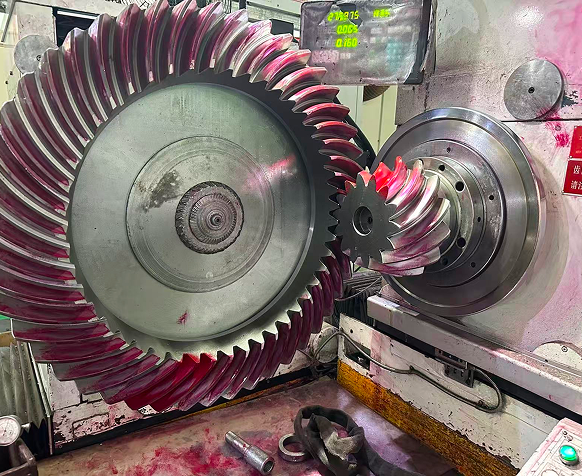
High alignment requirements: Installation precision directly affects noise, vibration, and service life.
Generation of axial thrust: Especially in spiral bevel types, this requires additional bearings to withstand.
Lubrication challenges: In vertical transmission layouts, lubricant struggles to reach the upper gear and bearings, necessitating special design considerations (e.g., oil paths or forced lubrication).
Presence of backlash: Gear-to-gear clearance can affect motion accuracy, requiring strict control in precision applications like robotics.