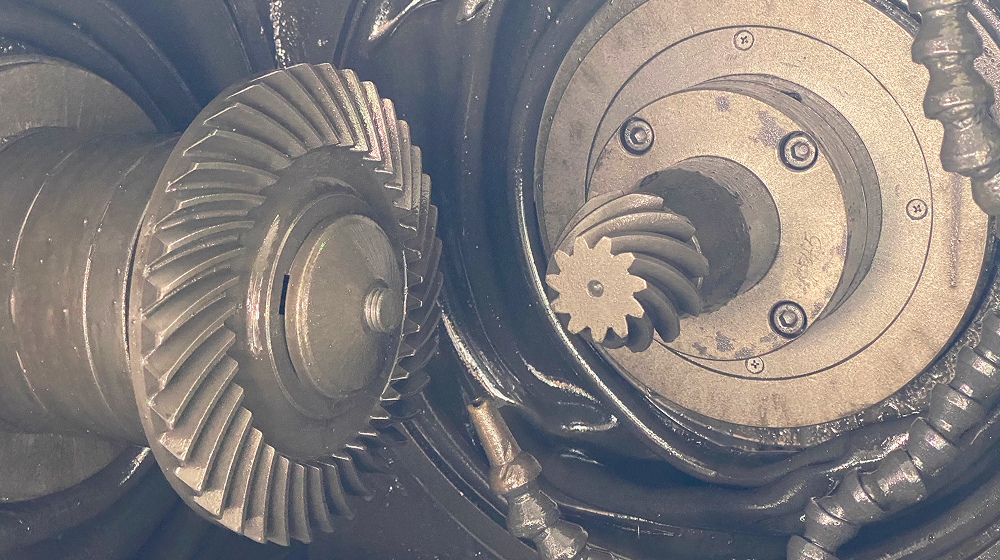

Spiral bevel pinion is the smaller spiral-toothed bevel gear that meshes with a crown gear to transmit torque and change rotation direction between intersecting shafts.
Key Features of Spiral Bevel Pinion
- Curved spiral tooth design enables smoother, quieter meshing and higher load capacity than straight bevel gears
- It is the smaller driving gear of the spiral bevel gear pair
- Teeth engage gradually, reducing impact and vibration under shock and heavy torque
- Usually integrated with a shaft (pinion shaft) for direct installation into gearboxes
- Requires precise tooth contact pattern control to avoid premature wear or tooth breakage
- Suited for high-speed, continuous-duty heavy equipment drives
Spiral Bevel Pinion VS Spiral Bevel Gear
- Spiral Bevel Pinion: The smaller driving member; fewer teeth; higher rotational speed; transmits input torque to the gear; often built as one piece with shaft
- Spiral Bevel Gear (Crown Gear): The larger driven member; more teeth; lower rotational speed; receives power from the pinion; usually mounted separately on the output shaft
- Ratio relation: Speed reduction is achieved based on the tooth count difference between pinion and gear
- Shared property: Both have curved spiral teeth and work on intersecting shafts, normally 90°
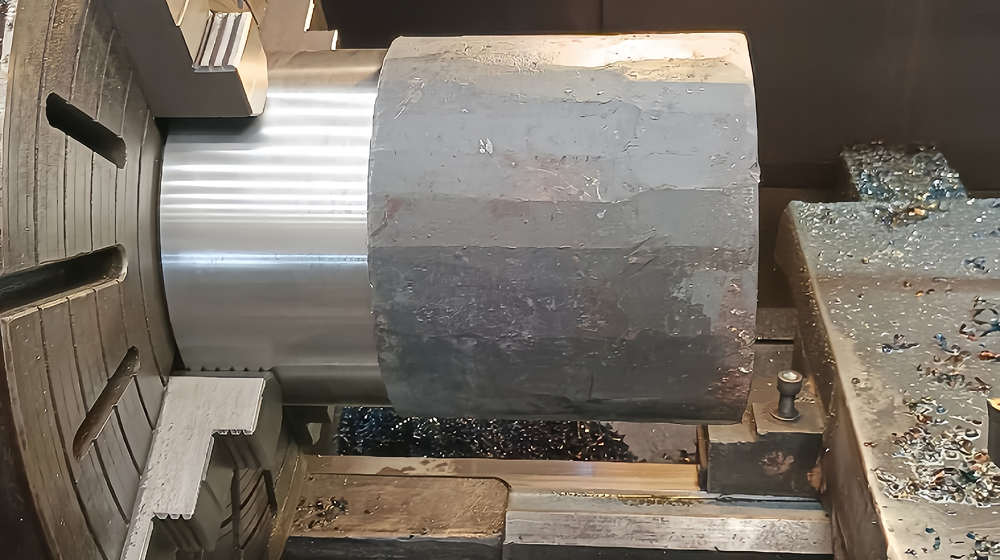
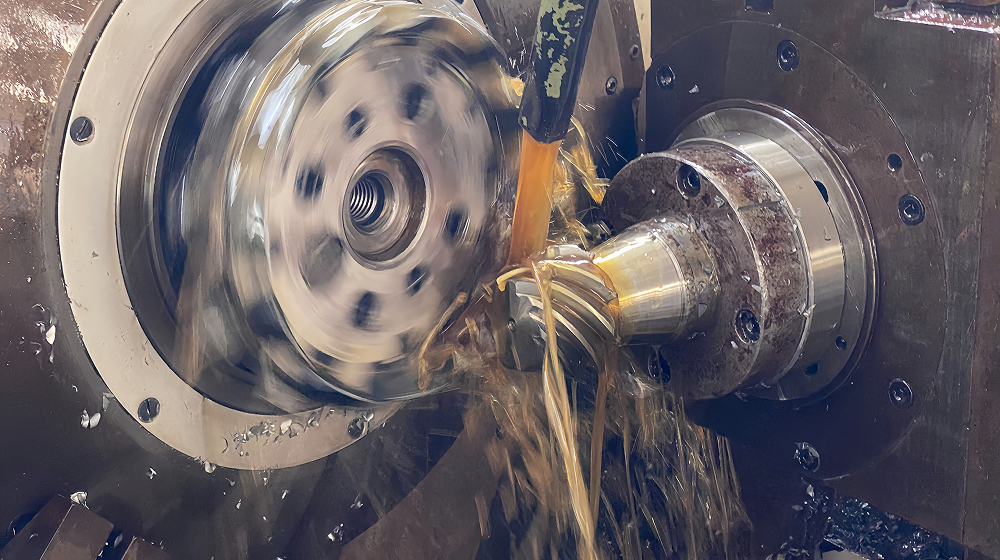
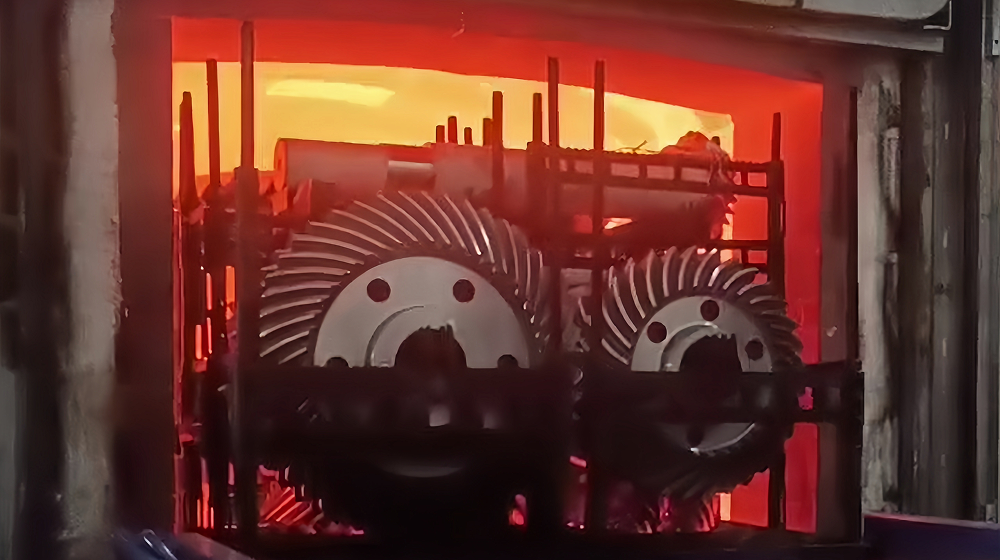
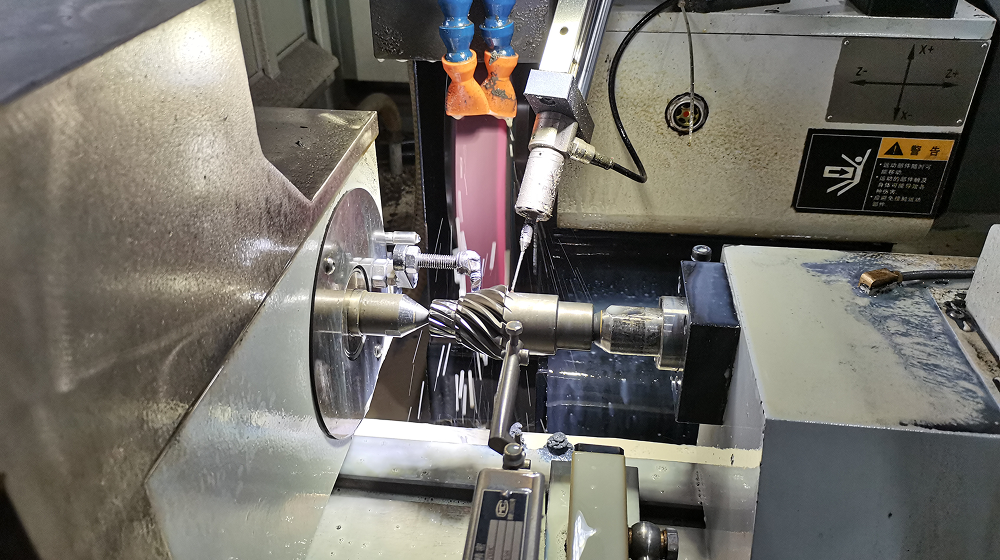
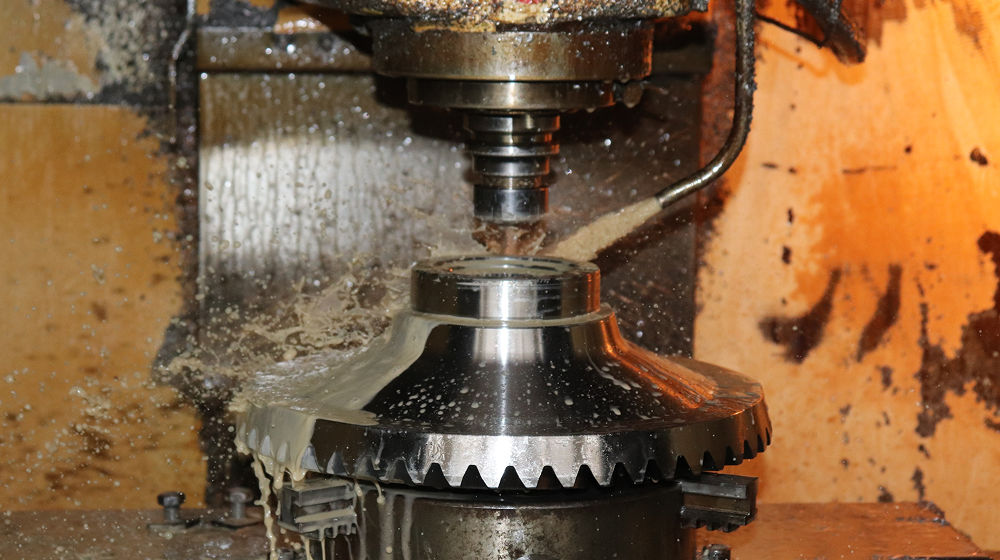
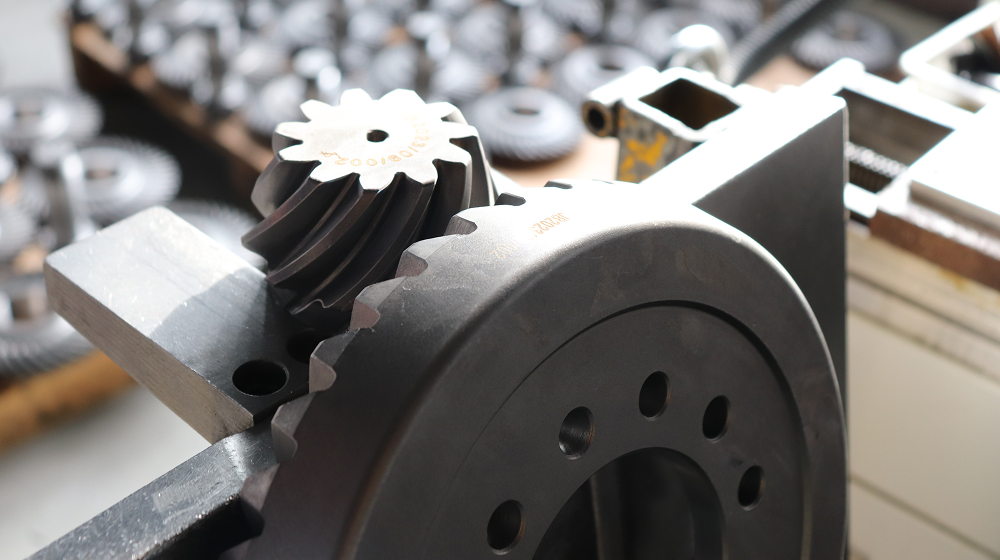
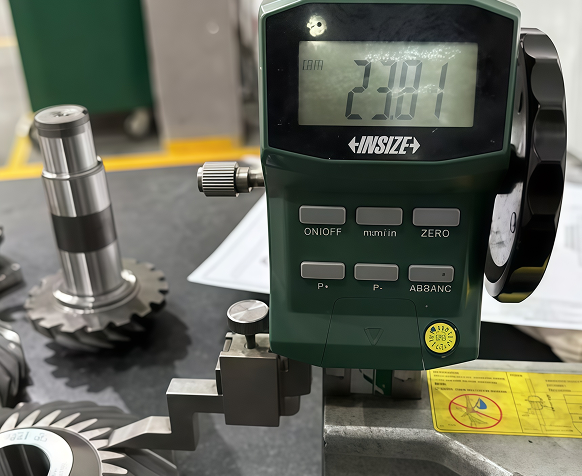
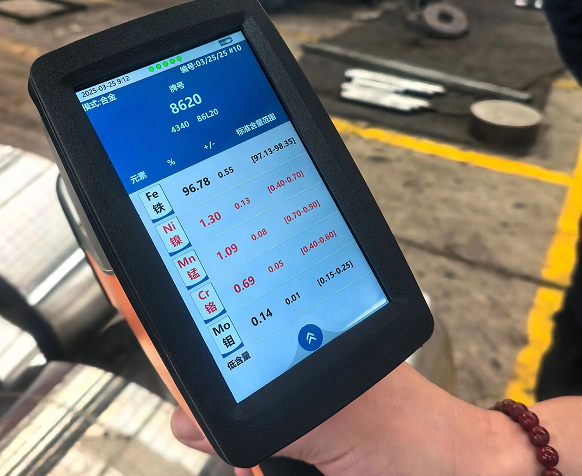
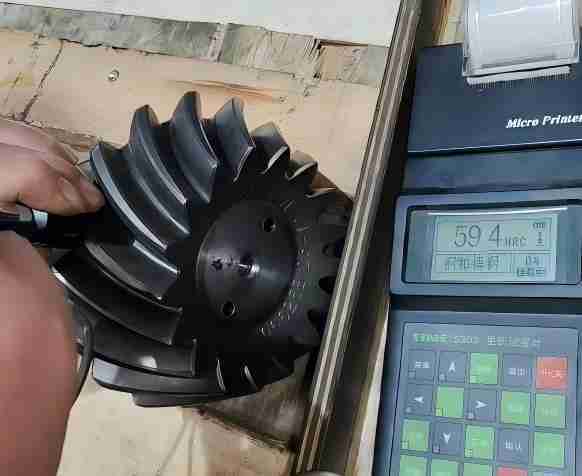
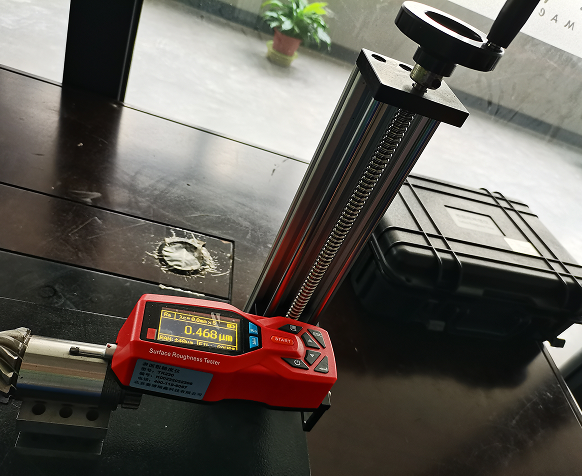
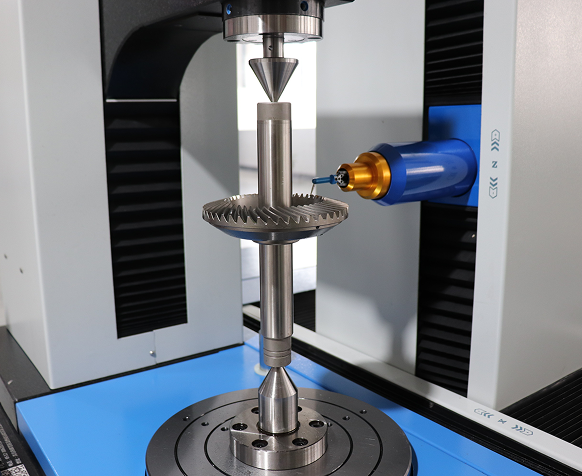
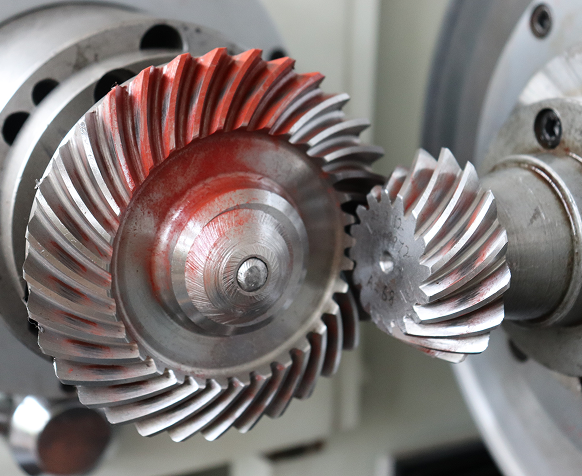
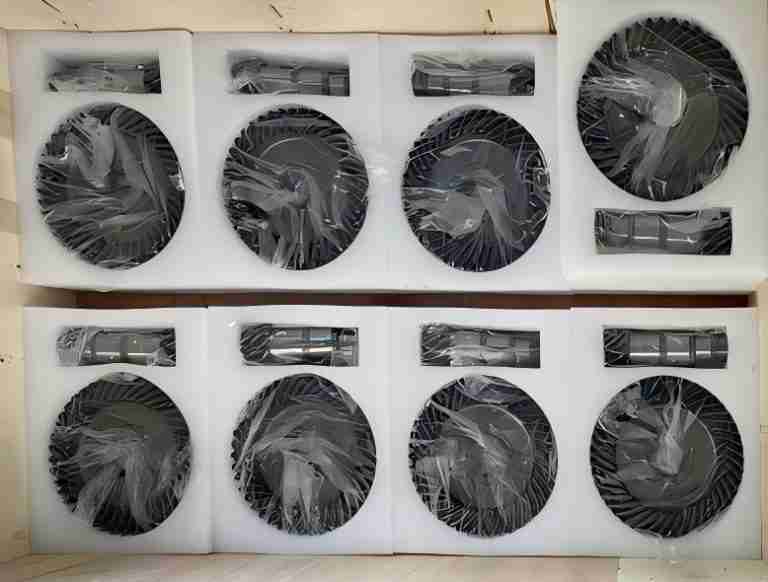
The spiral bevel pinion as shown in the photo is made by BELON and used for industrial gearbox. It is manufactured from 20MnCr5 with DIN 7 precision. It is a lapped bevel pinion. Lapping proceeds in multi‑stage steps: coarse abrasives for preliminary surface leveling, then finer compounds to deliver near‑mirror tooth surfaces (Ra below 0.4 μm).
BELON is able to provide you with custom spiral bevel pinion from your gear drawing or sample.