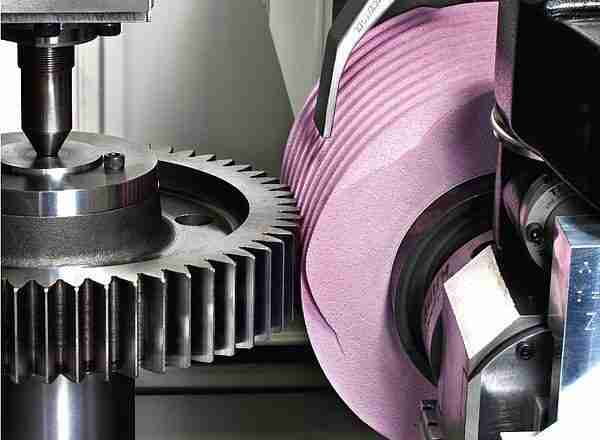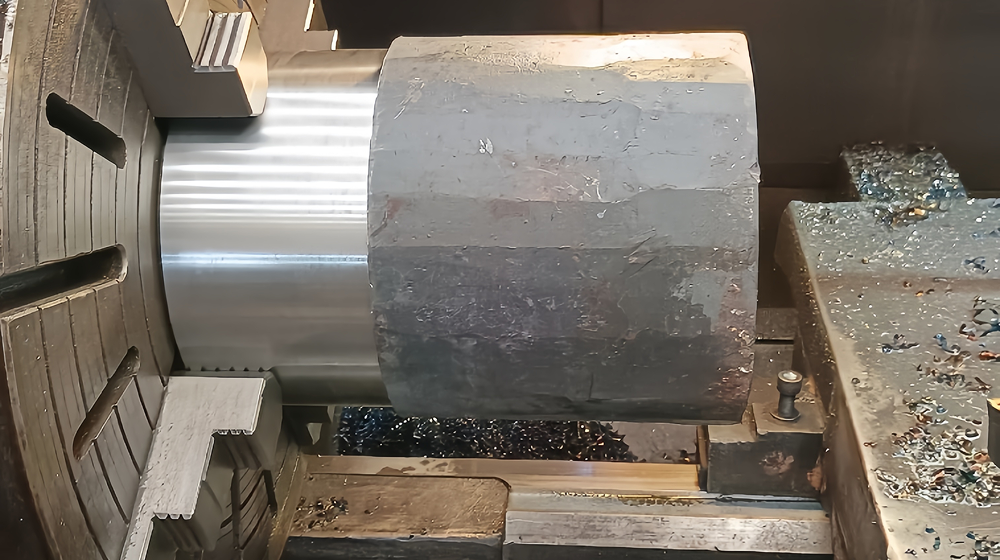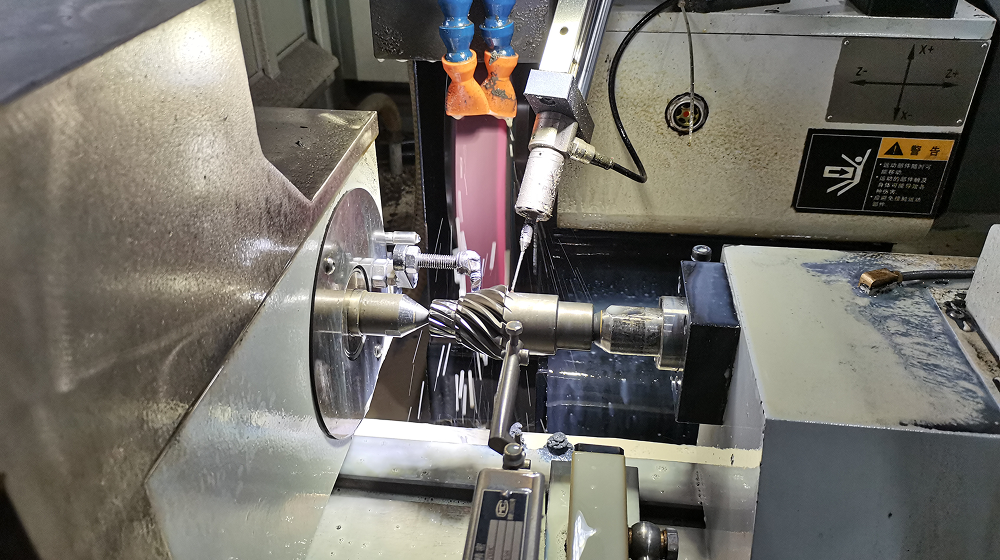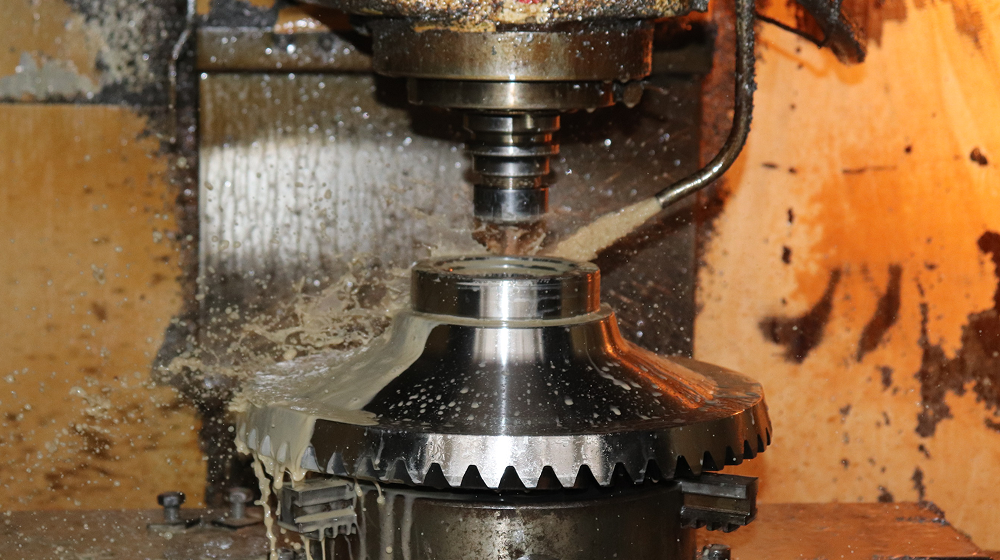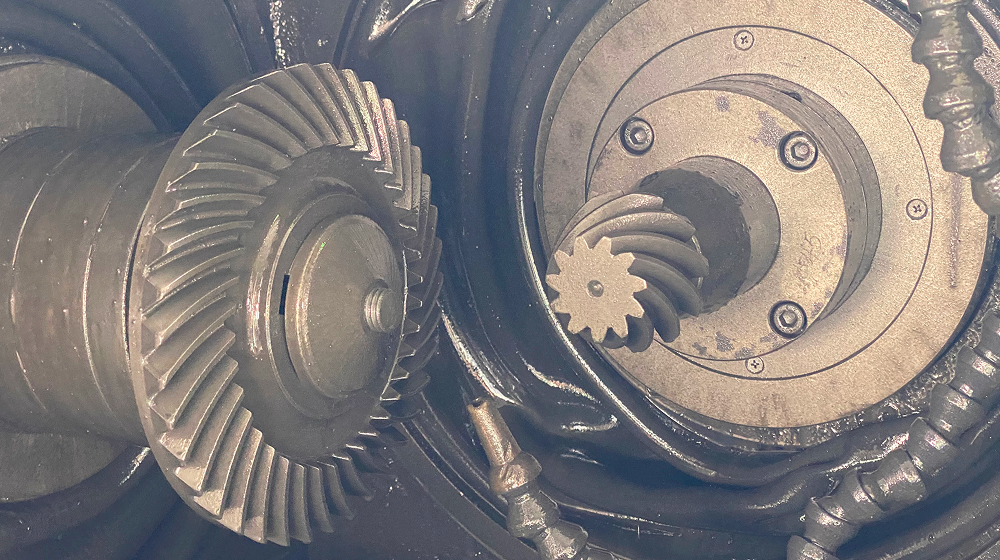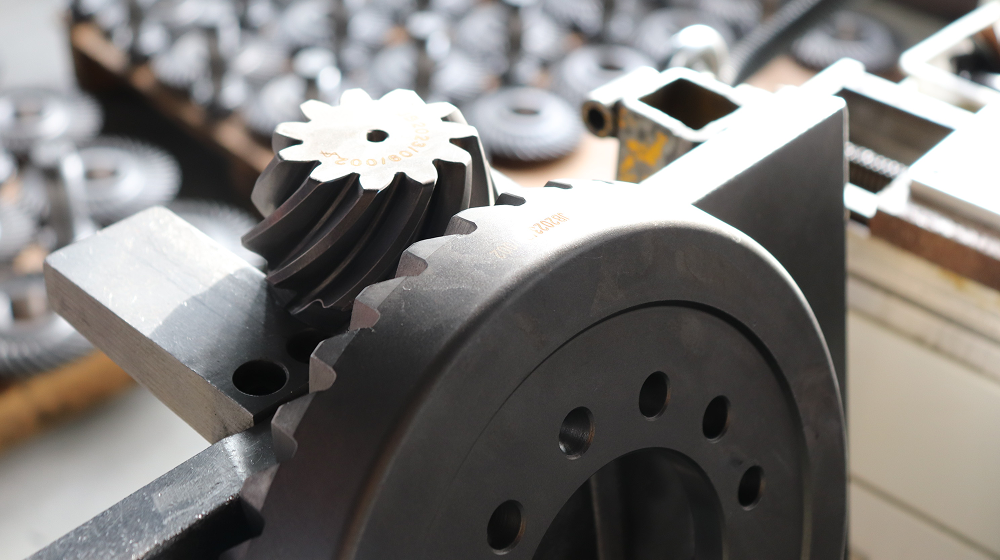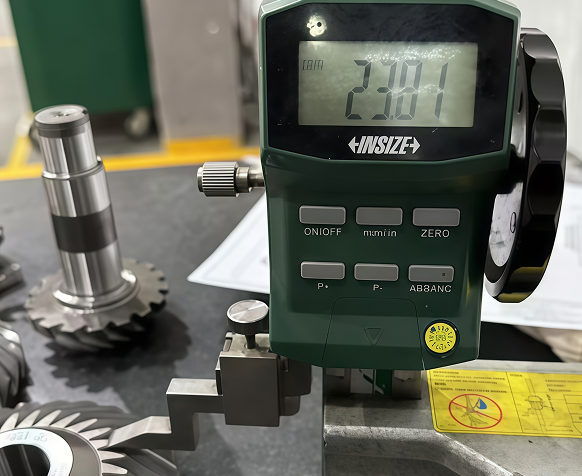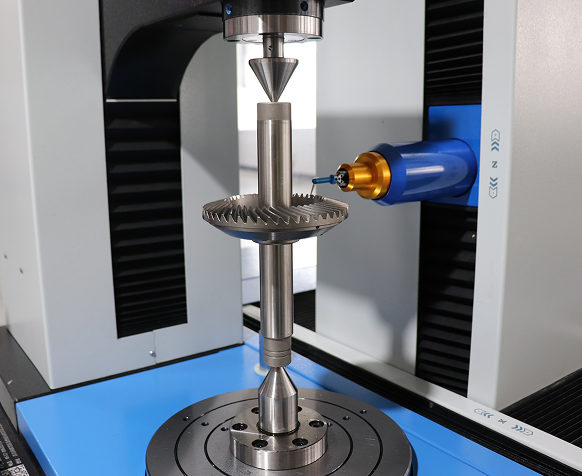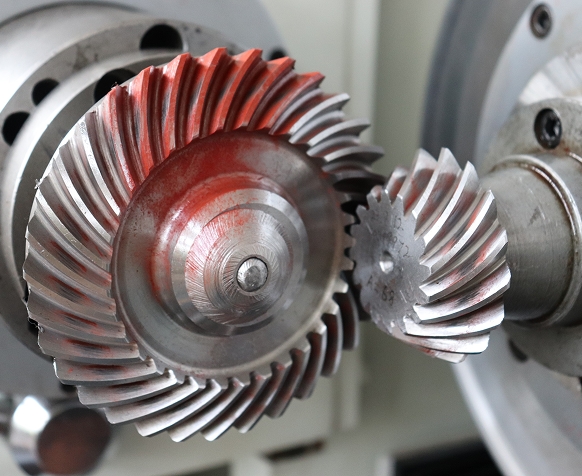
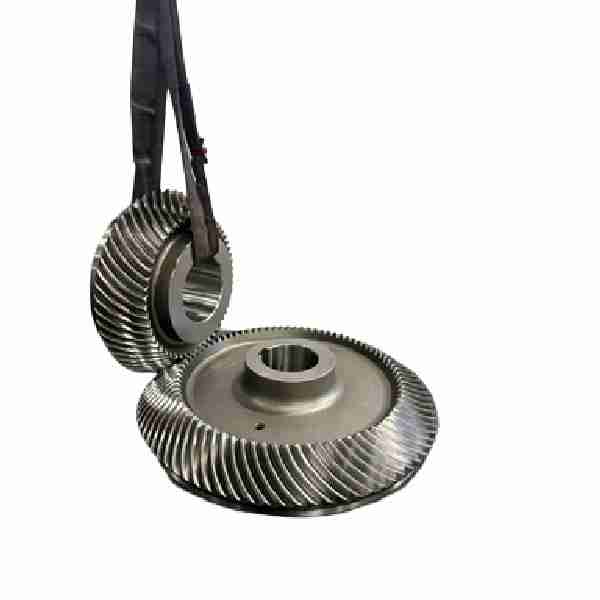
A spiral bevel gear is designed for intersecting shafts where high torque, smooth motion, and long-term reliability are required. Unlike straight bevel gears, the teeth of a spiral bevel gear are curved and positioned at a spiral angle. This curved shape allows multiple teeth to stay in contact at the same time during rotation. One of the most important technical features of a spiral bevel gear is its contact ratio. Contact ratio refers to how many teeth are touching each other at any given moment. A straight bevel gear typically has a contact ratio between 1.0 and 1.5. This means only one tooth carries most of the load at a time. When that tooth reaches the end of its contact, it hands off to the next tooth. This hand-off creates a small but noticeable impact.
A spiral bevel gear has a much higher contact ratio, typically between 2.0 and 3.0. This means two or even three teeth share the load at the same time. The result is smoother power transmission, less vibration, and lower noise. The load spreads across multiple teeth, so no single tooth carries too much stress. This is why a spiral bevel gear can handle higher torque than a straight bevel gear of the same size.
The spiral angle of a spiral bevel gear is usually between 15 and 35 degrees. A smaller spiral angle, like 15 degrees, creates less axial thrust but also provides less overlap between teeth. A larger spiral angle, like 35 degrees, gives a higher contact ratio and smoother operation but creates more axial thrust that must be handled by bearings.
Choosing the right spiral angle is a balancing act. For high-speed applications where smoothness is critical, designers often use a larger spiral angle. For applications where bearing capacity is limited, they may choose a smaller spiral angle. Some heavy-duty spiral bevel gear sets use a 20 to 25-degree spiral angle as a middle-ground solution.
There are two main systems for cutting a spiral bevel gear: the Gleason system and the Klingelnberg system. They are not interchangeable.
The Gleason system uses a face-milling process. Each tooth space is cut one at a time. The cutting tool is a rotating cutter head with multiple blades. The gear blank is indexed to the next tooth position after each cut. This method produces very accurate gears but takes more time. Most automotive and heavy-duty spiral bevel gear sets are cut using the Gleason system.
The Klingelnberg system uses a face-hobbing process. The cutting tool and the gear blank rotate together in a continuous motion. All tooth spaces are cut in one continuous cycle. This method is faster than face-milling and works well for medium to large batch sizes. The tooth form is slightly different from Gleason gears. A spiral bevel gear cut with one system cannot be run with a gear cut with the other system.
Both systems produce high-quality gears. The choice depends on the manufacturer’s equipment, batch size, and specific application requirements.