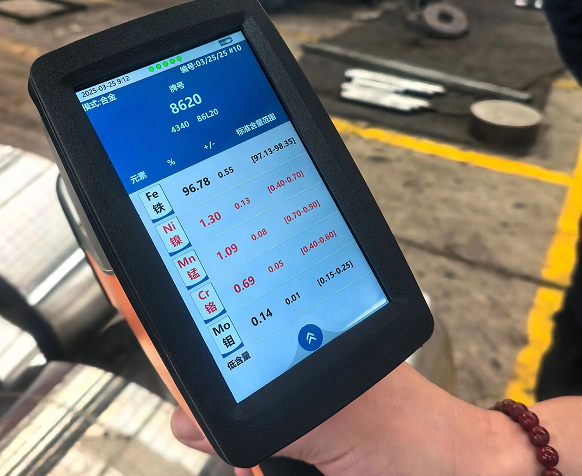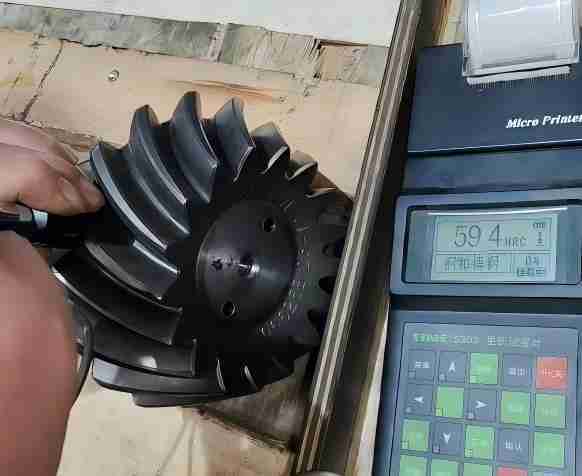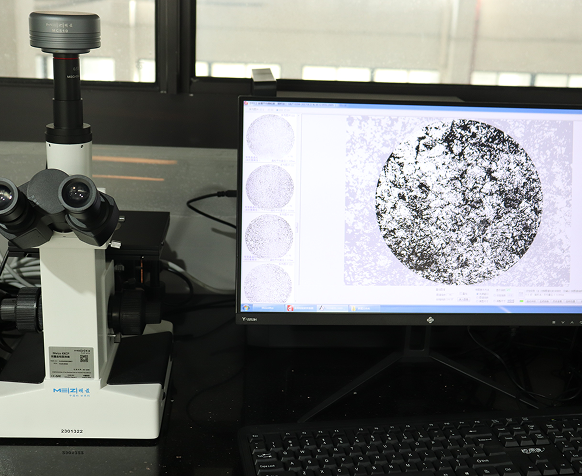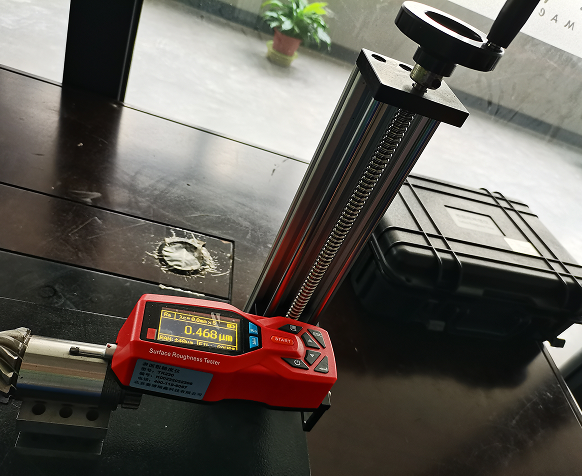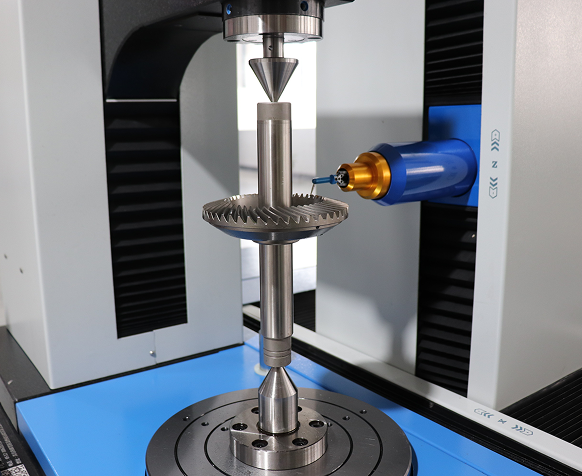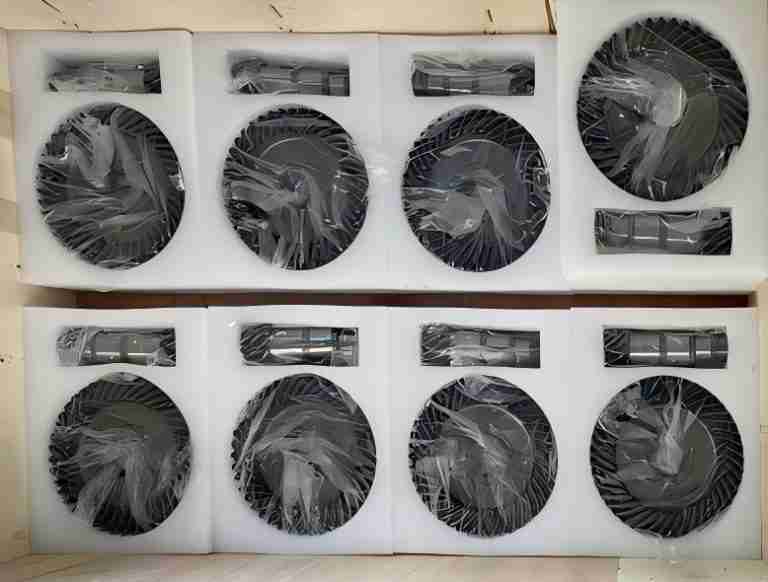

Pinion and bevel gear are paired bevel gear wheels comprising a small driving pinion and a larger driven bevel gear to transmit power between intersecting shafts and achieve speed reduction and torque boost.
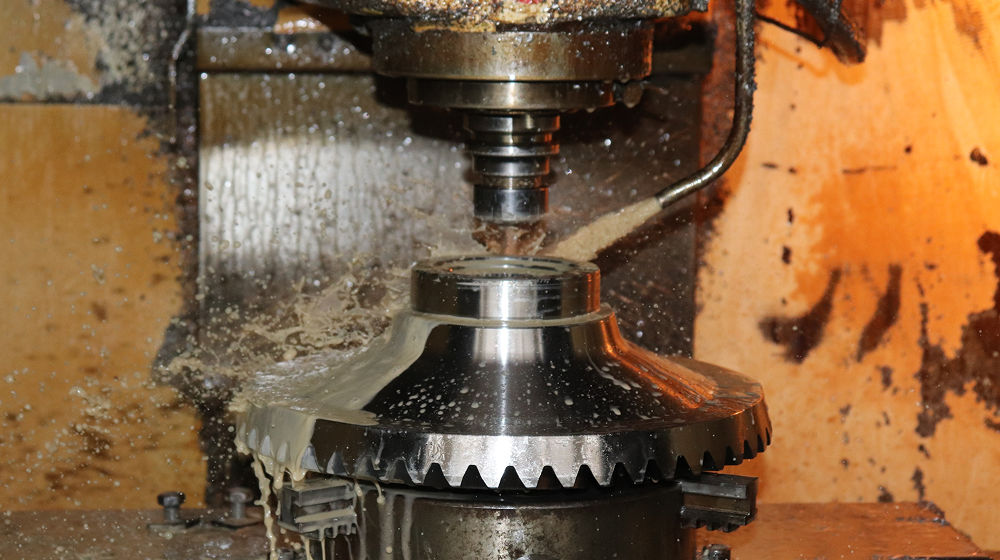
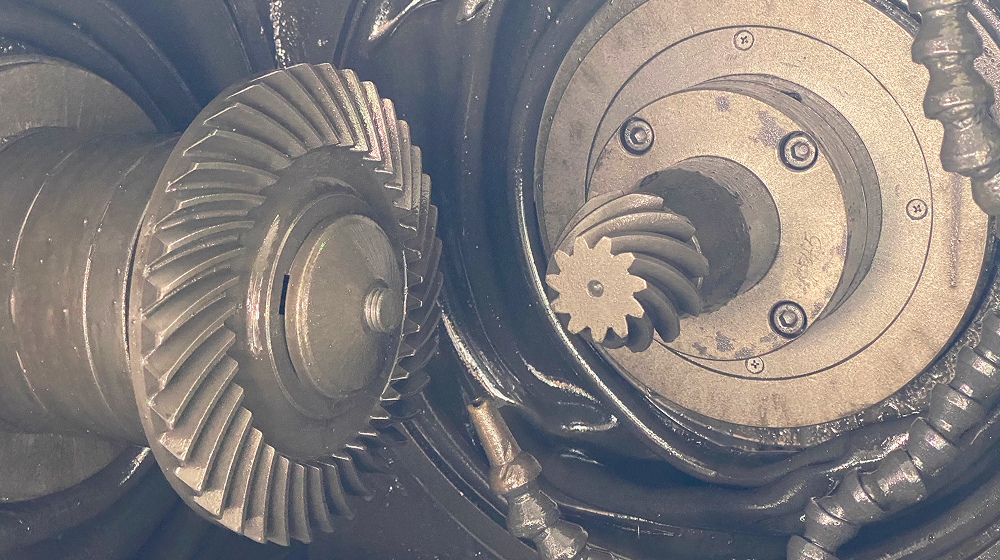
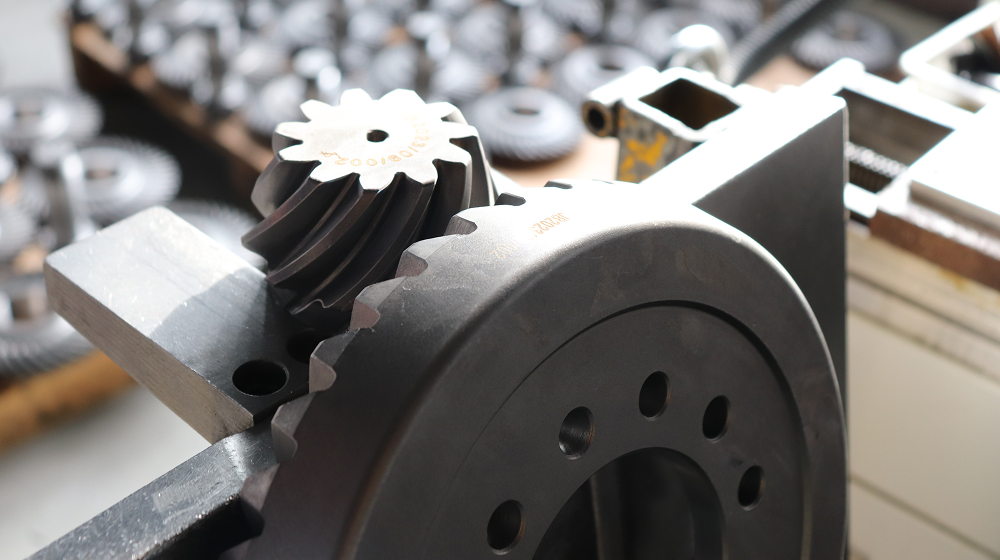
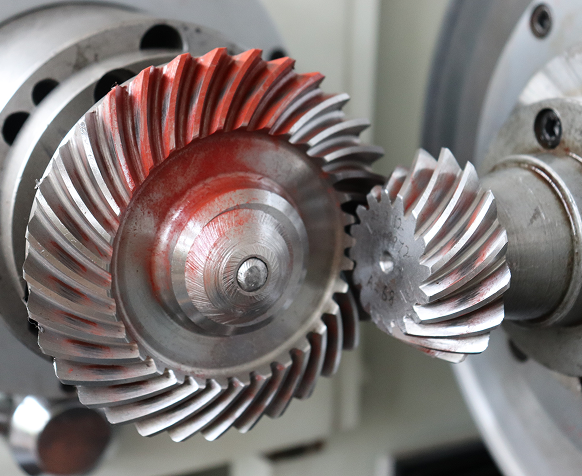
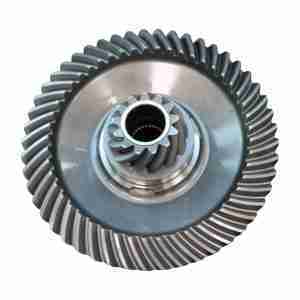
The image shows a pair of lapped spiral bevel gears BELON has made for wheel loaders (also commonly referred to as hypoid gears when offset, or generally as curved-tooth bevel gears).
Spiral Bevel Gears: The teeth of spiral bevel gears are not straight; instead, they curve along an arc, or spiral line, across the conical tooth surface. This curved tooth profile is the key feature that differentiates spiral bevel gears from straight bevel gears.
Pinion and Bevel Gear Pair Configuration: In this gear set, the larger component on the left serves as the driven bevel gear, and the smaller part on the right acts as the driving pinion. The pinion has fewer teeth while the mating bevel gear carries more teeth. This paired arrangement delivers speed reduction and torque multiplication for power transmission.
Directional Change: Their primary function is to transfer power from one shaft (e.g., horizontal) to another perpendicular shaft (e.g., vertical). They are widely used in applications such as automotive differentials, machine tool spindles, and speed reducers.
Smooth Operation: Thanks to the spiral angle, these gears offer a higher contact ratio (meaning more teeth are engaged simultaneously during meshing). This results in uniform load distribution, smoother transmission, and superior resistance to impact loads.
Axial Thrust: It is important to note that the pinion and bevel gear set generate significant axial thrust during operation. Consequently, robust bearing support systems must be designed to accommodate these axial forces.