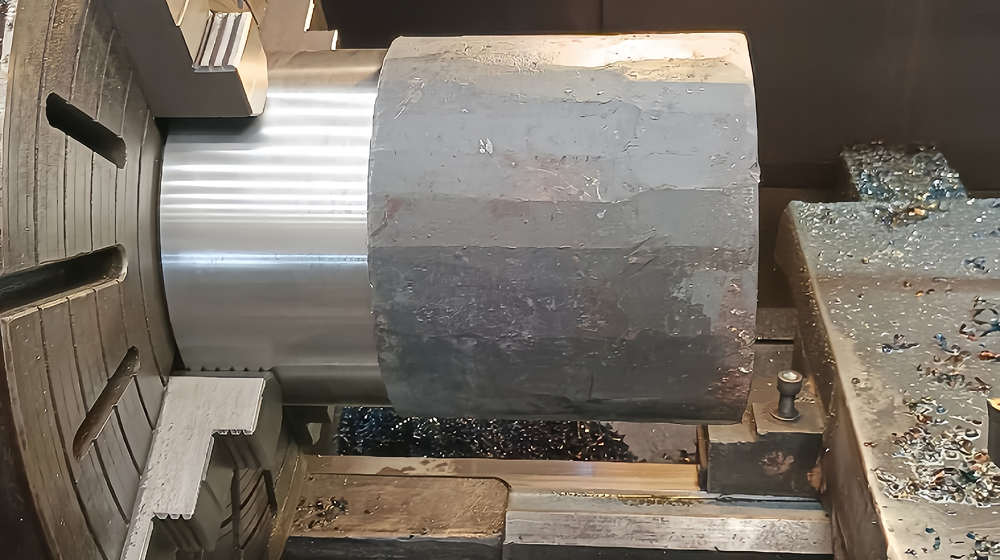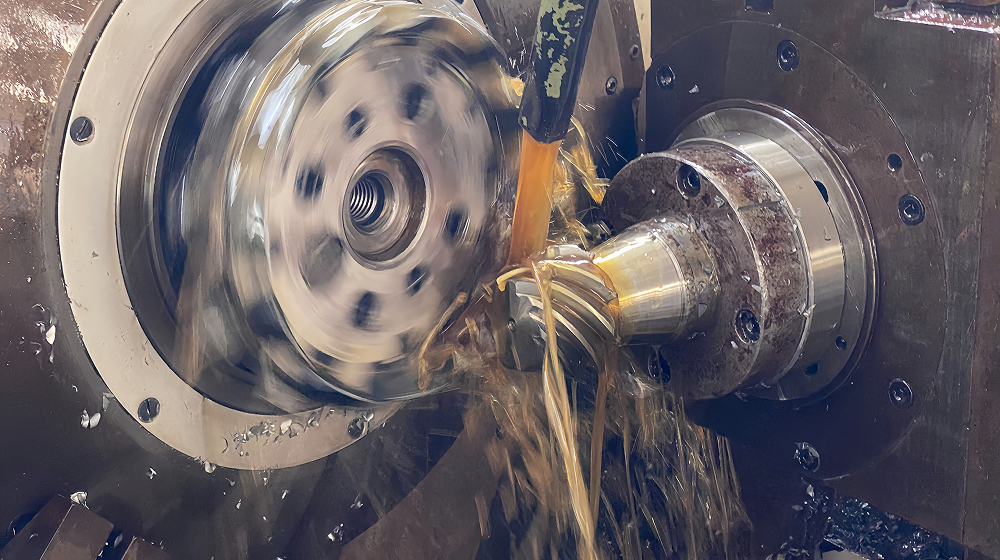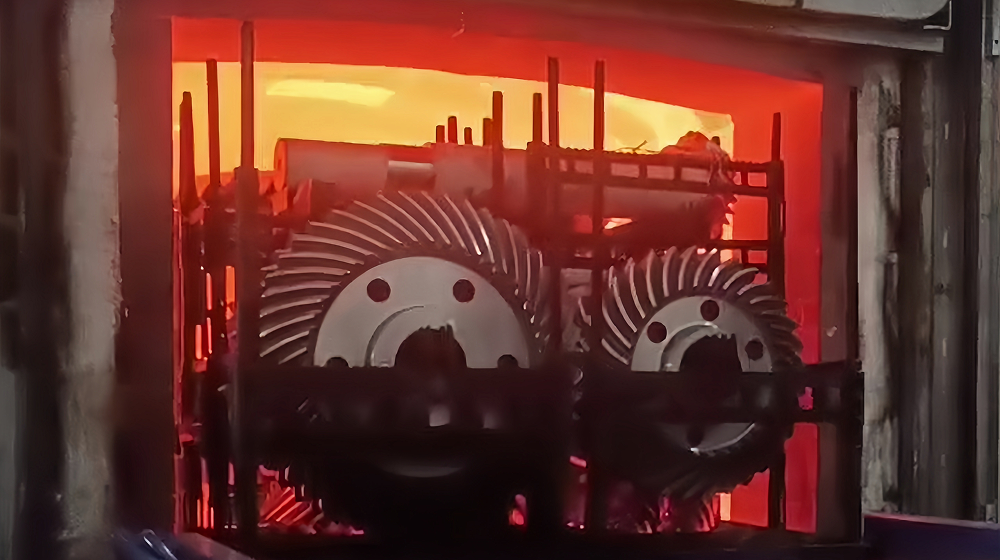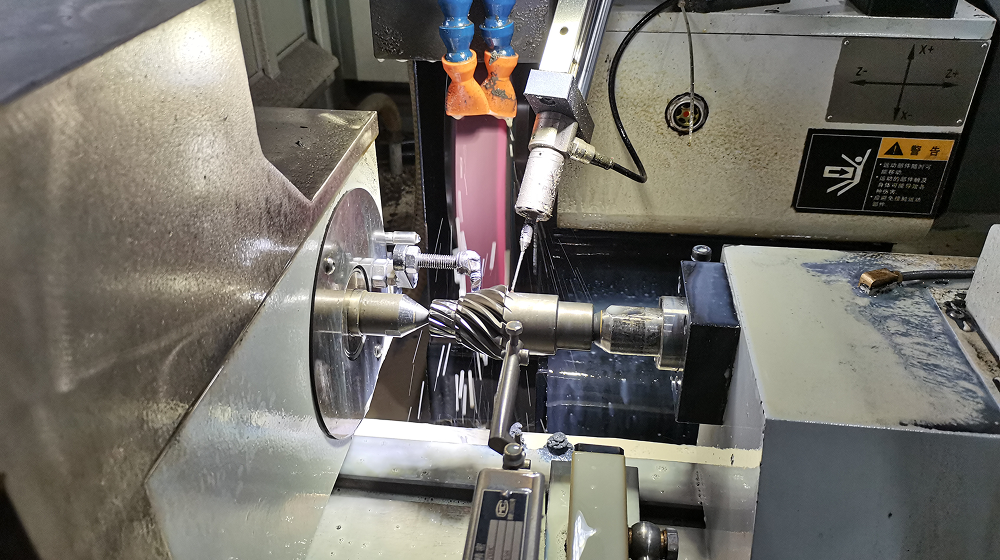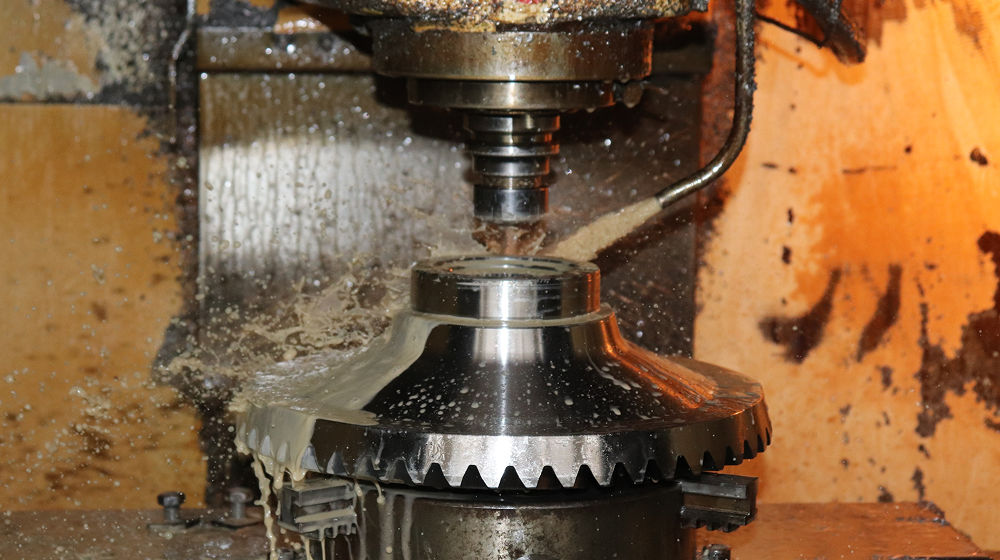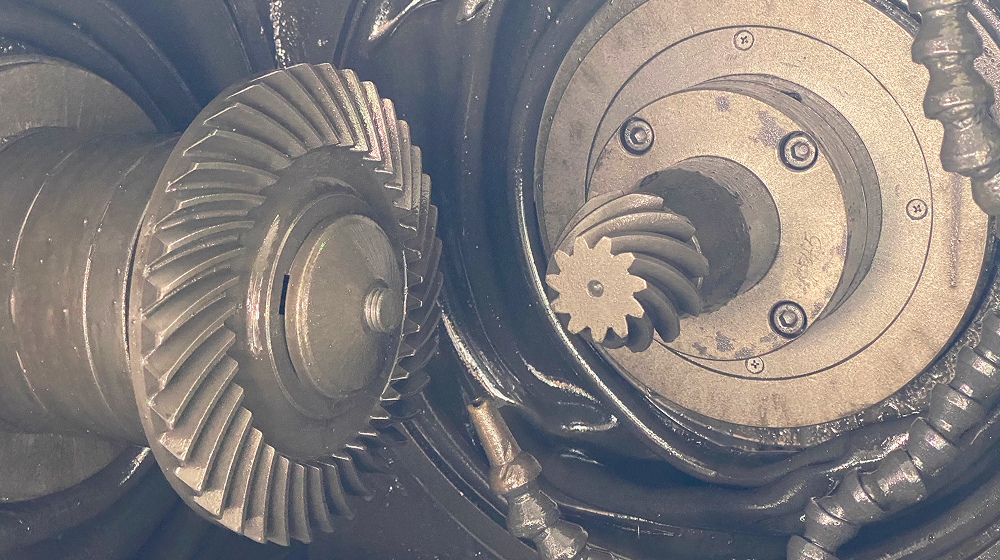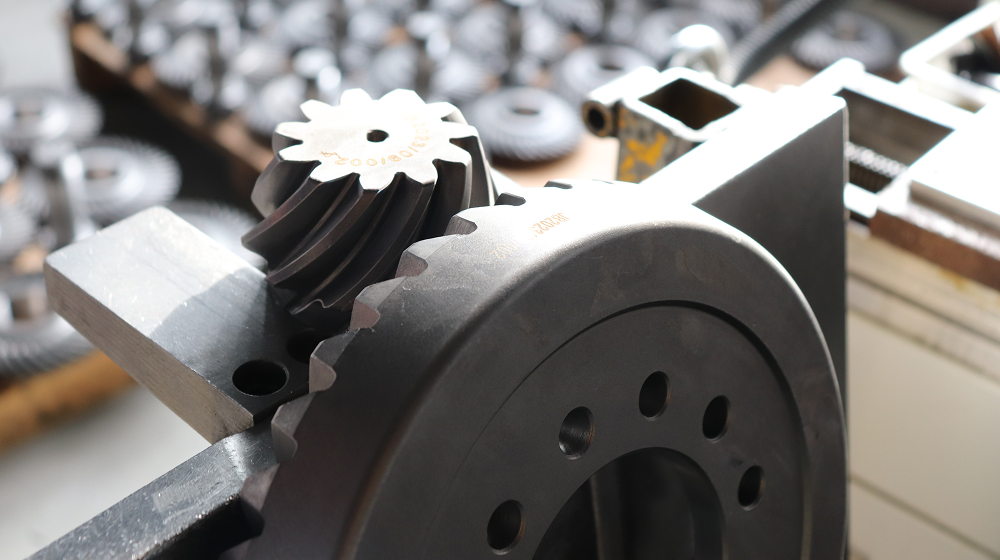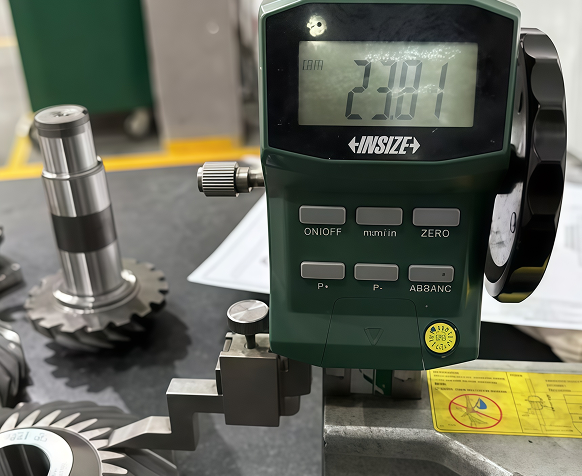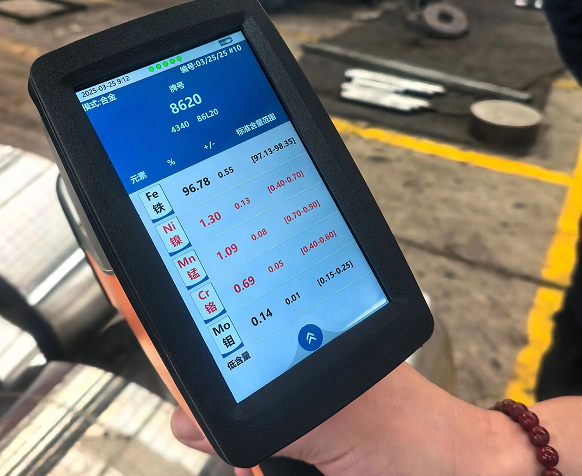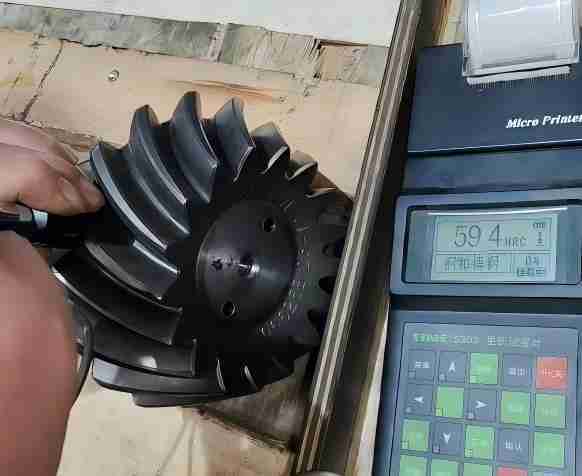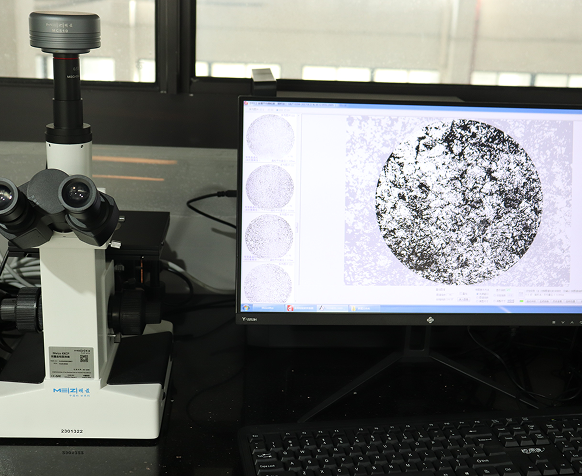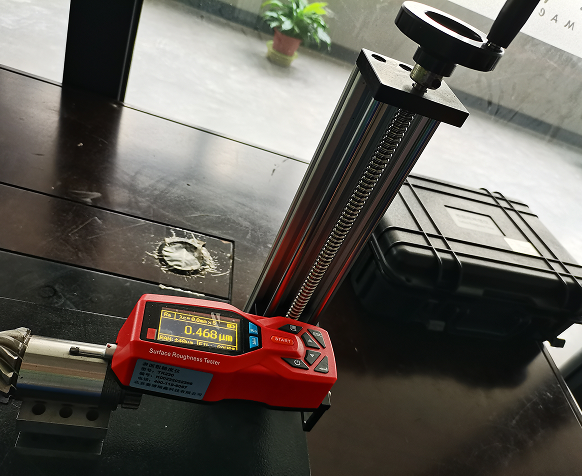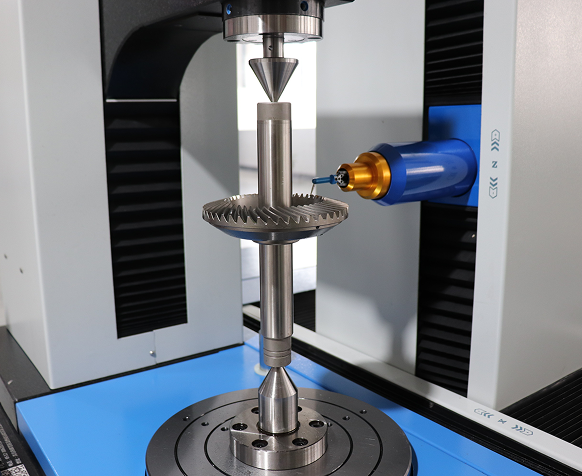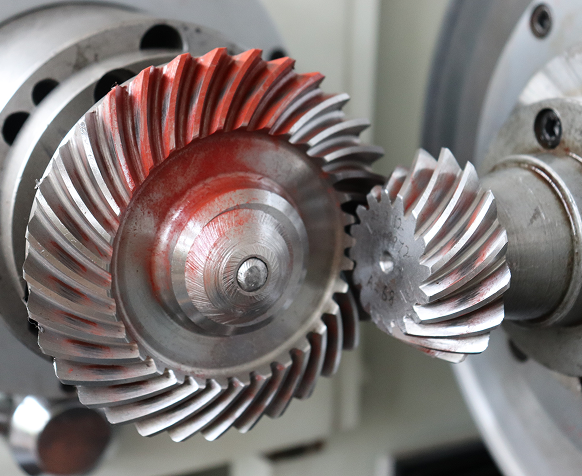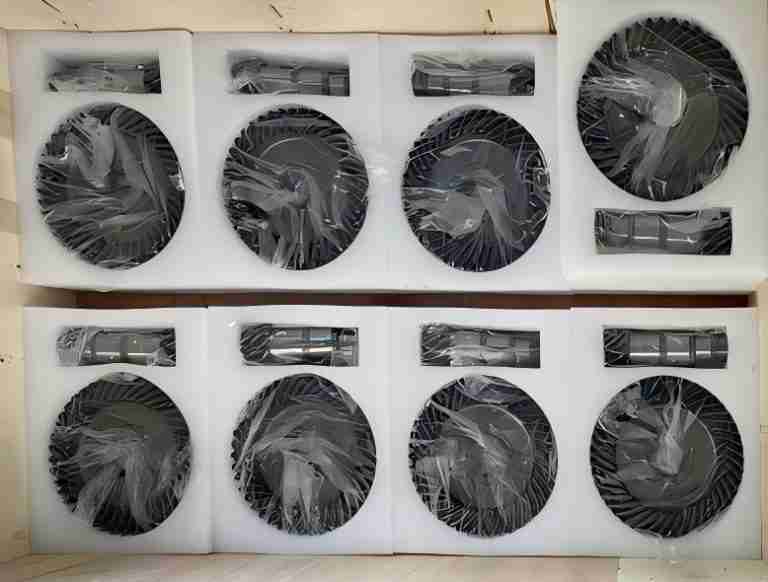

Bevel gear wheels are conical toothed gears designed to transmit power between intersecting shafts, most commonly at 90 degrees. What is shown in this photo is a spiral bevel gear set used for harvester and it has the following characterstics:
Split-Type Configuration (Ring Gear & Pinion Shaft):
These split-type bevel gear wheels consist of separate ring gear and pinion shaft assemblies.
- Left Side (Ring Gear / Driven Wheel): This standalone bevel gear blank comes with a central bore and keyway, for firm mounting onto the mating shaft.
- Right Side (Pinion Shaft / Driving Wheel): This assembly adopts an integrated gear shaft structure, with the pinion machined as one piece with the transmission shaft. This layout is widely used for bevel gear wheels applications demanding high torque capacity or tight radial space constraints. Integrating pinion and shaft greatly improves overall rigidity and mechanical strength.
Directional Change:
- The core purpose of these bevel gear wheels is to reroute power between intersecting shafts. They transfer power from one shaft (such as a horizontal input shaft) to another shaft at a 90° angle or custom angular offset, for example a vertical output shaft. That makes bevel gear wheels indispensable machinery components for systems requiring power direction conversion.
Speed Reduction and Torque Multiplication:
For this setup, the pinion on the right acts as the driving part and the left ring gear works as the driven part of the bevel gear wheels. Since the pinion has fewer teeth than the ring gear, the assembly lowers output rotational speed and amplifies output torque.
- Smooth Transmission:
The presence of the spiral angle ensures a high contact ratio (multiple teeth engaged simultaneously). This results in smooth power transmission, reduced noise levels, and superior resistance to impact loads.
- Axial Thrust:
It is critical to note that spiral bevel gears generate significant axial thrust during operation. Consequently, the bearing support system must be engineered to adequately accommodate these axial forces.