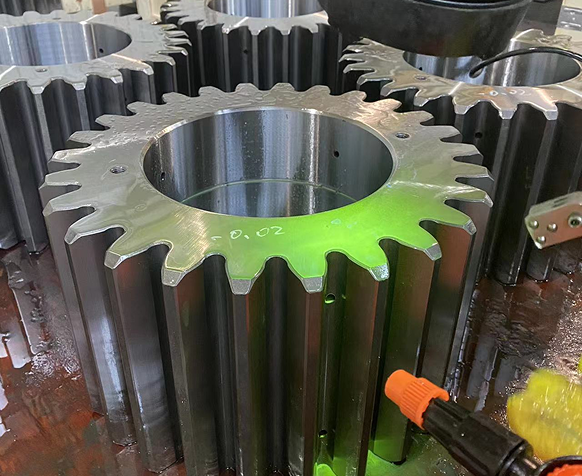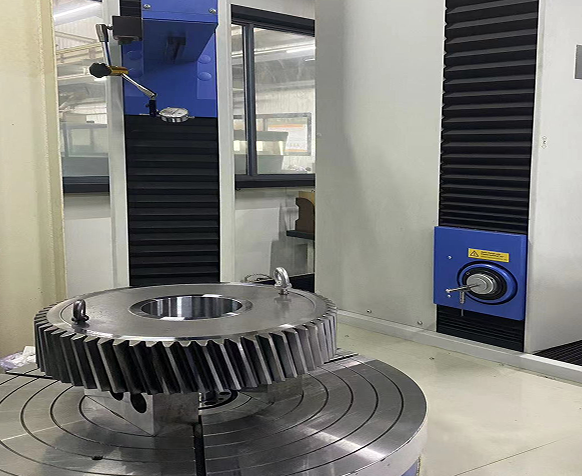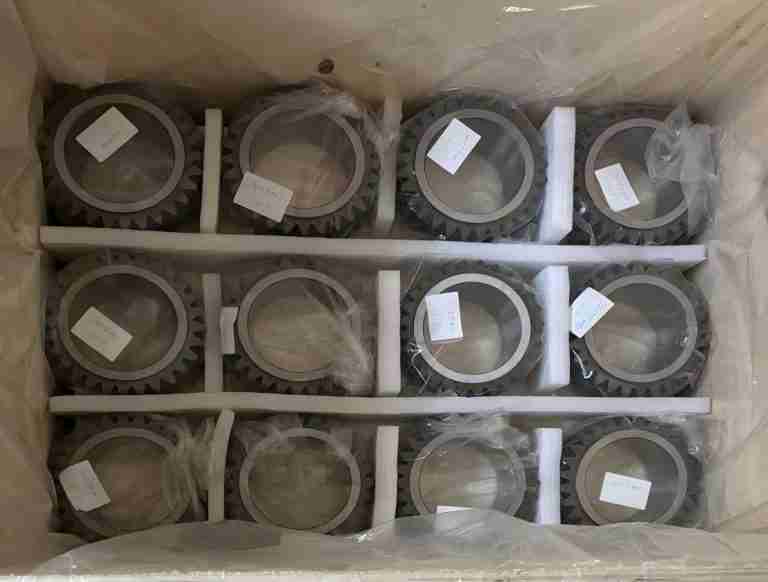

Helical Gears are an extremely common type of gear in mechanical transmission systems. A helical pinion is a small helical gear with angled helical teeth that meshes with a larger gear to transmit rotational power smoothly.
1. Core Definition and Structural Characteristics of Helical Pinions
- Appearance: The tooth trace (the direction along the tooth length) is inclined relative to the gear axis, forming a spiral shape (similar to a spring cross-section).
- Transmission Method: They are primarily used to transmit motion and power between parallel shafts. (If mounted on skewed shafts at 90 degrees, helical pinion gears can be used for crossed shafts, but this generates significant sliding friction and is generally not recommended).
- Difference from Spur Gears: Spur gears engage “instantaneously” across the entire tooth width simultaneously. In contrast, helical gears engage “gradually” from one end of the tooth and disengage at the other end.
2. Our Advantages of Precision Helical Pinions
- Smooth Transmission and Low Noise: Because the helical gear pinions’ teeth mesh gradually, the impact is minimal. This is the primary reason helical gears have replaced spur gears in high-speed transmission applications.
- High Load Capacity (High Contact Ratio): During operation, a helical gear has more teeth engaged simultaneously, which distributes the force. Therefore, it can transmit greater torque (making it suitable for heavy loads).
- Longer Lifespan: Due to the larger contact area, the wear on the pinion tooth surface is more uniform.