
Purchasing a ground bevel gear costs approximately three to five times more than a cut-only or sintered gear. However, for critical applications where failure causes downtime, safety risks, or warranty claims, that premium pays for 300–500% longer fatigue life, quieter operation, and predictable field service intervals. When purchasing ground gear, request a breakdown of tooling costs (grinding wheels, dressing tools), setup charges, piece price, and shipping. Also confirm lead times: typical orders run 6–10 weeks, with expedited services available at 20–30% premium.

Ground Gear Bevel Gear
Specification
Module
2
Application
Aviation
Material
18CrNiMo7-6
Heat Treatment
Carburizing + quenching + tempering
Accuracy
DIN 4
Ground Bevel Gear: A Buyer’s Guide to Quality and Value
When a drivetrain demands high torque density, smooth operation, and long service life, few components deliver like a ground bevel gear. Unlike cut-only gears that may leave rough surfaces and residual stress, ground bevel gears undergo precision abrasive finishing after heat treatment, achieving AGMA Q12–15 quality grades. However, purchasing ground bevel gear requires more than simply calling a supplier with a module number. Smart buyers evaluate material traceability, manufacturing capability, quality documentation, and total cost of ownership. This guide outlines four critical considerations before placing your next order.
First, define your application envelope clearly. When purchasing ground bevel gear, you must specify operating torque (Nm), input speed (rpm), center distance, gear ratio, and duty cycle (continuous vs. intermittent). For example, an electric vehicle reducer might require 300 Nm continuous with peak torque of 600 Nm, while an industrial robot joint cycles repeatedly with frequent starts and stops. These parameters directly influence tooth geometry choices, such as pressure angle (20° standard, 22.5° or 25° for higher load capacity) and spiral angle (30–35° for smooth engagement). Provide the supplier with a complete engineering drawing or a 3D CAD model that includes bore tolerance (typically H7 or H6), keyway specifications, and axial mounting features.
Second, verify material and heat treatment. When purchasing ground bevel gear, never accept vague material descriptions like “alloy steel” without a grade. Industry standards include case-hardening steels such as 8620H, 4320H, or 18CrNiMo7-6 for applications requiring hard teeth (58–62 HRC) and a tough core (30–42 HRC). Through-hardened grades like 4140 or 4340 (35–50 HRC) suit moderate loads where impact resistance matters more than surface durability. Request material test reports (MTRs) showing chemical composition and grain size. For heat treatment, demand a process certification that includes case depth (e.g., 0.8–1.2 mm effective case), surface hardness, core hardness, and distortion measurement. Without these documents, you risk premature pitting, tooth breakage, or excessive noise after only a few hundred operating hours.
Third, inspect quality assurance protocols. When purchasing ground bevel gear, the supplier should provide a first-article inspection (FAI) report for prototypes and batch sampling for production runs. Key measurements include: tooth thickness (over pin or ball measurement), runout (eccentricity of the pitch circle relative to the bore), single pitch deviation, total accumulated pitch error, and flank surface finish (typically 0.4 µm Ra or better). Reputable shops use coordinate measuring machines (CMM) with dedicated gear software or specialized testers such as Klingelnberg P-series or Gleason 300GMS. Ask whether the supplier operates under ISO 9001:2015 or AS9100D (aerospace) certification and whether they offer full gear metrology reports with each shipment.
Finally, ask about post-sales support, including design revision assistance, failure analysis, and replacement part availability. By following these four steps, you will purchase not just a gear, but reliable power transmission for years to come.

Production process
6-Step Production Process
Forging
Turning
Gear Milling
Heat Treatment
ID & OD Grinding
Tooth Grinding

Forging
When gears need high performance that needs to withstand high loads, high stress, impact loads or fatigue loads, forgings are suggested to use. Forging allows metal fibers to be continuously distributed along the gear profile, significantly improving root strength and fatigue life.
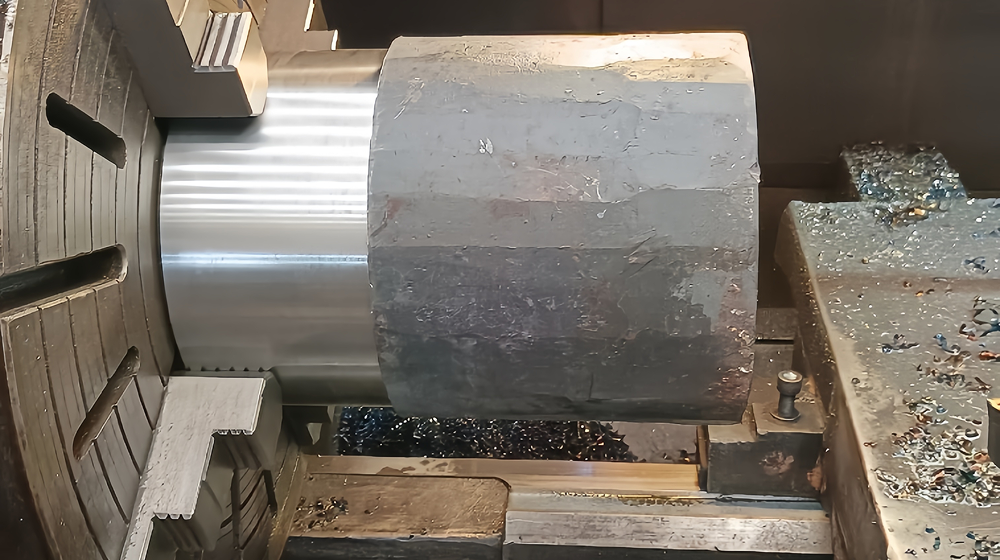
Turning
This is the process of cutting and shaping solid materials into precise parts. It uses tools like lathes, mills, and drills to remove excess material. Machining transforms a simple block of metal into a finished, functional component.
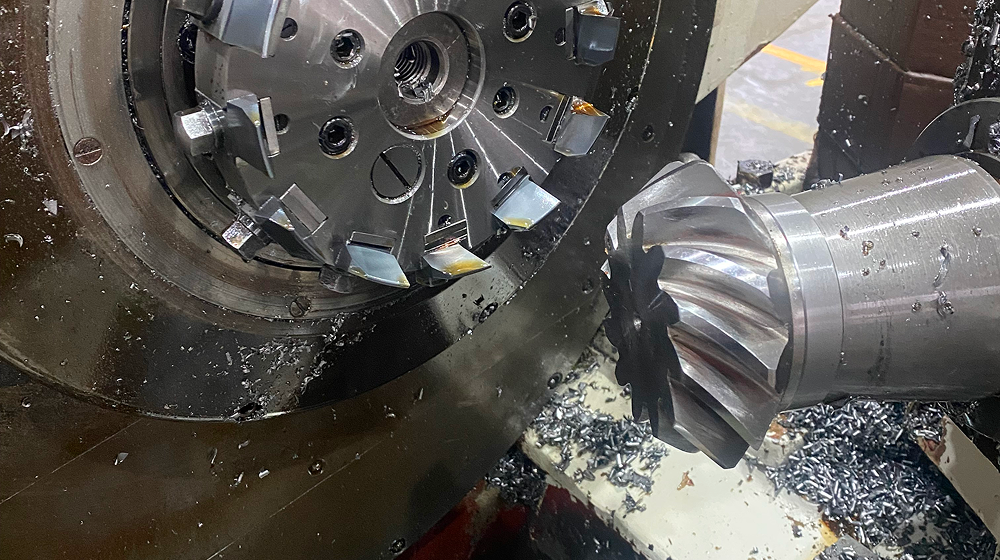
Gear Milling
Gear Milling is a gear cutting process that used a rotating from cutter shaped to match the exact space between two gear teeth is plunged into the gear blank. After cutting one tooth space, the blank is indexed to the next position .
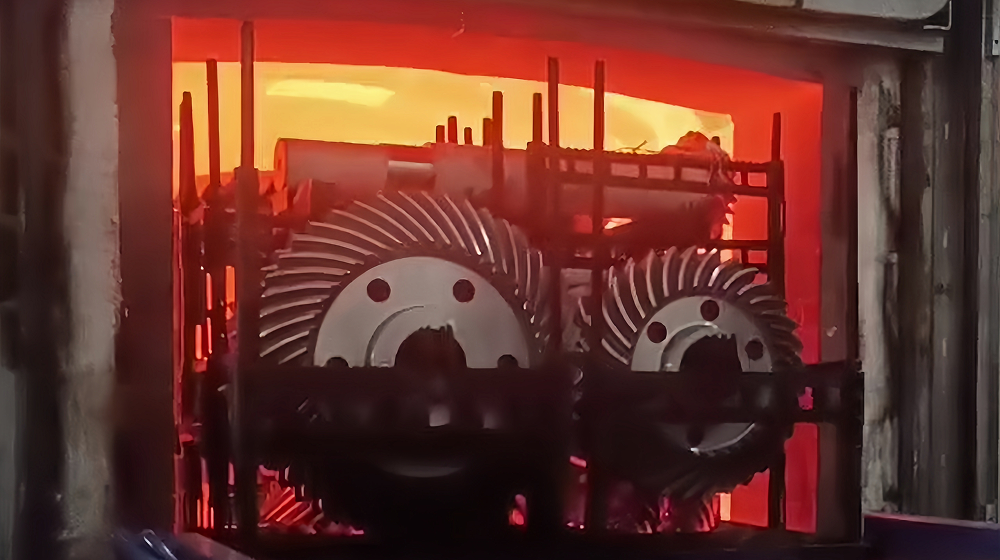
Heat Treatment
Gears need to be running with two gears or above two gears, that makes them easy to be worn-out. That’s why most types of gears need to be harden through heat treatment.
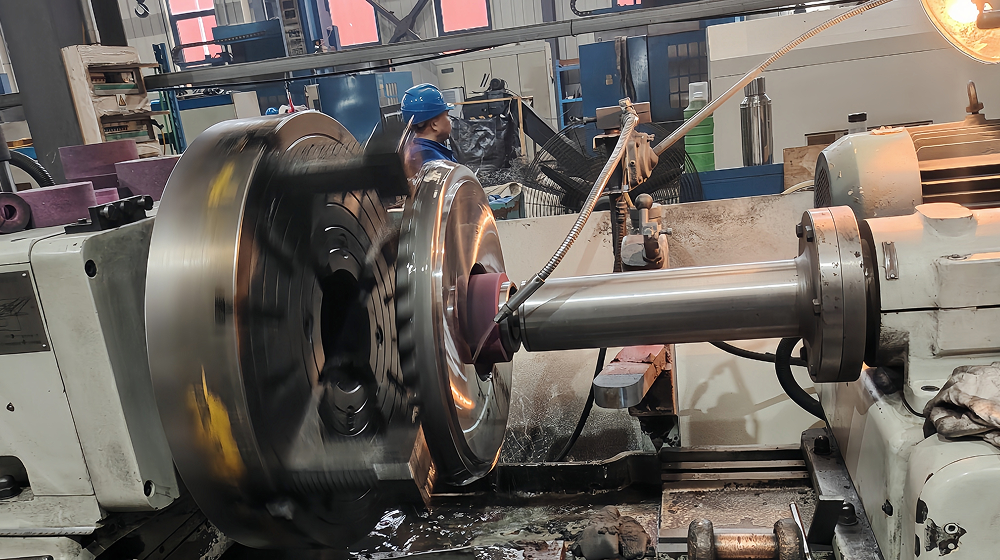
ID & OD Grinding
ID grinding, OD grinding, Surface grinding are all belonging to CNC grinding which are the foundational precision abrasive machining processes used to achieve exceptional dimensional accuracy and surface finishes, especially on hardened materials.
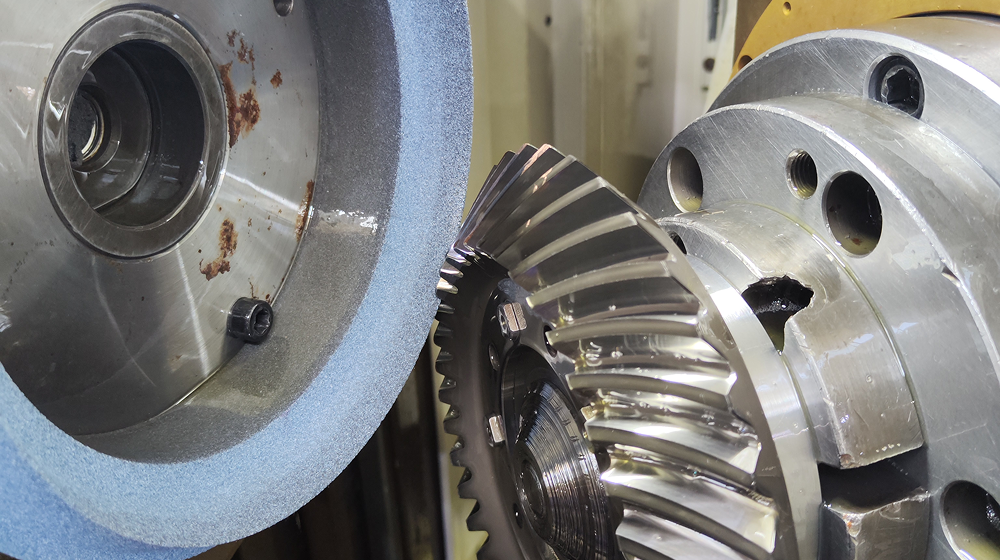
Tooth Grinding
Tooth Grinding are the final processes are applied after heat treatment to correct distortion, improve geometry, and achieve the final surface finish necessary for quiet, efficient power transmission.
Inspection
Strict Quality Inspection
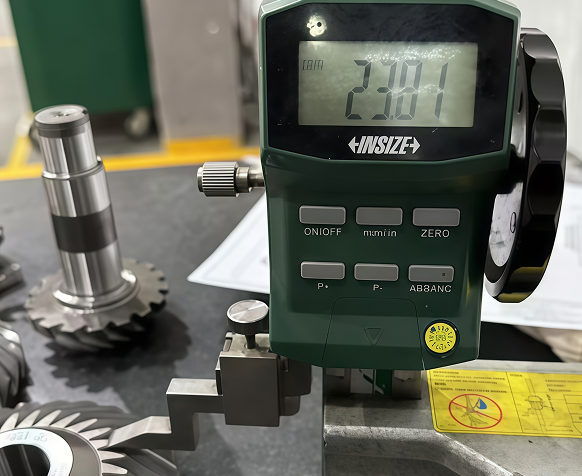
Dimension Inspection
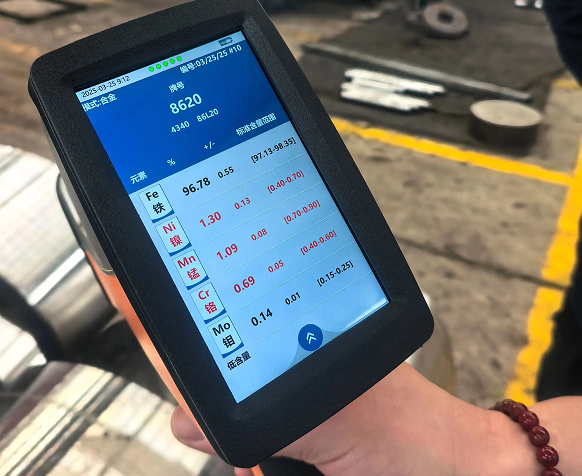
Material Testing
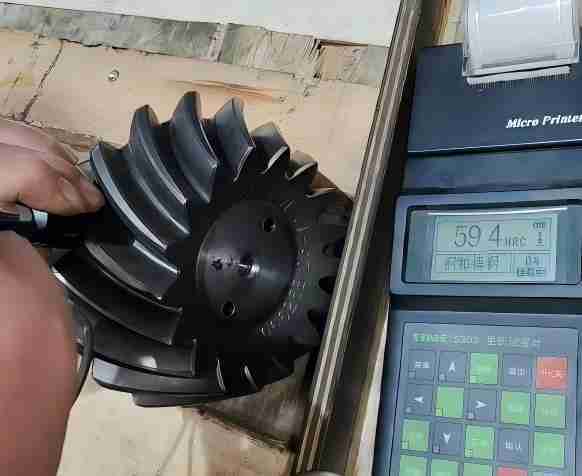
Hardness Inspection
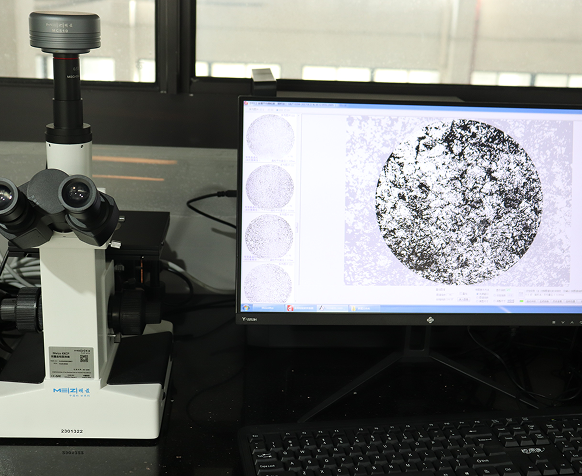
Heat Treatment Testing
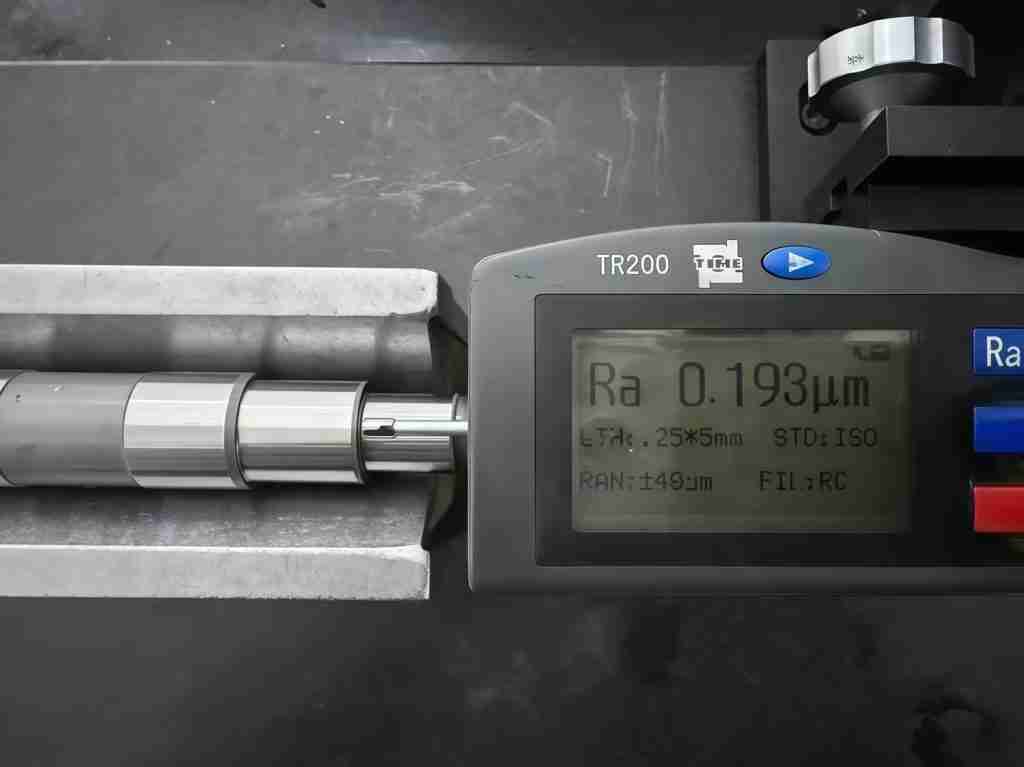
Roughness Testing
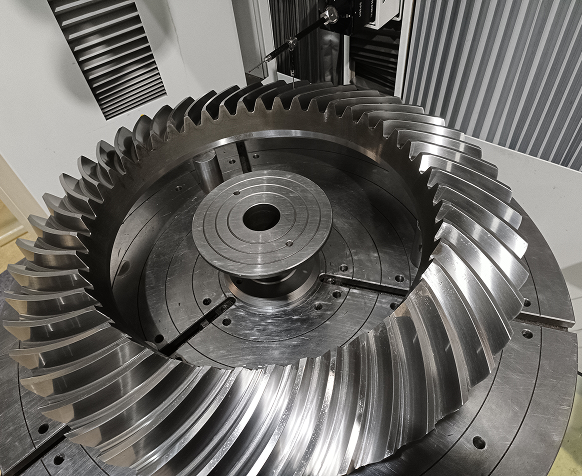
Accuracy Inspection
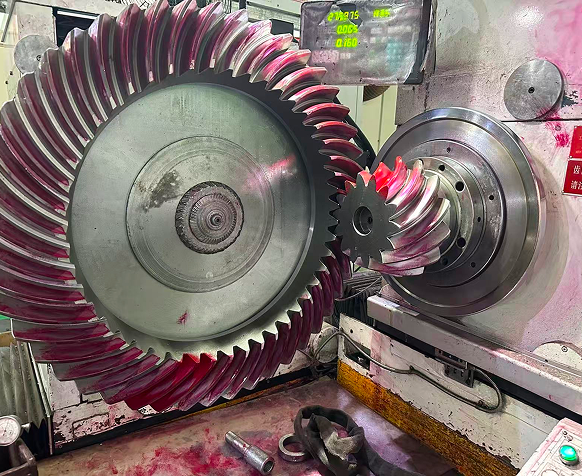
Meshing Testing
Dimension Inspection
Material Testing
Hardness Inspection
Heat Treatment Testing
Roughness Testing
Accuracy Inspection
Meshing Testing
Packages
Professional Packaging Safe Arrival
Customized cost-effective packages for products protection. We select multi-model solutions, combining air, sea, or land freight for the optimal balance of cost, speed, and reliability.

Inner Package
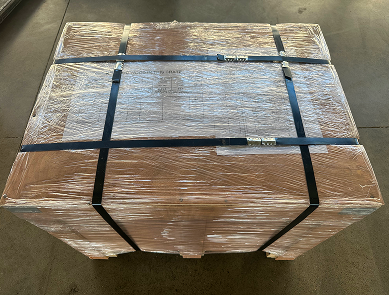
Out Package

Carton
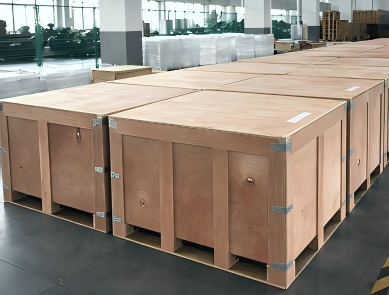
Wooden Package
Similar products
You May Be Interested In

Ground Bevel Gears For Helicopter Tail Rotor Drive
- Material: 18CrNiMo7-6
- Heat treatment: Carburizing + Quenching + Tempering
- Accuracy: DIN 5

Ground Bevel Gears
- Material: 20CrMnTi (or similar case-hardening steel)
- Heat treatment: Case-hardened
- Accuracy: DIN 5

Custom ground bevel gear manufacturing
- Material: 8620H
- Heat treatment: Carburizing + Quenching + Tempering
- Accuracy: DIN 5

Ground Spiral Bevel Gears For Heavy Industry
- Material: 18CrNiMo7-6
- Heat treatment: Case Carburizing 58-62HRC
- Accuracy: DIN 6
Your Precision
Transmission Partner
Do you have drawings to be implemented, or problems to be solved? Please feel free to contact us. From initial inquiry and technical specification confirmation to production and delivery, our dedicated team will provide you with one-on-one service, ensuring that every step meets your stringent requirements for precision.
Contact Us