
Abstract: A gear train is a mechanical transmission system consisting of two or more gears working together to transmit motion and power. By adjusting gear arrangement, dimensions, and tooth configuration, gear trains can change speed, torque, rotation direction, and power transmission efficiency.
This guide explains what a gear train is, how it works, various types of gear trains, common industrial applications, and key manufacturing factors that influence performance and reliability.
What Is a Gear Train?
A gear train is a device composed of two or more gears that mesh together to transmit rotational power from an input shaft to an output shaft.
The gear connected to the power source is called the driving gear, while the gear receiving power is called the driven gear. Additional gears can be added between them to achieve specific transmission requirements.

Gear trains are designed to achieve the following functions:
- Increase or reduce rotational speed
- Increase output torque
- Change rotation direction
- Transfer motion between different shaft positions
- Improve transmission efficiency and stability
The performance of a gear train depends on various factors, including the gear ratio, tooth profile, gear precision, material selection, lubrication, and manufacturing quality.
How Does a Gear Train Work?
The working principle of a gear train is based on the interaction between gear teeth. When the driving gear rotates, its teeth push against the teeth of the driven gear, thereby transmitting rotational motion and torque.
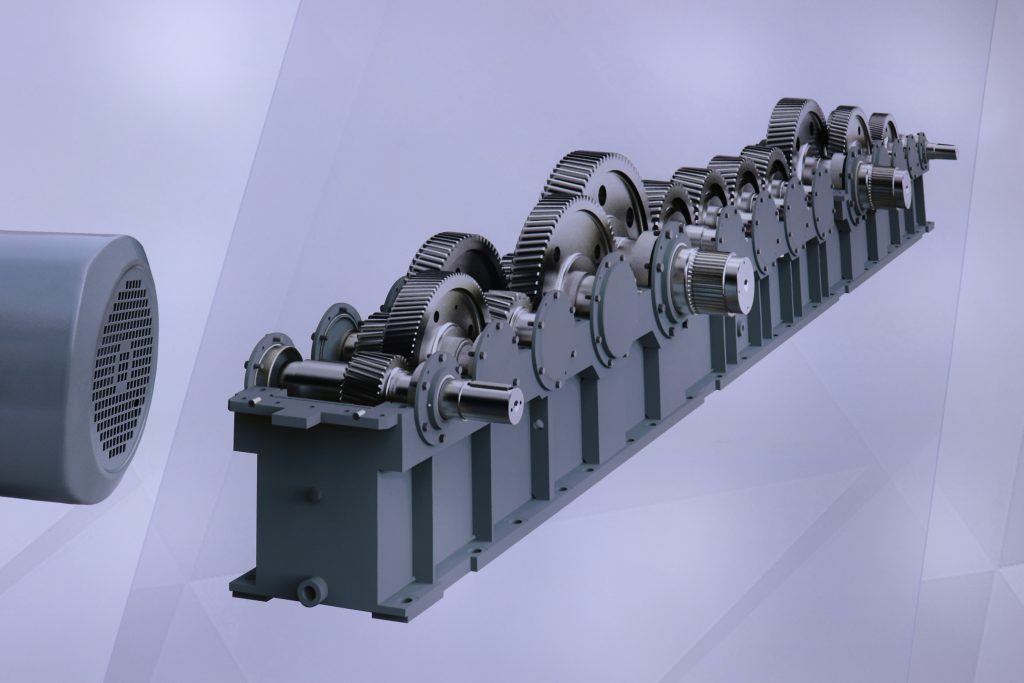
The relationship between gears determines the output performance:
- A smaller driving gear connected to a larger driven gear reduces speed while increasing torque.
- A larger driving gear connected to a smaller driven gear increases speed while reducing torque.
- Multiple idler gears can change the distance and direction of power transmission without affecting the overall gear ratio.
In industrial applications, gear trains are meticulously designed to balance speed, torque, efficiency, noise levels, and service life.
Types of Gear Trains
Gear trains can be classified according to their structure, arrangement, and transmission characteristics. Different gear train designs offer different advantages in terms of speed control, torque transmission, efficiency, and space utilization.
The main types of gear trains include simple gear trains, compound gear trains, planetary gear trains, bevel gear trains, and worm gear trains.
1.Simple Gear Train
A simple gear train consists of two or more gears where each shaft carries only one gear.
The input gear (drive gear) transmits motion directly to the output gear (driven gear). The rotational speed and torque are determined by the ratio between the number of teeth on the two gears.
Key characteristics include:
- Simple and compact structure
- Suitable for basic speed and torque transmission requirements
- Easy manufacturing and maintenance
In a simple gear train, an intermediate gear can also be added to change the direction of rotation or increase the distance between input and output shafts without affecting the overall gear ratio.
2.Compound Gear Train
A compound gear train uses multiple gears mounted on the same shaft. This arrangement enables engineers to achieve larger gear ratios within a compact structure.
Compared with simple gear trains, compound gear trains can achieve much larger gear ratios because the gear ratio of each gear pairs are compounded.
Key characteristics include:
- Improved flexibility in speed and torque adjustment
- Compact design for complex transmission requirements
- Higher transmission ratio capability
The arrangement of multiple gears enables engineers to optimize the relationship between input speed, output torque, and available installation space.
3.Planetary Gear Train
A planetary gear train consists of a sun gear, planet gears, and a ring gear.
The planet gears revolve around the sun gear while also engaging with the internal teeth of the ring gear. This unique structure enables multiple gears to share the transmitted load.
Key characteristics include:
- High transmission efficiency
- High torque density
- Compact transmission design
- Excellent load distribution
Compared with conventional gear arrangements, planetary gear trains can provide high power transmission capability within a smaller space.
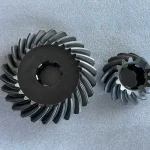
4.Bevel Gear Train
Bevel gear trains are designed to transmit power between intersecting shafts, commonly at 90 degrees. Different bevel gear designs include:
Among them, spiral bevel gears provide smoother engagement and improved load capacity due to their curved tooth design.
Key characteristics include:
- Ability to change transmission direction
- Suitable for high-load applications
- Smooth power transmission
5.Worm Gear Train
A worm gear train consists of a worm and a worm wheel, providing high reduction ratios and compact right-angle transmission.
The unique sliding contact between the worm and worm wheel enables worm gear trains to achieve high reduction ratios within a compact structure.
Key characteristics include:
- High reduction ratio
- Smooth and quiet operation
- Compact right-angle transmission design
The performance of a worm gear train depends on factors such as tooth design, material selection, lubrication, and operating conditions.
Industrial Applications of Gear Trains
Gear trains are widely used in various industries where reliable power transmission is required. Common applications include:

- Automotive Systems
Automotive transmissions and differential systems rely on complex gear trains to provide efficient power transmission.
- Industrial Gearboxes
Gear trains are the core transmission elements inside industrial gearboxes, controlling speed and torque output for machinery.

- Mining and Construction Equipment
Heavy-duty gear trains are specifically designed to withstand high loads, impact forces, and continuous operation.

- Robotics and Automation
Precision gear trains enable accurate movement control in robotic joints and automation equipment.
Manufacturing Considerations for High-Performance Gear Trains
The performance of a gear train depends not only on its design but also on manufacturing precision. Key manufacturing factors include:
- Gear Accuracy
High gear accuracy ensures smooth meshing, reduced vibration, and lower operating noise.
- Heat Treatment
Processes such as carburizing, quenching, and tempering can increase hardness and extend service life.
- Material Selection
Appropriate materials such as alloy steels provide the required strength, wear resistance, and fatigue properties.
- Precision Machining
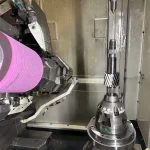
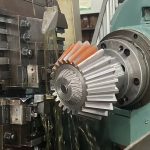
Advanced manufacturing processes, including gear hobbing, gear shaping, gear grinding, and gear inspection, help achieve consistent tooth geometry.
As a precision gear manufacturer, BELON provides customized gear solutions for a wide range of industrial applications, covering spur gears, helical gears, bevel gears, worm gears, planetary gears, and shaft components. Contact our engineering team at once to get your specific gear solutions now! [Request A Quote]
FAQs
1.What is the difference between a drive gear and a driven gear in a gear train?
The driving gear is the gear that connects to the power source and provides input motion, while the driven gear receives power from the drive gear and transmits output motion to the connected system.
The relationship between the drive gear and driven gear determines key transmission characteristics such as speed reduction, torque increase, and rotation direction.
2.How does a gear train change speed and torque?
A gear train changes speed and torque through varying gear sizes and gear ratios.
When a smaller drive gear drives a larger driven gear, the output speed decreases while the torque increases. Conversely, when a larger drive gear drives a smaller driven gear, output speed increases while torque decreases.
Engineers select the appropriate gear ratio based on the required performance of the transmission system.
3.Can BELON manufacture custom gear trains and transmission components?
Yes. Shanghai Beilong Machinery Co., Ltd. specializes in providing high-precision OEM gears, shafts, and transmission components for global industrial applications.
With strong manufacturing capabilities and engineering support, BELON provides customized solutions covering spur gears, helical gears, bevel gears, spiral bevel gears, worm gears, internal gears, planetary gear components, and gear shafts.
Our production capabilities cover the complete manufacturing process, including machining, heat treatment, gear grinding, gear inspection, and customized quality control to meet specific customer requirements.