

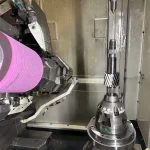
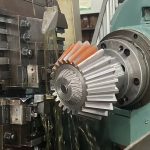
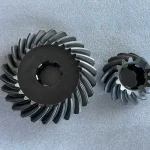
Abstract: Bevel gears are a reliable solution for transmitting power between intersecting shafts, combining high efficiency, compact design, and strong load capacity. This guide covers the bevel gear advantages and disadvantages, compares different types, and explains their applications, materials, and key selection considerations to help you determine whether they are the right choice for your system.
What Are Bevel Gears?
Bevel gears are a type of mechanical gear designed to transmit power and motion between intersecting shafts, most commonly at a 90° angle. They usually feature conical pitch surfaces and tapered teeth.

How Bevel Gears Work
Bevel gears operate by meshing two cone-shaped gears whose shafts intersect at a fixed angle, typically 90 degrees. When the driving gear rotates, its tapered teeth engage with the mating gear, transferring rotational motion and torque while changing the direction of the output shaft.
The working principle can be summarized in four key steps:
- Power Input – The driving bevel gear receives rotational power from the motor or engine.
- Tooth Engagement – The conical gear teeth mesh precisely, maintaining continuous contact as they rotate.
- Torque Transfer – Torque is transmitted from the driving gear to the driven gear through the tooth contact.
- Direction Change – The driven gear rotates on an intersecting shaft, typically changing the power flow by 90°, although other shaft angles are also possible.
Main Types of Bevel Gears
Different bevel gear designs are optimized for different operating conditions Bevel gears can be mainly classified as straight bevel gear, spiral bevel gear, zerol bevel gear and hypoid gear.
| Type | Best For | Main Advantages | Typical Applications |
| Straight Bevel Gear | Low-speed, light to medium loads | Simple design, low manufacturing cost, easy maintenance | Agricultural equipment, conveyors, machine tools |
| Spiral Bevel Gear | High-speed, high-torque applications | Smooth operation, low noise, high load capacity | Automotive differentials, industrial gearboxes, marine drives |
| Zerol Bevel Gear | Medium-speed precision drives | Quieter than straight bevel gears while maintaining simple installation | Precision machinery, instrumentation, automation equipment |
| Hypoid Gear | High-torque offset shaft systems | Excellent torque capacity, quiet operation, compact drivetrain layout | Automotive rear axles, heavy-duty trucks, construction machinery |
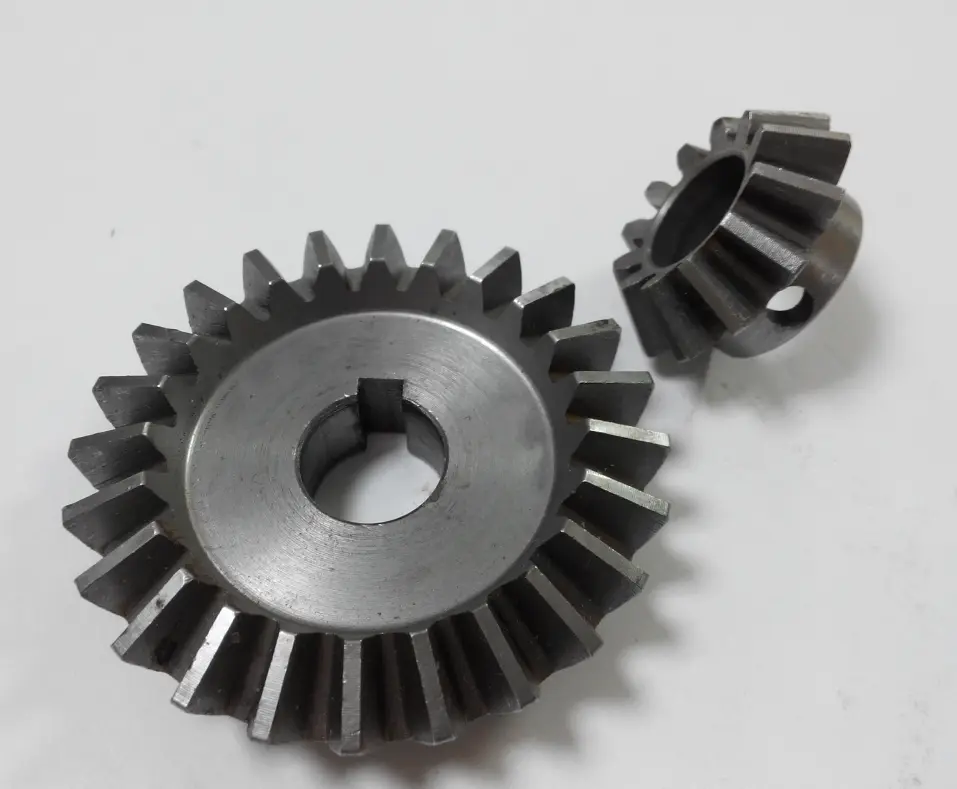
Straight Bevel Gears
Straight bevel gears have straight teeth that radiate toward the gear apex. They are the simplest and most economical bevel gear type. They are suitable for low-speed applications where noise and vibration are less critical.
Spiral Bevel Gears
Spiral bevel gears feature curved teeth that engage gradually rather than all at once. They are the preferred choice for demanding industrial and automotive applications.

Zerol Bevel Gears
Zerol bevel gears use curved teeth with a zero spiral angle, combining some of the smooth-running characteristics of spiral bevel gears with installation characteristics similar to straight bevel gears. They are commonly used in moderate-speed precision equipment.
Hypoid Gears
Hypoid gears are a specialized form of bevel gear in which the shaft centerlines do not intersect but are offset. This configuration provides greater tooth contact, increased torque capacity, and quieter operation.

Advantages of Bevel Gears
Compared with other gear types, bevel gears’ unique conical geometry makes them particularly suitable for right-angle drives found in industrial equipment, vehicles, marine propulsion systems, and precision machinery. The following sections explain the key advantages of bevel gears and why they are preferred in demanding engineering applications.
Efficient Right-Angle Power Transmission
One of the defining advantages of bevel gears is their ability to transmit power between intersecting shafts, most commonly at a 90° angle. Rather than relying on additional couplings or multiple gear stages to change the direction of motion, a bevel gear pair accomplishes this directly through its conical tooth geometry. This results in a simpler drivetrain with fewer components and reduced power loss.
High Torque Capacity
Bevel gears can transmit substantial torque and maintain reliable tooth engagement at the same time, making them well suited for heavy-duty applications.
This performance comes from the geometry of the tooth contact. Particularly in spiral bevel gears, the curved tooth profile enables multiple teeth to share the load simultaneously instead of concentrating the force on a single tooth. The load is distributed over a larger contact area, thus reducing localized stress, minimizing vibration, and improving resistance to tooth fatigue and pitting under continuous operation.
When manufactured from carburized alloy steels and finished through grinding or lapping, bevel gears can withstand high contact stresses and maintain long service life in demanding environments.
Compact Design Saves Space
When installation space is limited, bevel gears provide an efficient way to redirect power without adding unnecessary transmission components.
Because the gear pair changes shaft direction within a single stage, engineers can correspondingly design more compact drive systems than those requiring multiple spur gear stages or external belt drives. This compact arrangement not only reduces the overall footprint but also lowers the number of supporting bearings, shafts, and housings.
A shorter and more rigid transmission path can also improve system stability by reducing shaft deflection and minimizing alignment errors.
High Transmission Efficiency
Properly manufactured bevel gears typically achieve transmission efficiencies of approximately 95–98%. That’s why they can become one of the most efficient mechanical power transmission solutions for intersecting shafts.
Their high efficiency is largely attributed to the predominance of rolling contact during meshing, which minimizes frictional losses compared with gear systems that rely heavily on sliding motion.
In spiral bevel gears, the gradual engagement of curved teeth further reduces impact loads, vibration, and energy loss during operation.
Excellent Positioning Accuracy
High-precision bevel gears have accurate and repeatable motion transmission. Thus for those requires precise shaft synchronization and positioning, they can be a better choice.
The accuracy of a bevel gear set depends on factors such as tooth geometry, manufacturing precision, backlash control, and assembly quality. Precision machining, heat treatment, grinding, and contact pattern inspection ensure stable meshing characteristics and minimize transmission errors throughout the gear’s service life.
This level of precision allows rotary motion to be transferred smoothly even under changing loads, improving positioning consistency and reducing vibration in precision equipment.
Available in Many Configurations
Another advantage of bevel gears is their versatility. Different types of gear geometries are available to meet a wide range of operating conditions, allowing engineers to balance performance, cost, and manufacturing requirements.
- Straight bevel gears feature straight teeth and are a cost-effective choice for low-speed applications.
- Spiral bevel gears use curved teeth to provide smoother engagement, lower noise, and higher load capacity, making them the preferred option for demanding industrial systems.
- Zerol bevel gears combine the installation simplicity of straight bevel gears with smoother tooth engagement, which are more suitable for moderate-speed precision applications.
- Hypoid gears incorporate an offset shaft arrangement, offering greater torque capacity and quieter operation, particularly in automotive drivetrains.
This variety means designers shall select the most appropriate gear type based on speed, load, installation space, and operating environment.
Suitable for High-Speed Industrial Systems
Although straight bevel gears are commonly used at lower speeds, spiral bevel gears are specifically designed for high-speed and high-load operation.
Their curved tooth geometry produces gradual tooth engagement, which reduces impact loads as the gears mesh.
Combined with precision manufacturing and appropriate lubrication, spiral bevel gears maintain stable performance even in continuous-duty industrial applications where reliability and efficiency are essential.
Disadvantages of Bevel Gears
Although bevel gears offer excellent performance in right-angle power transmission, it does not mean that they are the ideal solution for every application. Their complex geometry, demanding manufacturing process, and strict installation requirements bring more challenges for production and maintenance than many other gear types.
More Difficult to Manufacture
Compared with simple spur or helical gears, bevel gears are significantly more difficult to manufacture due to their three-dimensional conical tooth geometry. Each tooth must be generated with extremely high accuracy for the correct contact pattern, backlash, and load distribution during operation.
High-quality spiral bevel gears are produced using specialized systems such as Gleason or Klingelnberg machines, which precisely generate the curved tooth profile required for smooth meshing. After gear cutting, additional finishing processes—including gear grinding or gear lapping—are often required to improve tooth accuracy, reduce surface roughness, and optimize the contact pattern. These operations demand advanced equipment, skilled technicians, and strict process control, making bevel gear manufacturing considerably more complex than that of cylindrical gears.
Higher Manufacturing Cost
The sophisticated manufacturing process naturally results in higher production costs.
Unlike standard gears, bevel gears require dedicated cutting equipment, multiple precision machining steps, heat treatment, finishing operations, and comprehensive inspection throughout production. Their conical geometry also makes dimensional measurement and tooth contact verification more challenging than for parallel-shaft gears.
To ensure consistent performance, manufacturers typically inspect parameters such as tooth geometry, runout, backlash, surface hardness, and contact patterns using specialized measuring equipment. These additional inspection procedures improve reliability but also increase manufacturing time and overall cost.
Sensitive to Shaft Alignment
One of the most critical installation requirements for bevel gears is accurate shaft alignment.
Bevel gears rely on a precisely controlled tooth contact pattern. If the shaft angle, mounting distance, or bearing preload deviates from the design specification, the contact area shifts toward the toe, heel, root, or tip of the tooth instead of remaining evenly distributed across the tooth surface.
Poor alignment can result in:
- Uneven load distribution
- Increased vibration and operating noise
- Localized tooth stress
- Accelerated wear and pitting
- Reduced service life
Require Precise Installation
Even a perfectly manufactured bevel gear cannot achieve its intended performance without proper installation.
Small installation errors may not immediately cause failure, but they often lead to increased vibration, excessive heat generation, and premature tooth wear over time.
For high-speed industrial gearboxes, manufacturers usually recommend checking the contact pattern with marking compound during assembly to verify that the gears mesh correctly before the equipment is placed into service.
Increased Noise in Straight Bevel Gears
Straight bevel gears are generally noisier than spiral bevel gears, particularly at higher rotational speeds.
Because straight teeth engage almost simultaneously across the tooth width, the load is applied more abruptly during meshing. This sudden engagement generates higher impact forces, resulting in increased vibration and audible gear noise as speed increases.
In contrast, spiral bevel gears feature curved teeth that engage progressively. Multiple teeth share the load during meshing, reducing impact loads and producing smoother, quieter operation.
Lubrication Is Essential
Proper lubrication is critical to the reliability and service life of bevel gears, especially in high-speed or heavily loaded applications.
Although bevel gears operate with relatively high mechanical efficiency, significant contact pressure still develops between mating tooth surfaces. An adequate lubricant film separates these surfaces, reducing friction, dissipating heat, and protecting the gear teeth from direct metal-to-metal contact.
Insufficient or contaminated lubrication can quickly lead to serious surface damage, including:
- Scoring– Adhesive wear caused by excessive friction and breakdown of the lubricant film.
- Pitting– Surface fatigue that forms small pits after repeated cyclic contact stresses.
- Overheating – Excessive friction raises operating temperature, accelerating lubricant degradation and increasing the risk of premature gear failure.
Advantages and Disadvantages of Different Types of Bevel Gears
Each bevel gear type is designed to balance different priorities, such as load capacity, operating speed, noise level, manufacturing cost, and installation requirements.
The table below compares the four main types of bevel gears, highlighting their strengths, limitations, and typical applications.
| Type | Advantages | Disadvantages | Best Applications |
| Straight Bevel Gear | Simple tooth geometry
Low manufacturing cost Easy installation and maintenance |
Noisier at high speeds
Higher impact during tooth engagement Lower load capacity than spiral designs |
Agricultural machinery, conveyors, machine tools, low-speed industrial equipment |
| Spiral Bevel Gear | Smooth and quiet operation
High torque capacity Excellent load distribution |
More complex manufacturing
Higher production cost Requires specialized cutting and finishing |
Industrial gearboxes, marine propulsion systems, mining equipment, robotics, automotive differentials |
| Zerol Bevel Gear | Smoother meshing than straight bevel
Moderate manufacturing complexity Good positioning accuracy |
Fewer suppliers
Limited standard product availability Lower load capacity than spiral bevel gears |
Precision machinery, automation equipment, measuring instruments, light industrial drives |
| Hypoid Gear | High torque capacity
Quiet operation Compact offset shaft arrangement Increased tooth contact area |
Greater sliding motion
Higher friction losses Requires high-performance lubricants and precise lubrication management |
Automotive rear axles, heavy-duty trucks, construction equipment, off-road vehicles |
Bevel Gears vs Other Gear Types
Selecting the right gear is not simply a matter of efficiency or cost. While bevel gears excel at transmitting power between intersecting shafts, spur, helical, and worm gears each offer unique advantages depending on the application.
The following comparison highlights the key differences to help engineers choose the most suitable gear for their transmission system.
| Gear Type | Transmission Efficiency | Noise Level | Manufacturing Cost | Torque Capacity | Shaft Arrangement | Best Applications |
| Spur Gear | ★★★★★
(97–99%) |
High | Low | Medium | Parallel shafts | Conveyors, pumps, simple gearboxes, machine tools |
| Helical Gear | ★★★★☆
(95–98%) |
Low | Medium | High | Parallel or crossed shafts | Industrial gearboxes, compressors, automotive transmissions |
| Worm Gear | ★★★☆☆
(50–90%) |
Very Low | Medium | Very High reduction ratio | Non-parallel, non-intersecting shafts (typically 90°) | Lifts, conveyors, rotary tables, hoists |
| Bevel Gear | ★★★★★
(95–98%) |
Low (spiral) / Medium–High (straight) | Medium–High | High | Intersecting shafts (typically 90°) | Automotive differentials, marine propulsion, mining equipment, right-angle gearboxes |
When to Choose Bevel Gears
Bevel gears are preferred whenever power must be transmitted between intersecting shafts without sacrificing efficiency or torque capacity.
Compared with other gear types, bevel gears offer several distinct advantages:
- Over spur gears– Bevel gears can change the direction of power transmission, making them ideal for right-angle drive systems where spur gears cannot be used.
- Over helical gears– Although helical gears are excellent for parallel shafts, bevel gears are the better choice when shafts intersect and a compact drivetrain is required.
- Over worm gears– Bevel gears generally achieve much higher transmission efficiency because tooth contact is dominated by rolling rather than sliding. They also generate less heat and require less input power for the same output torque, although worm gears remain advantageous when very high reduction ratios or self-locking characteristics are required.
Which Gear Type Is Best for Your Application?
In fact, there is no universally “best” gear type—only the one that best matches the operating conditions.
- Choose spur gears for simple, cost-sensitive, and high-efficiency parallel-shaft transmissions.
- Choose helical gears when quiet operation, higher load capacity, and smooth continuous meshing are priorities.
- Choose worm gears when you need very high gear reduction, compact packaging, or self-locking
- Choose bevel gears when your system requires high-efficiency torque transmission between intersecting shafts, especially in applications involving right-angle drives, heavy loads, or limited installation space.
Common Applications of Bevel Gears
Bevel gears are widely used for right-angle power transmission, where shafts intersect and torque must be transferred efficiently. They are more suitable for automotive, marine, heavy-duty, and precision motion systems.
Automotive Differentials
Bevel gears are the core components of vehicle differentials. They allow the left and right wheels to rotate at different speeds while transmitting engine torque smoothly, especially during cornering.

Our spiral bevel gear set used in automotive gearbox
Marine Propulsion Systems
In marine propulsion systems, bevel gears change the direction of power transmission between the engine and propeller shaft. They provide reliable torque transfer under heavy loads and continuous operation.

Our spiral bevel gear set used in marine applications
Mining Equipment
Mining machinery uses bevel gears in crushers, conveyors, and heavy-duty gearboxes. Their high strength and wear resistance help handle extreme loads and harsh working environments.
Agricultural Machinery
Bevel gears are commonly found in tractors, harvesters, and agricultural implements. They enable compact power transmission between shafts positioned at different angles.

Our spiral bevel gear set for agricultural gearbox
Industrial Gearboxes
Industrial gearboxes use bevel gears for efficient 90° power transmission. They are widely applied in automation equipment, manufacturing lines, and heavy industrial machinery.
Robotics and Automation
In robotics and automation systems, precision bevel gears provide accurate motion control, compact transmission, and high positioning repeatability for robotic joints and actuators.

Hypoid bevel gear set with high speed ratio for industrial robot
How to Choose the Right Bevel Gear
The following factors help determine the most suitable gear design.
| Selection Factor | Key Considerations |
| Load | Higher torque and shock loads require stronger materials, larger gear sizes, and optimized tooth geometry. Spiral bevel gears are often preferred for heavy-duty applications due to smoother load distribution. |
| Speed | High-speed applications require gears with better precision, balance, and surface finish to reduce vibration and noise. Low-speed systems may prioritize strength and durability. |
| Material | Choose materials based on load, wear resistance, and operating environment. Common options include carburized alloy steels such as 20CrMnTi, 18CrNiMo7-6, and 8620 for high-strength applications. |
| Lubrication | Proper lubrication improves wear resistance and extends service life. High-load or high-speed bevel gears may require oil lubrication, while lighter systems can use grease lubrication. |
| Noise | For applications requiring quiet operation, spiral bevel gears generally perform better than straight bevel gears because of gradual tooth engagement and reduced impact. |
| Accuracy | Precision applications require higher gear grades (such as ISO 5–7 or AGMA 10–12). Gear accuracy affects efficiency, vibration, positioning accuracy, and service life. |
| Budget | Straight bevel gears offer a cost-effective solution for standard applications, while spiral and hypoid bevel gears provide better performance at a higher manufacturing cost. |
| Manufacturing | Consider available production processes, including machining, heat treatment, grinding, and lapping. Complex gear designs may require advanced equipment and tighter process control. |
| Maintenance | Select gears that match maintenance capabilities. Proper alignment, lubrication, and regular inspection are essential for preventing premature wear and failure. |
Quick Decision Guide
| Application Requirement | Recommended Bevel Gear Type |
| Low cost, simple right-angle transmission | Straight bevel gears |
| High load, high speed, low noise operation | Spiral bevel gears |
| Compact design with high torque requirements | Hypoid bevel gears |
| Precision motion control systems | Precision-ground spiral bevel gears |
| Harsh industrial environments | Heat-treated alloy steel bevel gears |
A proper selection of the correct bevel gear can improve transmission efficiency, reduce maintenance requirements, and extend the service life of the entire system.
Best Materials for Bevel Gears
Material selection directly affects the load capacity, wear resistance, fatigue life, and operating reliability of bevel gears. BELON selects suitable gear materials based on application requirements, including torque, speed, working environment, and service life expectations.
For most industrial bevel gear applications, alloy steels with carburizing and hardening treatment are preferred because they provide a hard wear-resistant tooth surface and maintain a tough core to withstand impact loads.
| Material | Strength | Wear Resistance | Typical Use |
| 20CrMnTi | ★★★★☆ | ★★★★★ | Industrial gearboxes, automotive differentials, precision bevel gears |
| 18CrNiMo7-6 | ★★★★★ | ★★★★★ | Heavy-duty machinery, mining equipment, marine and high-load transmission systems |
| 8620 | ★★★★☆ | ★★★★☆ | Automotive gears, general industrial applications |
| Stainless Steel | ★★★☆☆ | ★★★☆☆ | Marine equipment, food processing machinery, corrosion-resistant applications |
| Brass | ★★☆☆☆ | ★★☆☆☆ | Low-load instruments, small precision mechanisms |
20CrMnTi — A Common Choice for Industrial Bevel Gears
20CrMnTi is one of the most widely used alloy steels for bevel gears. After carburizing and quenching, it achieves high surface hardness (typically HRC 58–62) while maintaining good core toughness. This combination provides excellent resistance to tooth wear, pitting, and impact loads.
18CrNiMo7-6 — For Extreme Load Conditions
18CrNiMo7-6 offers higher hardenability and fatigue strength compared with standard gear steels. It is commonly selected for heavy-duty bevel gears used in mining, marine, and industrial transmission systems where high torque and long service life are required.
BELON Material & Heat Treatment Capability
At BELON, bevel gears can be manufactured from various engineering materials according to customer requirements. Our process includes:
- Material selection based on application load and environment
- Precision machining and tooth cutting
- Carburizing, quenching, and tempering
- Gear grinding and lapping for improved tooth contact
- Final inspection of hardness, dimensions, and gear accuracy
By combining the right material with optimized heat treatment and precision manufacturing, BELON delivers bevel gears with improved strength, durability, and transmission reliability for demanding industrial applications.
How BELON Manufactures High-Performance Bevel Gears
BELON integrates advanced machining technology, heat treatment, and inspection procedures to manufacturer high performance bevel gears as per the needs of our customers.
Forging
High-quality alloy steel is selected and forged to improve material density and mechanical strength. The process helps create a strong gear blank structure suitable for heavy-load applications.
CNC Machining
Advanced CNC machining equipment is used for accurate gear blank preparation, including turning, drilling, and dimensional control. This ensures stable geometry before tooth cutting. See the following video to check how belon works in gear CNC machining process:
Gear Cutting
Using professional gear cutting technology, BELON produces straight and spiral bevel gears with precise tooth profiles. Proper tooth geometry ensures smooth power transmission and reliable load distribution.
Heat Treatment
Depending on application requirements, bevel gears undergo processes such as carburizing, quenching, and tempering. These treatments improve surface hardness, wear resistance, and core toughness. The following video shows an example how large spiral bevel gears are hardened by carburizing heat treatment:
Grinding
Precision gear grinding improves tooth accuracy and surface finish, reducing friction, vibration, and transmission losses in high-performance applications.
Lapping
Gear lapping removes microscopic surface irregularities and improves tooth contact patterns. It helps achieve smoother operation, lower noise, and better load distribution.
CMM Inspection
Coordinate Measuring Machine (CMM) inspection verifies critical gear parameters, including tooth profile, tooth alignment, dimensions, and accuracy grade to ensure compliance with customer specifications.
Contact Pattern Inspection
Contact pattern testing confirms proper tooth engagement between mating gears. It helps identify alignment issues and ensures optimal load distribution during operation.
Noise Testing
Noise testing evaluates gear running performance by checking vibration and operating sound levels, especially for applications requiring smooth and quiet transmission.
From material selection to final inspection, BELON provides a complete bevel gear manufacturing solution for industrial, automotive, marine, and heavy-duty applications.
Need custom bevel gears for your application? Contact BELON to discuss your requirements and engineering solutions.
Conclusion
Please note that no single bevel gear design fits every application. Engineers shall consider the specific operating conditions, performance requirements, and manufacturing considerations to make the final right decision for users.
Key factors that determine bevel gear performance include:
- Operating Conditions– Load, speed, temperature, and working environment directly affect gear design and material selection.
- Gear Type– Straight bevel gears suit simple and cost-effective applications, while spiral and hypoid bevel gears are better for high-load, high-speed, and low-noise systems.
- Material Selection– Proper materials, such as 20CrMnTi and 18CrNiMo7-6, provide the required balance of strength, wear resistance, and fatigue life.
- Accuracy Requirements– Higher precision gear grades improve efficiency, reduce vibration, and ensure stable operation in demanding applications.
- Manufacturing Quality– Advanced processes including precision machining, heat treatment, grinding, lapping, and inspection are essential for achieving reliable gear performance.
A well-designed bevel gear is the result of balancing application requirements, engineering design, material properties, and manufacturing capability.
For custom bevel gear solutions, BELON listens to your voice, discusses with you, and works with each of our customers to optimize gear design, material selection, and manufacturing processes based on specific application needs.
FAQs
What are the limitations of a bevel gear?
Bevel gears are effective for transferring power between intersecting shafts, but they have some limitations as well. They require precise alignment during installation, and their manufacturing process is more complex compared with spur gears. Straight bevel gears may generate higher noise and vibration at high speeds, while spiral and hypoid bevel gears require more advanced machining and lubrication control.
What are common bevel gear problems?
Common bevel gear failures include:
- Tooth wear
- Pitting and surface fatigue
- Tooth breakage
- Excessive noise and vibration
- Overheating
Proper gear design, material selection, lubrication, and regular maintenance can significantly reduce these issues.
Are bevel gears inefficient?
No. Bevel gears can achieve high transmission efficiency when properly designed and manufactured.
Straight bevel gears typically achieve around 95–98% efficiency, while spiral bevel gears can provide similar or slightly improved performance with smoother tooth engagement.
What are the three main types of bevel gears?
The three main types of bevel gears are:
- Straight Bevel Gears
Simple tooth design, easy to manufacture, and suitable for low-speed or moderate-load applications. - Spiral Bevel Gears
Curved teeth provide smoother engagement, lower noise, and higher load capacity, making them suitable for high-speed and heavy-duty applications. - Hypoid Bevel Gears
Allow offset shaft arrangements and provide high torque capacity, commonly used in automotive differentials and compact drive systems.
Where are bevel gears commonly used?
Bevel gears are widely used in applications requiring right-angle power transmission, including:
- Automotive differentials
- Marine propulsion systems
- Industrial gearboxes
- Mining equipment
- Agricultural machinery
- Robotics and automation systems
- Aerospace and precision machinery
What are the alternatives to bevel gears?
Depending on the application requirements, alternatives include:
- Worm gears– suitable for high reduction ratios and self-locking applications
- Helical gears– preferred for parallel shaft transmission with smooth and quiet operation
- Spur gears– cost-effective for simple parallel shaft applications
- Planetary gears– ideal for compact designs requiring high torque density
The best choice depends on factors such as shaft arrangement, speed ratio, load capacity, efficiency, and space limitations.
What is the advantage of spiral bevel gears over straight bevel gears?
Spiral bevel gears offer several advantages compared with straight bevel gears:
- Smoother operationdue to gradual tooth engagement
- Lower noise and vibrationat high speeds
- Higher load capacitybecause multiple teeth share the load
- Better durabilityunder continuous operation
However, spiral bevel gears require more complex manufacturing processes and are generally more expensive than straight bevel gears.
What is the best material for a bevel gear?
The best material depends on the application requirements, including load, speed, environment, and service life expectations.
Common choices include:
- 20CrMnTi– widely used for industrial bevel gears due to excellent wear resistance and good core toughness after carburizing and quenching.
- 18CrNiMo7-6– suitable for heavy-duty applications requiring high strength and fatigue resistance, such as mining and marine systems.
- 8620– commonly used in automotive and general industrial applications.
- Stainless Steel– selected for corrosion-resistant environments such as marine and food processing equipment.
For high-performance bevel gears, the combination of proper material selection, heat treatment, precision machining, and inspection quality is more important than the material alone.