

Abstract: Drive gears and driven gears always work as a pair in mechanical power transmission. Understanding the differences between them is essential for selecting the appropriate gear system, calculating gear ratios, and optimizing machine performance. This guide explains what drive gears and driven gears are, how they work together, their applications, gear ratio calculations, and important considerations when selecting custom gears.
What Is a Drive Gear?
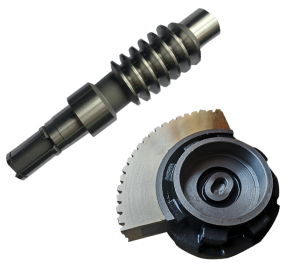
A drive gear, also known as a driving gear, is a gear that receives mechanical power directly from a motor, engine, or other power source. Its primary function is to transmit rotational motion and torque to a mating gear, known as the driven gear. In every gear transmission system, the drive gear acts as the input component that initiates movement throughout the gear train.
The drive gear determines the direction of rotation and plays a key role in establishing the gear pair’s transmission ratio. During rotation, its teeth mesh with those of the driven gear, allowing power to be transferred efficiently from the input shaft to the output shaft.
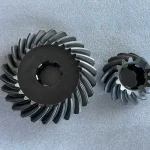
Depending on the application, a drive gear can be a spur gear, helical gear, bevel gear, worm gear, or internal gear. Regardless of the gear type, its fundamental purpose remains the same: converting input power into controlled motion for the next stage of the transmission system.
In industrial machinery, the performance of drive gears directly affects transmission efficiency, operating noise, load distribution, and service life. Therefore, selecting the appropriate gear material, tooth profile, heat treatment, and manufacturing accuracy is essential for ensuring reliable long-term operation.
What Is a Driven Gear?
A driven gear is the gear that receives rotational motion and torque from the drive gear. Unlike the drive gear, which is connected to the power source, the driven gear functions as the output component of the gear pair, transmitting power to the next stage of the machine or transmission system.
As the drive gear rotates, its teeth engage with those of the driven gear, causing the driven gear to rotate in the opposite direction in a standard external gear pair. The speed and torque of the driven gear depend on the gear ratio between the two gears. A larger driven gear generally rotates more slowly while delivering higher torque, whereas a smaller driven gear rotates faster but delivers lower output torque.
Driven gears are widely used in automotive transmissions, agricultural equipment, mining machinery, robotics, and other power transmission systems. Their design—including the number of teeth, module, pressure angle, material, and heat treatment—directly affects transmission efficiency, durability, and operating performance.
Like drive gears, driven gears can be manufactured as spur gears, helical gears, bevel gears, worm gears, or internal gears, depending on application requirements. Selecting the appropriate driven gear is essential for achieving the desired gear reduction, torque output, and service life.
How Do Drive Gears and Driven Gears Work Together?
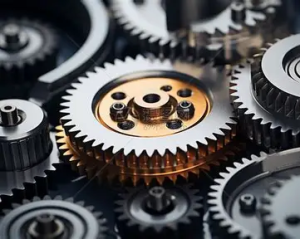
Drive gears and driven gears always function as a matched pair to transmit mechanical power. When the drive gear receives rotational energy from a motor or engine, its teeth mesh with the driven gear, transferring motion, torque, and speed through continuous engagement of the gear teeth. This synchronized movement forms the foundation of nearly every gear transmission system.
One of the most important concepts in a gear pair is the gear ratio, which is determined by the number of teeth on the drive gear and driven gear. The gear ratio directly affects the output speed and torque of the transmission system.
For example, if a drive gear has 20 teeth and the driven gear has 40 teeth, the gear ratio is 2:1. In this configuration, the driven gear rotates at half the speed of the drive gear while producing approximately twice the output torque (excluding transmission losses). This principle is widely applied in industrial gearboxes where higher torque is required for heavy-duty applications.
Conversely, when the driven gear has fewer teeth than the drive gear, the output shaft rotates faster but delivers lower torque. This configuration is commonly found in machinery that require higher operating speeds rather than maximum tractive force.

The relationship between speed and torque makes proper gear ratio selection critical in industries such as automotive, agriculture, mining, robotics, construction equipment, and industrial automation. When designing gear transmission systems, engineers must balance efficiency, load-bearing capacity, operating speed, and durability.
Drive Gear vs. Driven Gear: Key Differences
Although drive gears and driven gears always operate together, they perform different functions within a power transmission system. Understanding the differences between them helps engineers, designers, and equipment manufacturers select the right gear combination for specific operating conditions.
The table below summarizes the key differences between a drive gear and a driven gear.
| Feature | Drive Gear | Driven Gear |
| Function | Supplies mechanical power to the gear pair | Receives power from the drive gear |
| Alternative Name | Driving Gear | Driven Gear |
| Position | Input side of the transmission | Output side of the transmission |
| Power Source | Connected to a motor, engine, or other power source | Connected to the output shaft or driven equipment |
| Primary Role | Initiates rotational motion | Delivers the required output speed and torque |
| Rotation Direction | Determines the initial rotation direction | Rotates opposite to the drive gear in external gear pairs |
| Speed | Usually rotates faster when driving a larger gear | Depends on the selected gear ratio |
| Torque | Provides input torque | Produces the required output torque |
| Typical Applications | Motors, engines, gearboxes | Industrial machinery, conveyors, vehicles, robotics |
How to Select the Appropriate Drive Gear and Driven Gear?
Selecting the appropriate drive gear and driven gear is essential for achieving reliable performance, high transmission efficiency, and long service life. Whether designing a new transmission system or replacing existing gears, engineers should evaluate several key factors before making a selection.
1. Determine the Required Gear Ratio
The gear ratio directly affects output speed and torque, making it one of the primary parameters to define. Generally, a larger driven gear reduces output speed while increasing torque, whereas a smaller driven gear increases speed but reduces torque. Selecting the appropriate gear ratio ensures the transmission system meets the performance requirements of the application.
2. Choose the Appropriate Gear Type
Different applications require different gear types depending on shaft arrangement, operating conditions, and load requirements.
- Spur Gears – Suitable for parallel shafts and simple power transmission.
- Helical Gears – Offer smoother operation, higher load capacity, and lower noise than spur gears.
- Bevel Gears – Used to transmit motion between intersecting shafts.
- Worm Gears – Ideal for high reduction ratios and compact transmission systems.
- Internal Gears – Commonly used in planetary gearboxes and precision transmission systems.
3. Select the Right Material
Gear materials have a significant impact on strength, wear resistance, and fatigue life. Common materials include alloy steels, carbon steels, stainless steels, cast iron, and engineering plastics.
For heavy-duty industrial applications, carburized alloy steels such as 20MnCr5, 18CrNiMo7-6, and SAE 8620 are widely used because they provide excellent surface hardness while maintaining core toughness.
4.Consider Manufacturing Accuracy
High-precision gears enhance transmission efficiency, reduce vibration and noise, and extend service life. Depending on the application, manufacturing processes such as gear hobbing, gear shaping, gear grinding, gear lapping, and gear honing may be used to achieve the rnecessary precision standards.
Selecting the appropriate gear quality standard, such as DIN, ISO, or AGMA, helps ensure alignment with the operating conditions and performance expectations.
5.Evaluate Heat Treatment Requirements
Heat treatment plays a critical role in enhancing gear durability and load-carrying capacity. Common processes include carburizing, induction hardening, nitriding, and quenching and tempering.
The appropriate heat treatment depends on factors such as transmitted load, operating speed, wear resistance requirements, and expected service life.
By carefully considering these factors, engineers can select drive gears and driven gears combination that achieves optimal efficiency, reliability, and long-term performance for a specific application.
FAQs
1.What is the difference between a drive gear and a driven gear?
A drive gear is connected to the power source and provides the input motion and torque to the gear system. A driven gear receives that power from the drive gear and transfers it to the output shaft or driven equipment. Although they always work together, their functions within the transmission system are different.
2.Can the drive gear and the driven gear be the same type of gear?
Yes. The terms drive gear and driven gear describe the function of a gear rather than its design. Spur gears, helical gears, bevel gears, worm gears, and internal gears can all serve as either the drive gear or the driven gear, depending on the transmission configuration.
3.How do I choose the appropriate gear ratio?
The appropriate gear ratio depends on your application’s required output speed, torque, load capacity, and operating conditions. Engineers typically determine the gear ratio during the transmission design stage to achieve the desired balance between efficiency, power, and performance.
4.Can BELON manufacture custom drive gears and driven gears?
Yes. Shanghai Belon Machinery Co., Ltd. specializes in the design and manufacture of high-precision OEM gears for a wide range of industrial applications. We supply custom spur gears, helical gears, bevel gears, internal gears, worm gears, and gear shafts, with comprehensive manufacturing capabilities including forging, machining, heat treatment, gear grinding, inspection, and customized quality control to meet specific customer requirements.