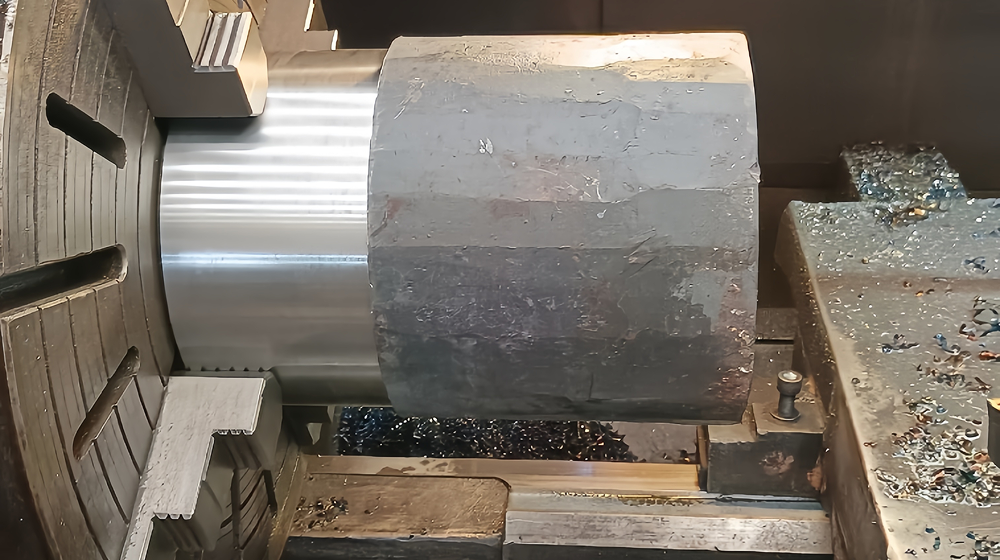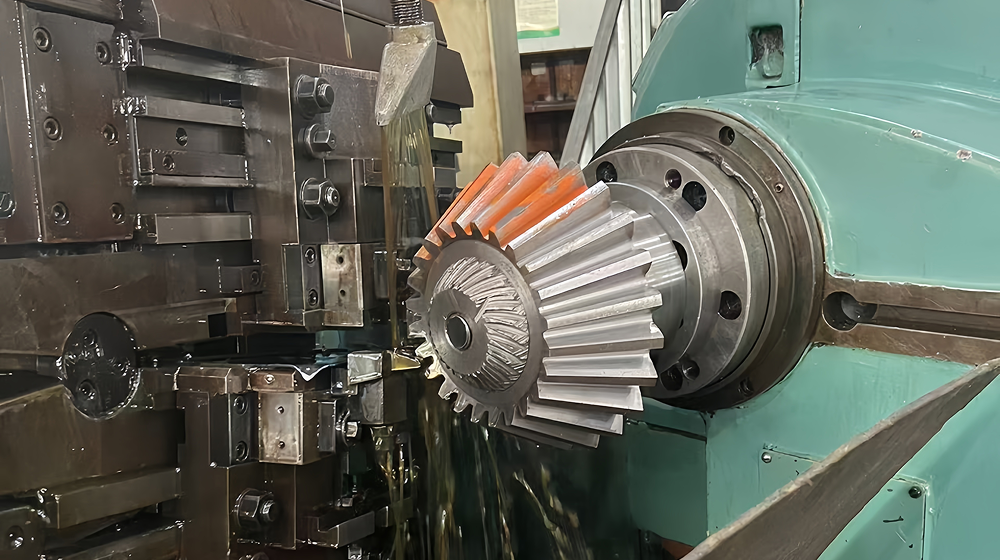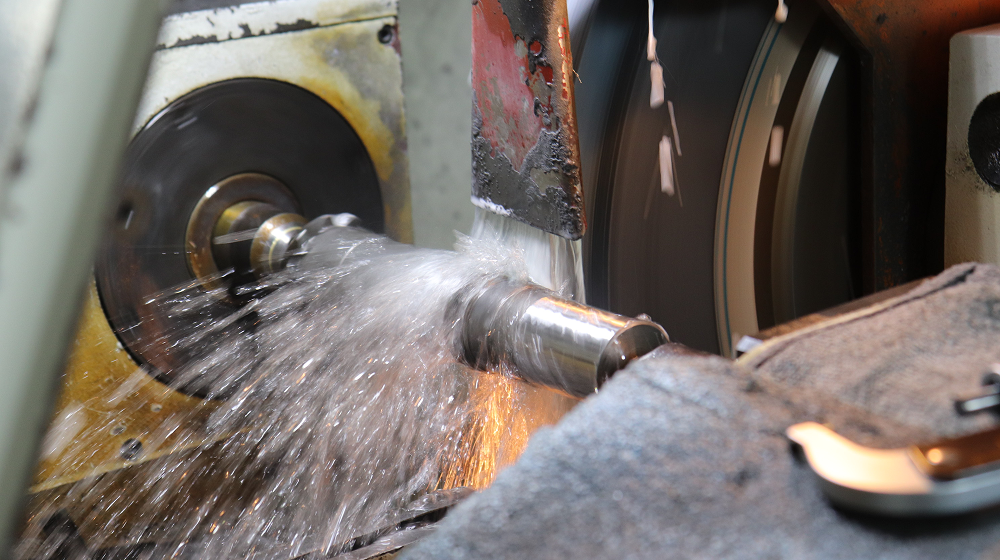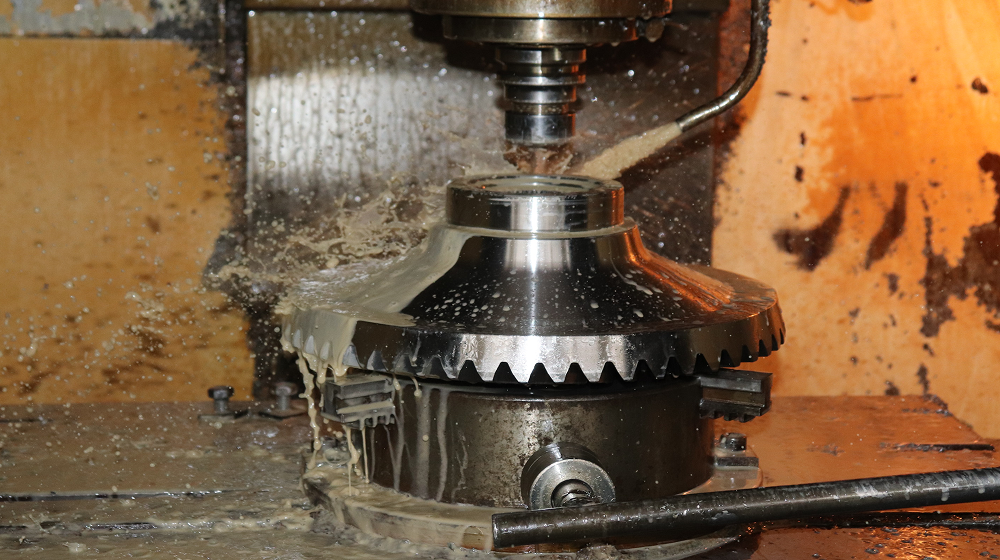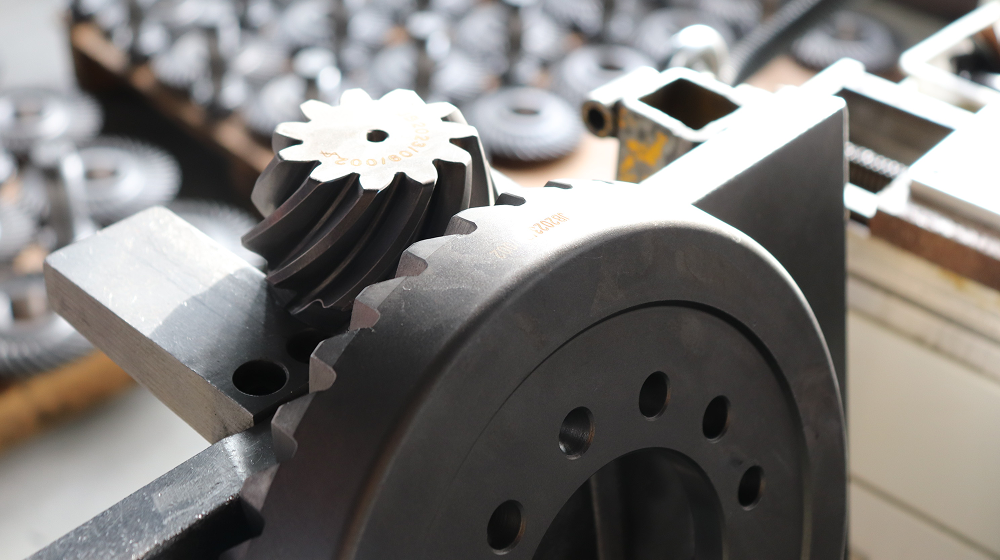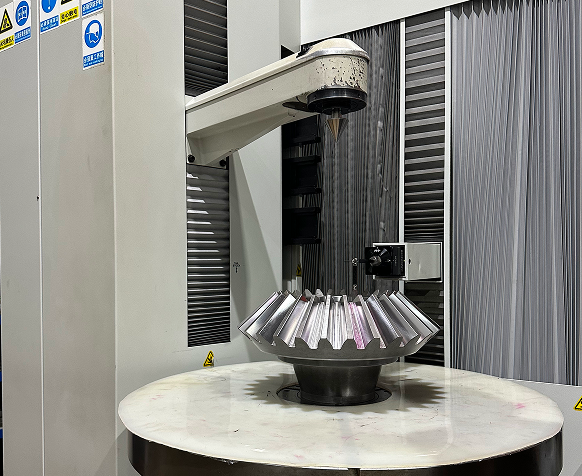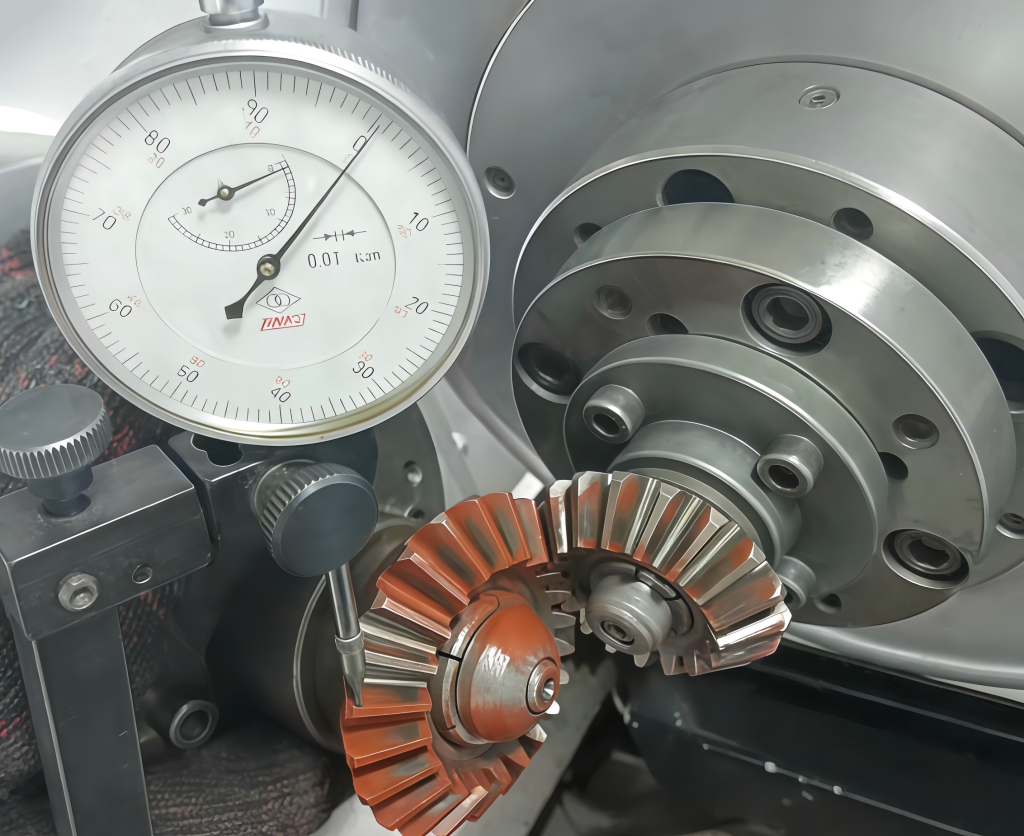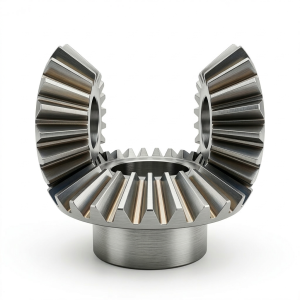

Straight bevel gears represent the most fundamental and historically established configuration for right-angle power transmission, characterized by straight tooth traces that converge precisely at the cone apex and teeth that taper uniformly from the outer heel diameter to the inner toe diameter, creating a geometrically simple yet functionally effective means of transferring torque between intersecting shafts whose axes typically intersect at 90 degrees. This structurally uncomplicated design for gearbox bevel gears yields a transmission system with zero axial thrust component under ideal alignment conditions—a distinctive advantage that substantially simplifies bearing arrangements and housing structures, eliminating the need for heavy-duty tapered roller bearings typically required to counteract the axial forces generated by curved-tooth geometries, and making straight bevel gears particularly suitable for applications where axial space is severely constrained or where bidirectional load reversals occur frequently without corresponding changes in bearing load direction. The line of action in straight bevel gear meshing generates a complex combination of rolling and sliding motion along the tooth flank, with the sliding velocity reaching its maximum at the toe end where the pitch line velocity is lowest and diminishing progressively toward the heel, while Hertzian contact stresses concentrate near the mid-face width region where the relative radius of curvature is most unfavorable, rendering the gear pair highly sensitive to mounting distance variations, shaft deflection under torsional and bending loads, and thermal expansion differentials between housing and shaft materials that can alter the intended mesh geometry during sustained operation.
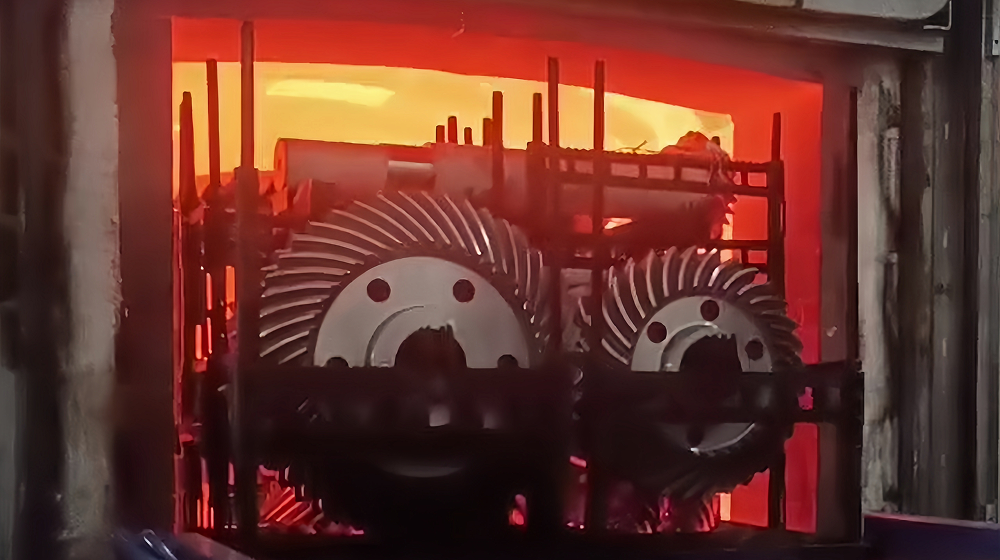
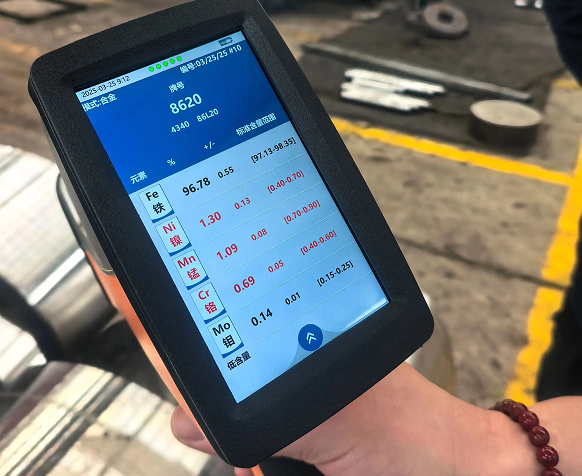
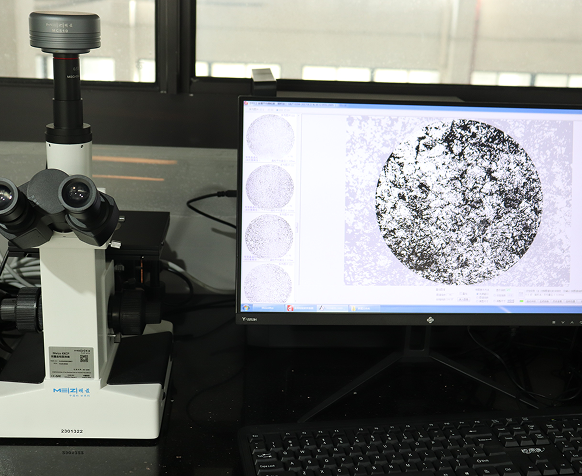
Despite their inherent impact excitation and moderate to high noise levels resulting from a contact ratio typically ranging between 1.2 and 1.5—which means that for a significant portion of each meshing cycle only a single tooth pair carries the entire transmitted load—straight bevel gears remain the preferred solution across countless industrial sectors including agricultural tillage and harvesting equipment, manual transmission reverse idler trains, mining scraper conveyor drive heads, port crane slewing mechanisms, and low-speed high-torque mixer drives, primarily due to their manufacturing simplicity, ease of field inspection without specialized instrumentation, and exceptional cost-effectiveness in low-to-medium volume production runs where the capital investment for spiral bevel cutting equipment cannot be justified. The tooth root bending strength, which reaches its theoretical maximum at the heel end where the tooth section modulus is greatest due to the larger circumferential thickness, fundamentally dictates the ultimate load-carrying capacity of the gear set under shock loading conditions, while the toe end presents the highest sliding velocity and consequently the greatest scuffing risk, necessitating careful surface finish control below 0.3 μm Ra and adequate lubrication supply with extreme-pressure additives to maintain a protective boundary film under the most severe operating conditions. Material selection for straight bevel gears in heavy industrial service invariably centers on case-hardening alloy steels such as 20MnCr5, 16MnCr5, or 18CrNiMo7-6, which provide a wear-resistant surface layer of 58–62 HRC capable of withstanding abrasive wear and contact fatigue, combined with a tough, ductile core of 30–40 HRC capable of absorbing the shock loads arising from sudden encounters with rocks, roots, or other foreign objects in off-highway applications, with the heat treatment cycle meticulously tailored to achieve a case depth of 0.6–0.9 mm that optimally balances surface durability against core toughness and distortion control.