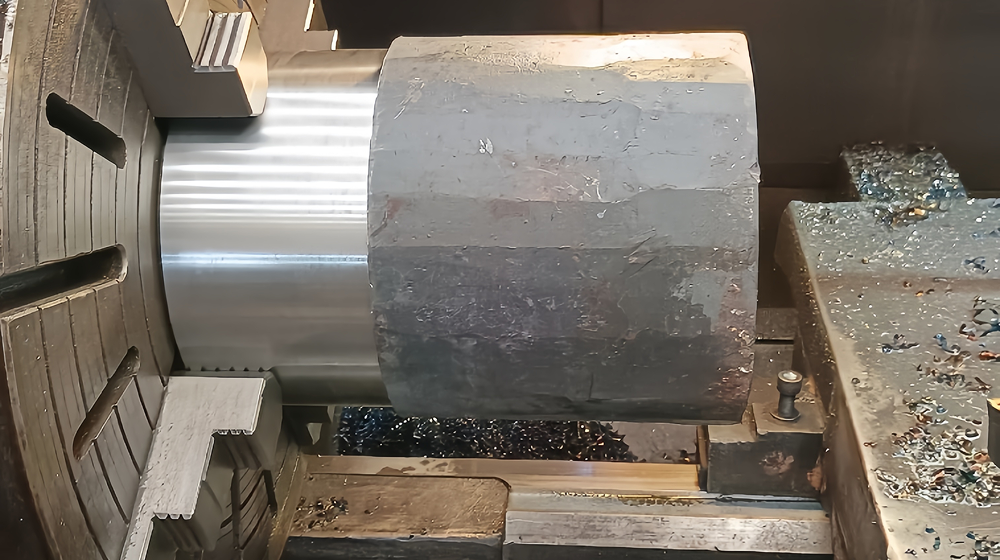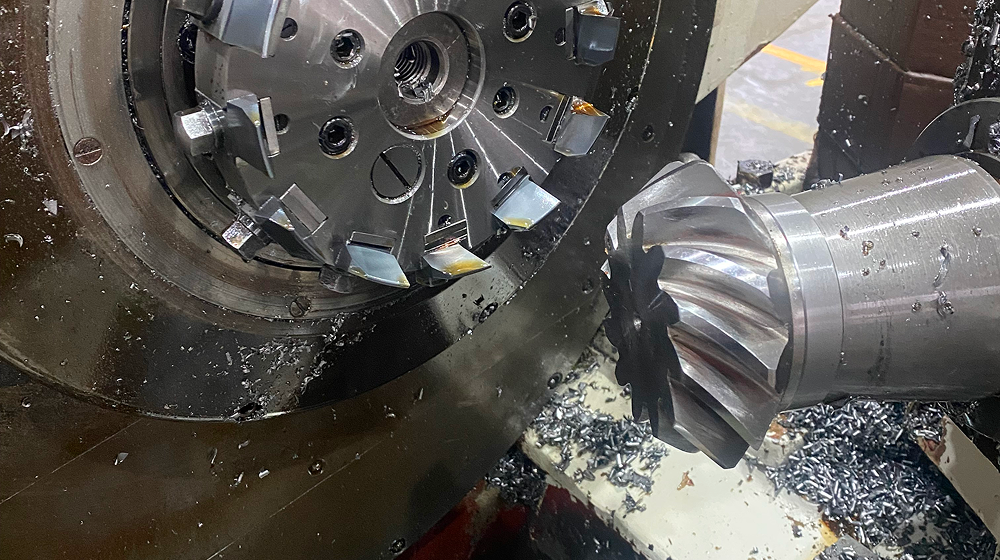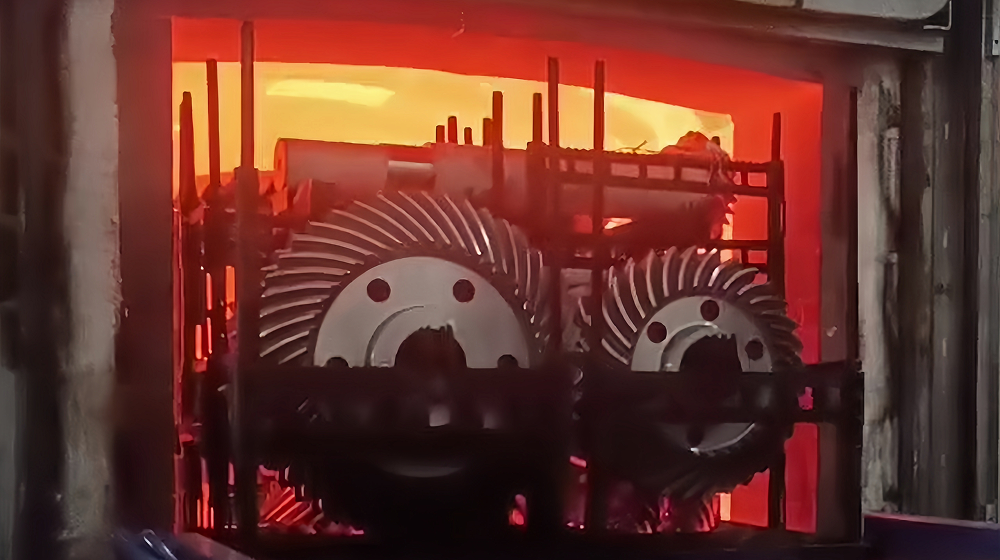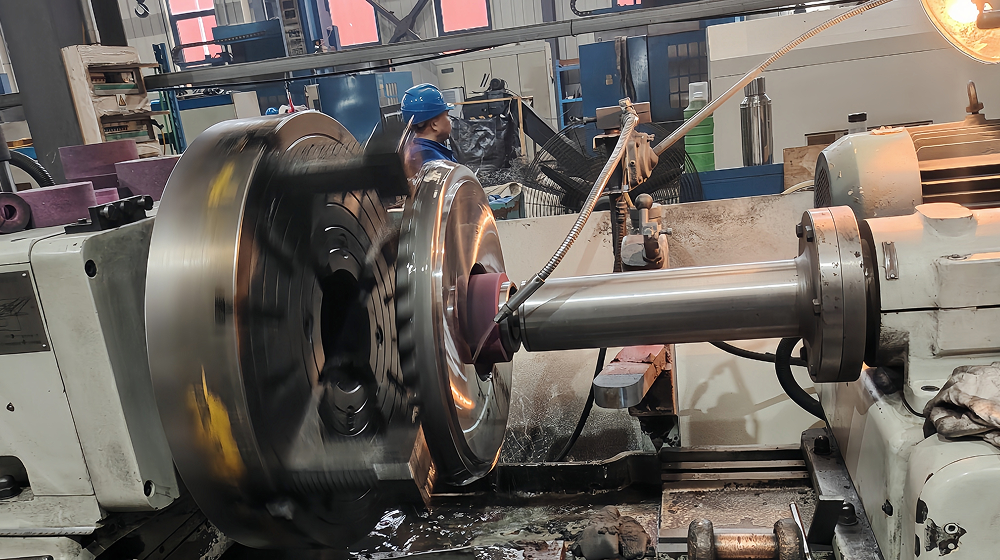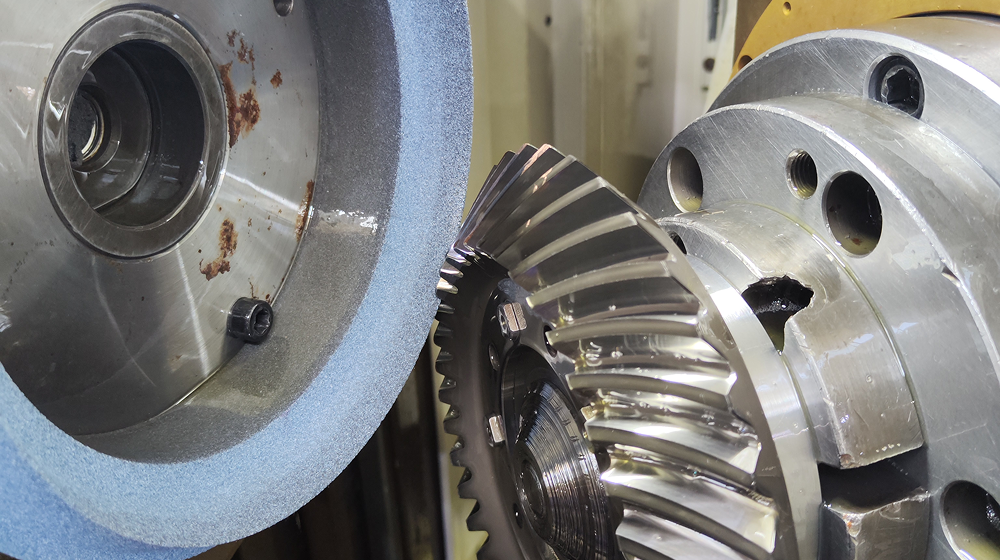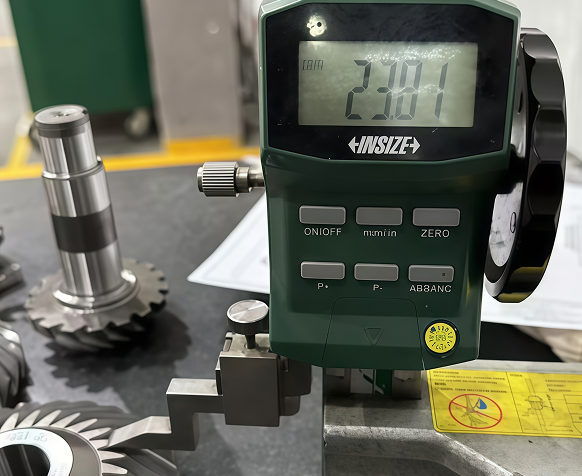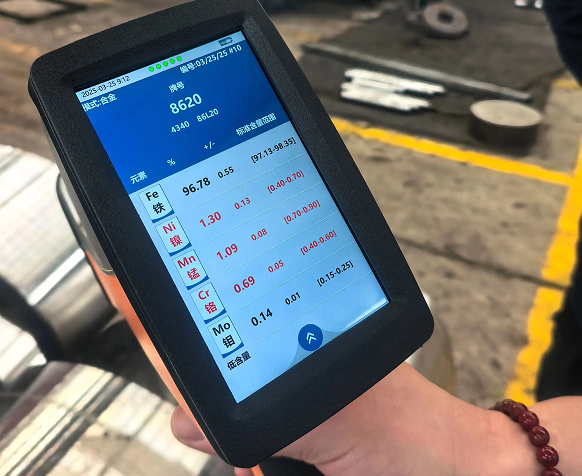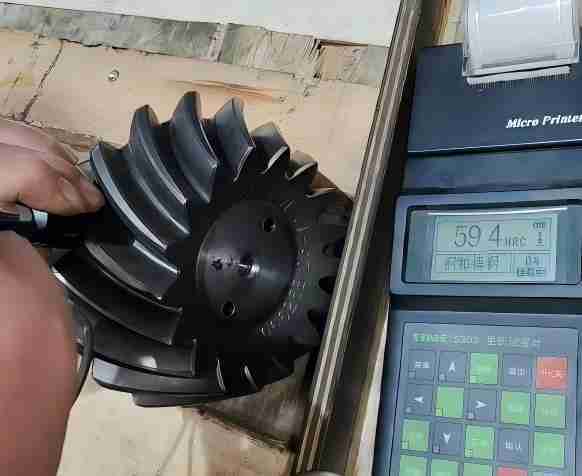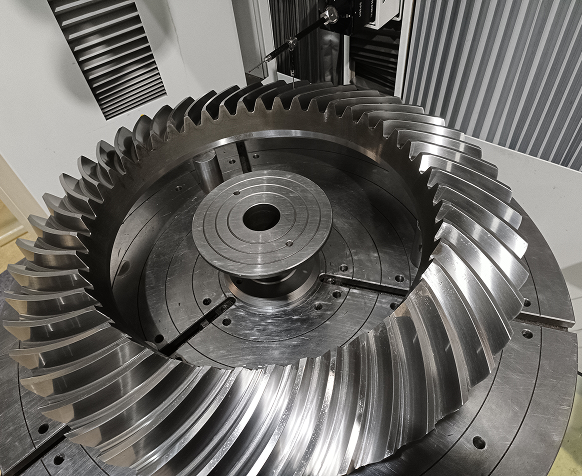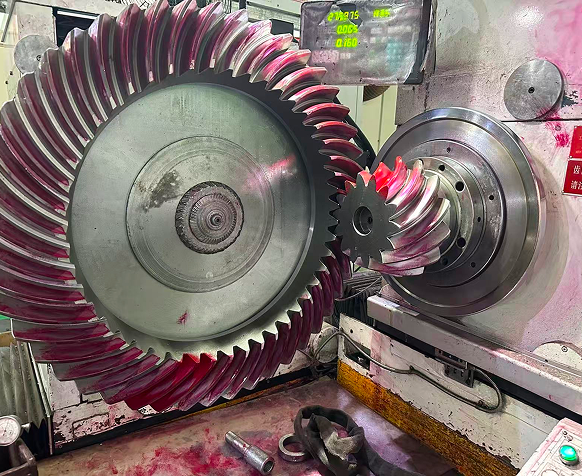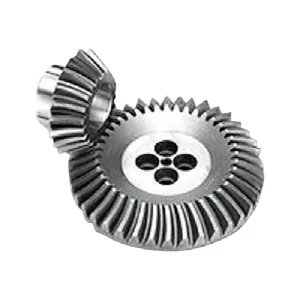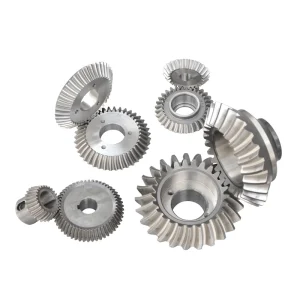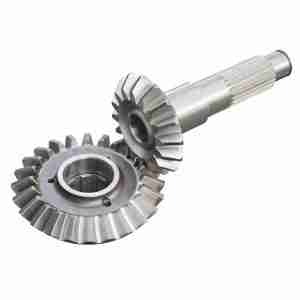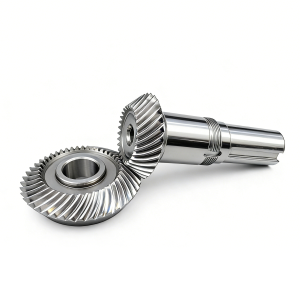
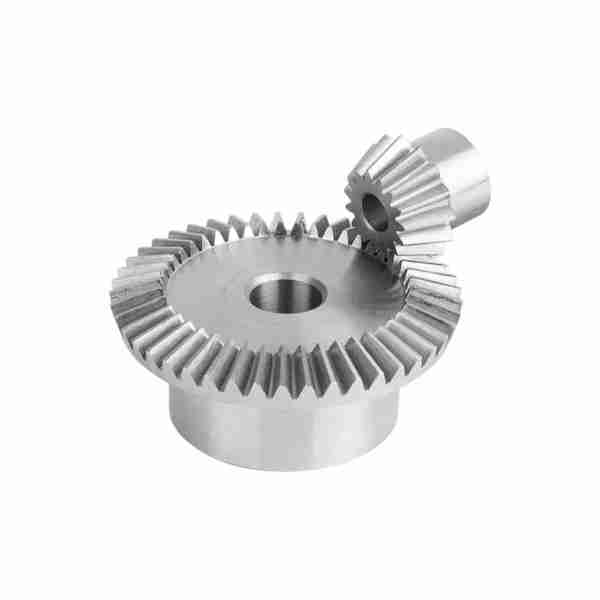
This is a standard product schematic diagram of a Zero Degree (Zerol) Bevel Gear. Unlike cylindrical gears, this type of gear is specifically designed for transmitting motion between intersecting shafts.
Zero degree bevel gears are core components in mechanical transmission systems used to change the direction of power transmission. Their main applications include:
- Spatial Directional Transmission
Used to connect two intersecting shafts (typically at 90°, but other angles are also possible), transmitting rotational power from a motor to a working machine at a right angle or a specific angle.
- High-Precision and Low-Noise Applications
Because their tooth profile lies between straight bevel gears and spiral bevel gears, the tooth surface contact during meshing is smooth, resulting in extremely low noise and vibration. Therefore, they are widely used in equipment with strict noise requirements, such as automotive differentials, precision machine tools, aerospace equipment, and high-end medical devices.
- High Load Capacity Transmission
Compared to ordinary straight bevel gears, zero degree bevel gears have a higher contact ratio and can withstand greater impact loads and torque.