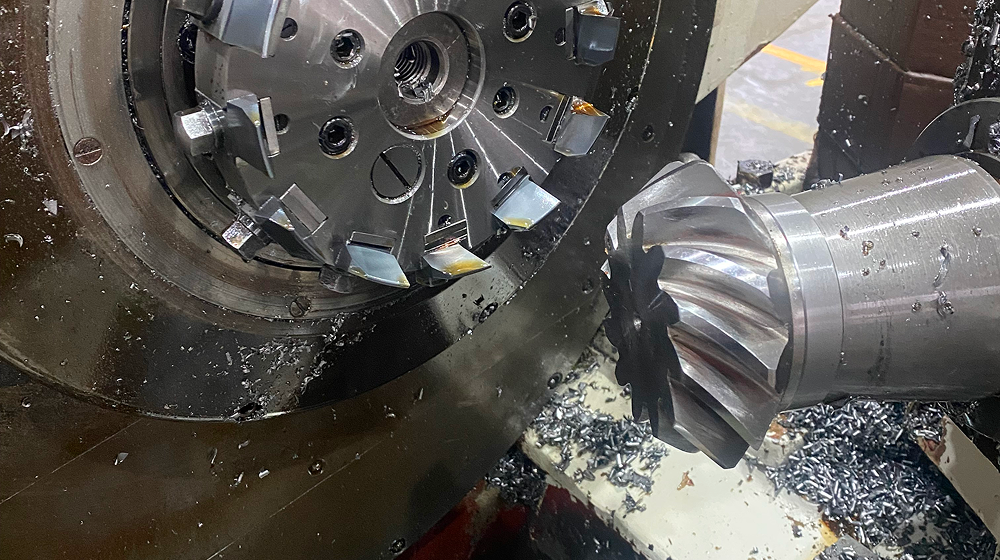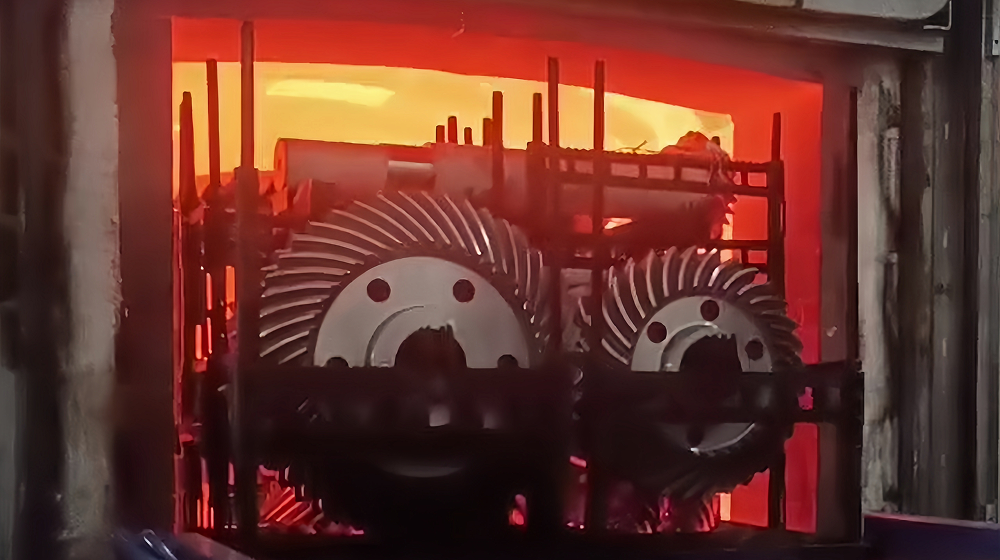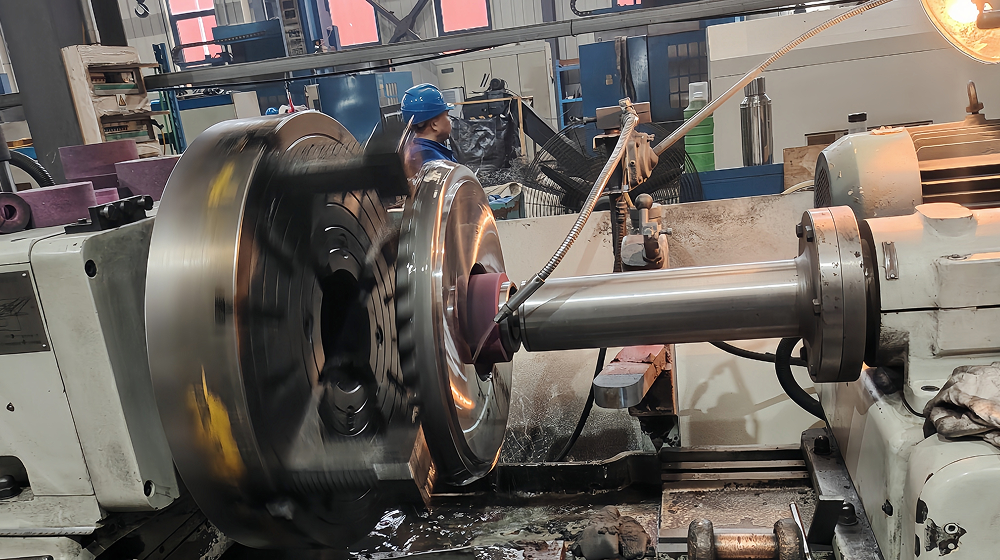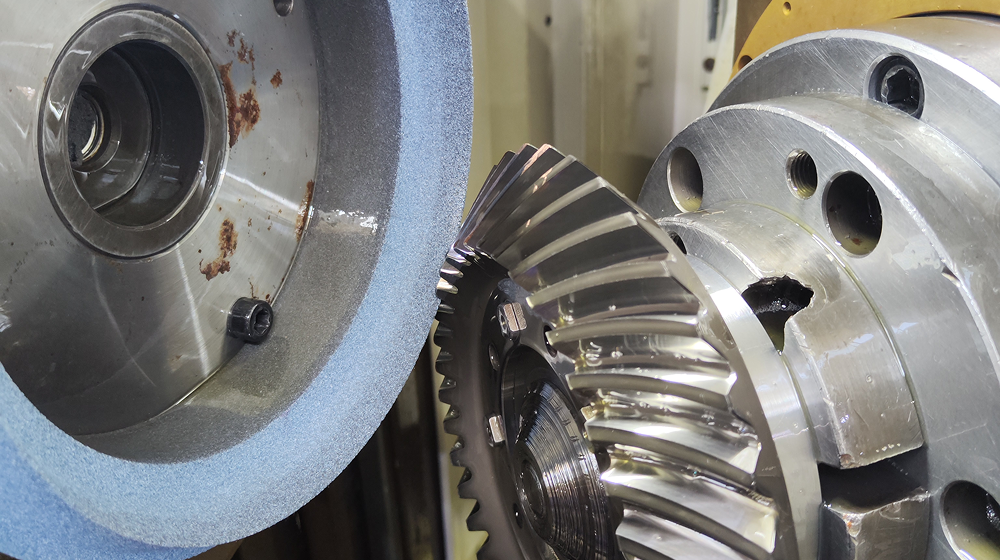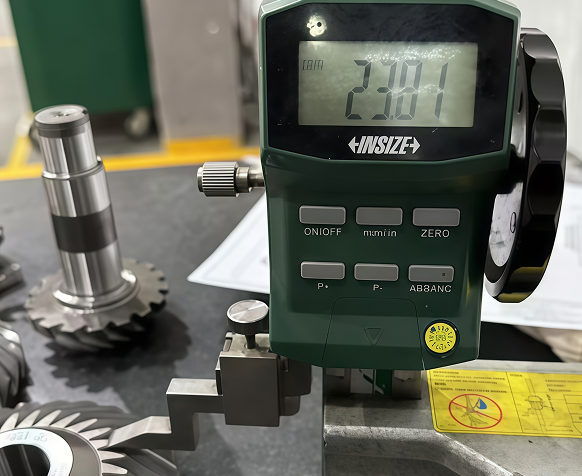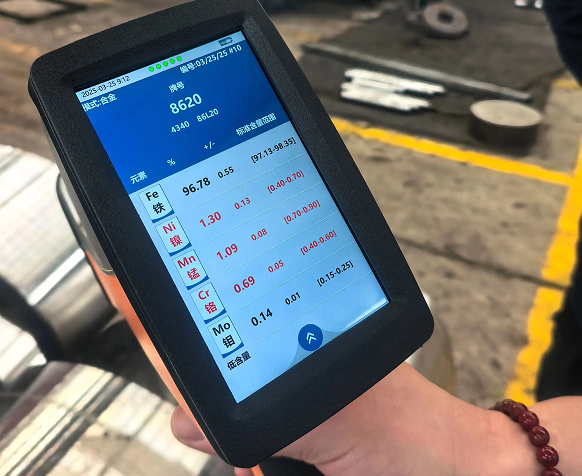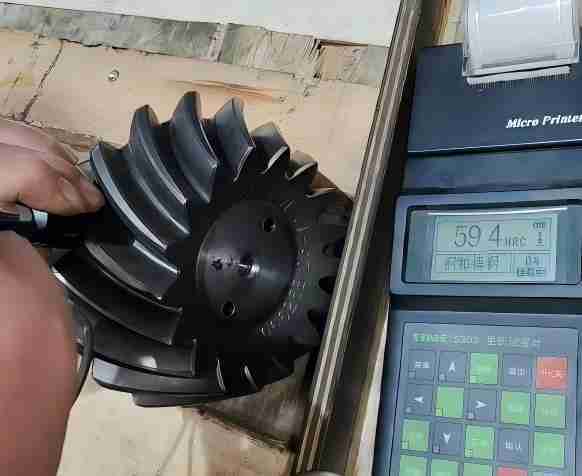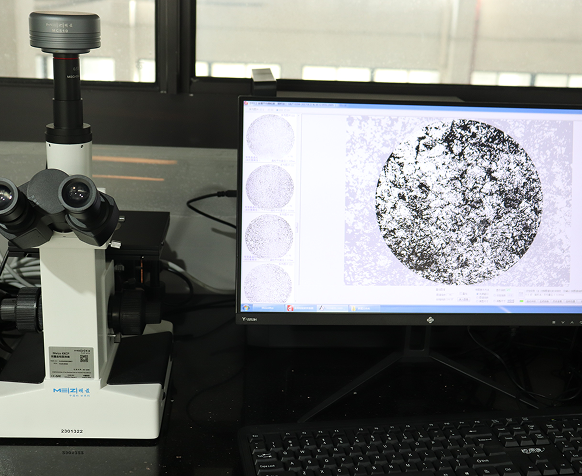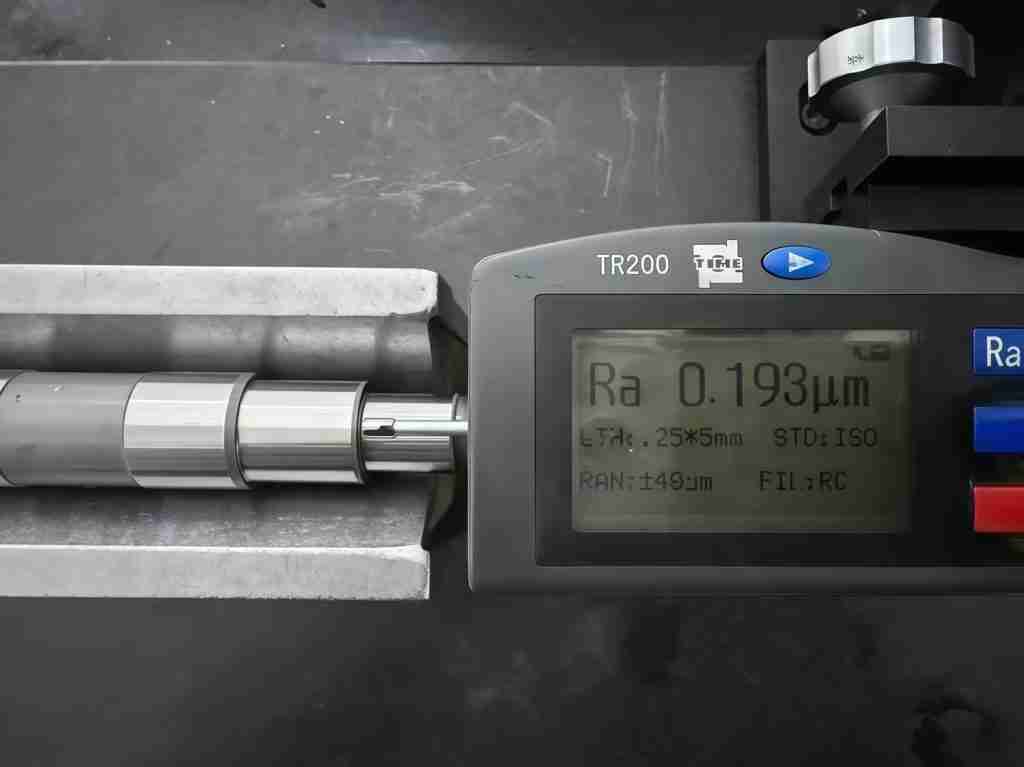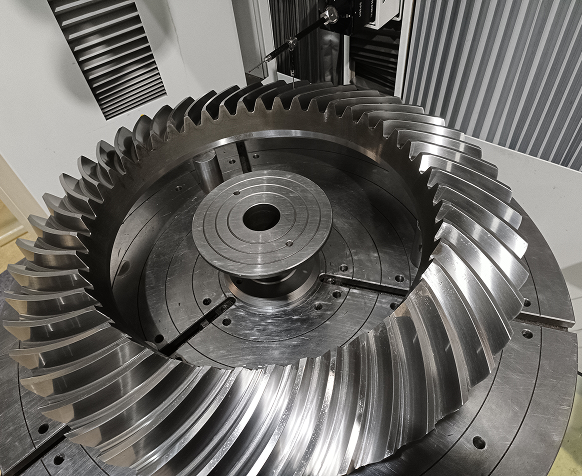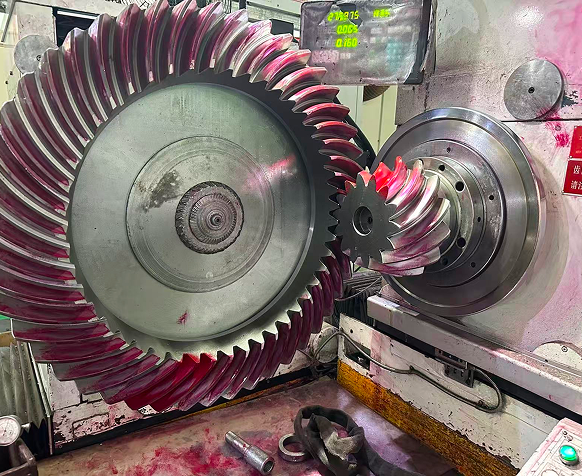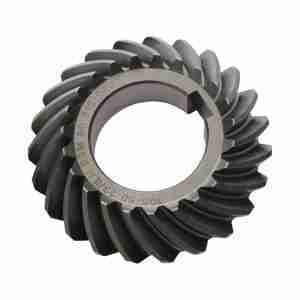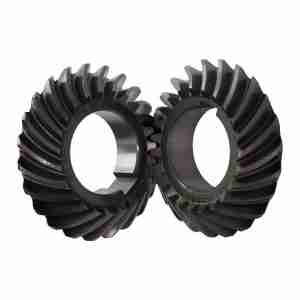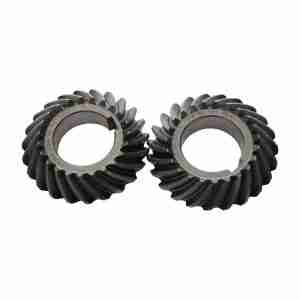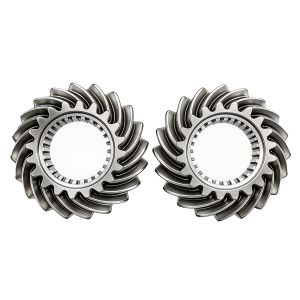
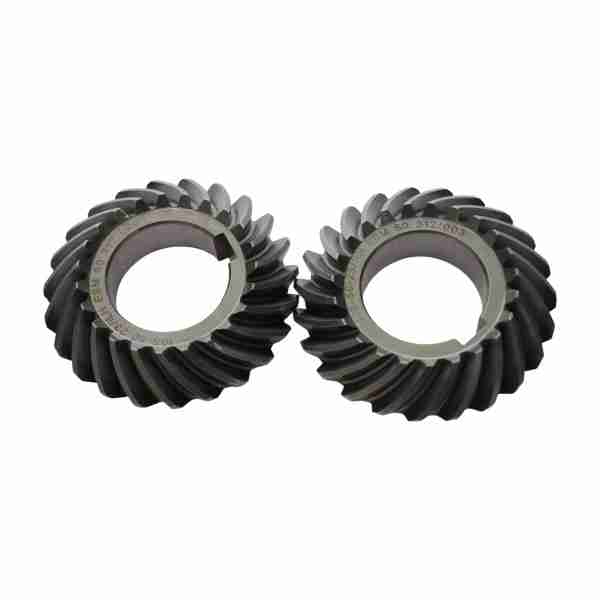
Miter Gear is a specific type of bevel gear whose core function is to transmit power and change the direction of rotation at a 1:1 speed ratio between two intersecting shafts (typically at a 90-degree angle). It is not merely a simple “right-angle turn” component; its design, manufacturing, and application involve precise engineering principles.
Core Structure and Working Principle
The tooth flanks of miter gears are distributed on conical surfaces, with the axes of the two gears intersecting at the apex of the cones. Their most standard configuration features two gears with equal numbers of teeth, identical dimensions, and both having a 45-degree pitch cone angle, thereby achieving a 1:1 speed ratio. Power transmission is accomplished through the continuous meshing of the tooth flanks: the tooth surface of the driving gear pushes against the tooth surface of the driven gear. The normal force at the contact point transmits torque, and due to the geometric relationship of the intersecting axes, the direction of rotation is changed.