Belon-machinery-gear-manufacturing-company-gear-solutions-providerBelon-machinery-gear-manufacturing-company-gear-solutions-provider
Contact Us
large-module-lapped-bevel-gears-lapping-gears-supplier-Belon

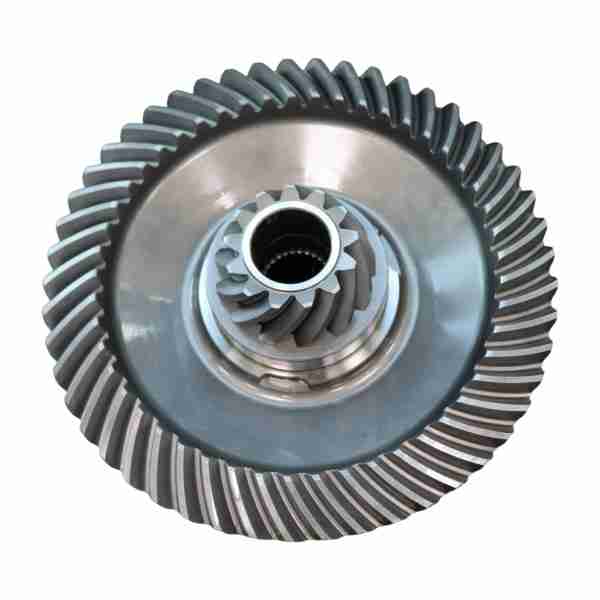
Large Module Lapped Bevel Gear

A large module lapped bevel gear is not a special type of gear. It is a standard bevel gear with a large tooth size, typically module 10 or above, that has been finished with the lapping process. Lapping transforms a good gear into a significantly better one by removing microscopic high spots from the tooth surface. For large module gears, lapping is even more important than for small gears. The reason is simple. A large tooth has a larger surface area. Larger surfaces have more high spots and irregularities. When a large module gear is cut, the cutting forces are higher. The tool deflects more. The heat generated is greater. All of these factors create more surface imperfections. Without lapping, these imperfections cause uneven load distribution, high stress, noise, and premature wear. With lapping, the gear runs smoothly, quietly, and for much longer. For heavy-duty applications like mining, cement mills, steel mills, and marine propulsion, large module lapping bevel gears are the standard choice.

The fundamental problem that lapping solves is surface irregularity. When a large module bevel gear is cut by any conventional gear cutting machine, the tooth surface is not perfectly smooth. This is especially true for large gears. The cutting tool is large. The machine must handle high forces. The gear blank may weigh hundreds or even thousands of kilograms. Under these conditions, microscopic ridges, feed marks, and high spots are unavoidable. These imperfections are not visible to the naked eye, but they have a profound effect on gear performance. Under load, the high spots carry a disproportionate share of the force. They become localized stress concentrators. They generate heat. They break through the lubricant film. They wear rapidly. And as they wear, they create debris that accelerates wear on the rest of the tooth surfaces. On a large module gear, each tooth carries a heavy load. A single high spot can cause a gear to fail months or years before it should. Lapping eliminates these high spots by running the gear against its mating gear with an abrasive compound between the teeth. The abrasive particles are harder than the gear material. As the gears rotate, the abrasive removes material only where contact occurs. The high spots, which contact first and contact hardest, are removed preferentially. As they are removed, more of the tooth surface comes into contact. The process continues until the contact pattern is uniform across the tooth width and height. At that point, the gears are said to be lapped in.

For large module gears, the lapping process is similar to smaller gears but with important differences. First, the equipment is much larger and more powerful. Large lapping machines can handle gears up to two meters in diameter or more. Second, the cycle time is longer. While a small gear might lap in two to three minutes, a large module gear may require ten to twenty minutes or more. The abrasive must work longer to remove high spots from the larger tooth surfaces. Third, the operator must pay close attention to the contact pattern. Marking compound is applied repeatedly during the cycle. The operator examines the pattern and adjusts the lapping pressure and position as needed. The goal is a smooth, even pattern covering at least 60 percent of the tooth width and 50 percent of the tooth height. Fourth, cleaning is critical. Large gears have more surface area to retain abrasive particles. Residual abrasive left on a large gear will cause rapid wear in service. Cleaning is typically done with high-pressure washing followed by solvent baths, sometimes multiple times. The results are measurable and meaningful. Noise levels typically drop by 3 to 5 decibels. Vibration levels decrease proportionally. Contact stress is reduced because the load is spread across more of the tooth surface. Wear life extends, often by 30 to 50 percent or more. Break-in time, the period during which a new gear set must be run at reduced load to avoid damage, is drastically shortened. A non-lapped large module gear set may require 50 to 100 hours of break-in. A lapped set can often go directly to full load. For heavy industry, where downtime costs thousands of dollars per hour, this reduction in break-in time alone justifies the cost of lapping.

Large module lapping bevel gears are not the answer for every application. For very low-speed, very light-load applications, a cut gear is perfectly adequate. For ultra-high-precision applications requiring the highest possible accuracy, grinding is necessary. But grinding large module gears is extremely expensive. The grinding machines are costly. The process is slow. The wheel wear is high. For the vast majority of heavy-duty industrial, mining, and marine applications, lapping offers the best balance of performance and cost. A lapped large module bevel gear performs much better than a cut gear, at a fraction of the cost of a ground gear.
Specification
Module
12.82
Application
Gearbox
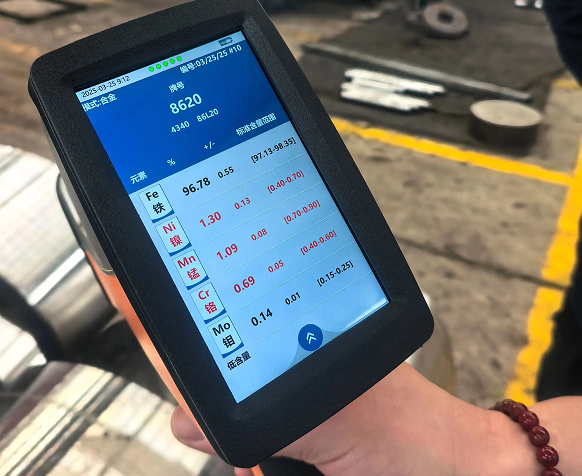
Material
8620
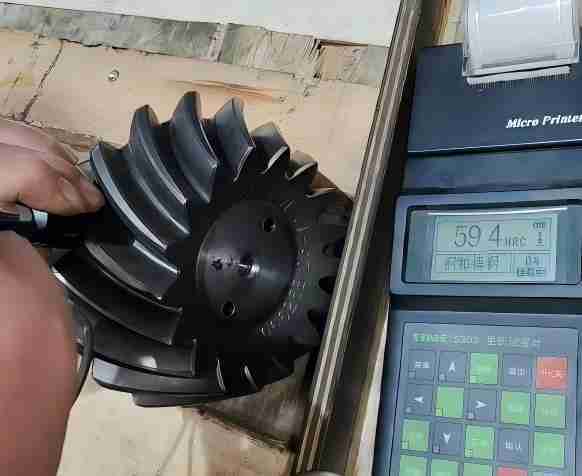
Heat Treatment
CARB.CASE HARDEN
Accuracy
DIN 8-9
Contact Us

Lapping Bevel Gear Application In Mining Equipment


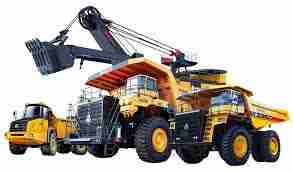
Mining equipment operates in some of the most brutal conditions found in any industry. Crushers, mills, conveyors, and shovels run 24 hours a day, seven days a week. They are exposed to dust, dirt, moisture, vibration, and shock loads. Downtime is measured in thousands of dollars per hour. In this demanding environment, the large module lapping bevel gear has proven itself as a critical component for reliability and long life. Mining companies have learned through decades of experience that lapped gears last significantly longer than cut gears, and the small additional cost of lapping pays for itself many times over in reduced downtime.

Typical mining applications for large module lapping bevel gears include crusher drives, ball mill drives, conveyor drives, and shovel swing drives. In a cone crusher, for example, a large bevel gear set transfers power from the motor to the crushing head. The loads are high and the shocks are severe. Rocks can jam the crusher, causing instantaneous torque spikes that would destroy a poorly made gear. A lapped gear set handles these shocks better because the contact pattern is even and the high spots have been removed. There are no points of extreme stress concentration where a crack can start. In a ball mill, the gear set must run continuously for months at a time. The speeds are low, typically 200 to 400 RPM, but the torques are enormous. A ball mill gear set might transmit 5000 horsepower or more. At these power levels, even a small imperfection on a tooth surface becomes a major problem. Lapping ensures that the load is spread evenly across all teeth, preventing localized overheating and wear.

The operating conditions in mining are harsh. The gearbox is often mounted outdoors, exposed to rain, snow, and temperature extremes. Seals eventually leak. Contaminants get into the oil. Despite these challenges, a lapped large module bevel gear set in a mining application typically lasts five to ten years under normal operation. This is two to three times longer than a non-lapped gear set in the same application. Mining companies track this data carefully. They know exactly how long their gears last. They have calculated the cost of downtime, the cost of replacement gears, and the cost of labor for changeouts. Their data consistently shows that lapped gears are worth the investment. One copper mine reported that their crusher bevel gears went from lasting 18 months to lasting 42 months after they switched to lapped gears. That is a 133 percent increase in life. Another mine reported that lapped gears reduced their annual gear maintenance cost by 60 percent. These are not isolated examples. They are typical results across the industry.

Why do lapped gears last so much longer in mining? The answer is even load distribution and better lubrication. On a cut gear, the high spots carry most of the load. These high spots get hot. They wear down. They generate particles that act like sand in the oil. This creates a self-accelerating wear cycle. Once it starts, it cannot be stopped. The gear will fail, and it will fail sooner than it should. On a lapped gear, the load is spread evenly. No single spot overheats. The oil film stays intact. The wear is slow and uniform. The gear simply lasts longer. Mining equipment manufacturers and mine operators have recognized this for decades. Almost all heavy mining gear sets are lapped today. The few that are not lapped are usually low-cost replacements for old equipment that is near the end of its life. For new equipment and for major rebuilds, lapping is the standard.

large-module-lapping-bevel-gear-lapped-gears-set-supplier-Belon
Production process

9-Step Production Process

Forging
Turning
Gear Milling
Heat Treatment
ID & OD Grinding
CNC Machining
Gear Lapping
Marking
Clean & Package
1
2
3
4
5
6
7
8
9
High-precision-forging-gear-production-process-Belon-China-manufacturer

Forging

When gears need high performance that needs to withstand high loads, high stress, impact loads or fatigue loads, forgings are suggested to use. Forging allows metal fibers to be continuously distributed along the gear profile, significantly improving root strength and fatigue life.
High-precision-turning-gear-production-process-Belon-manufacturer

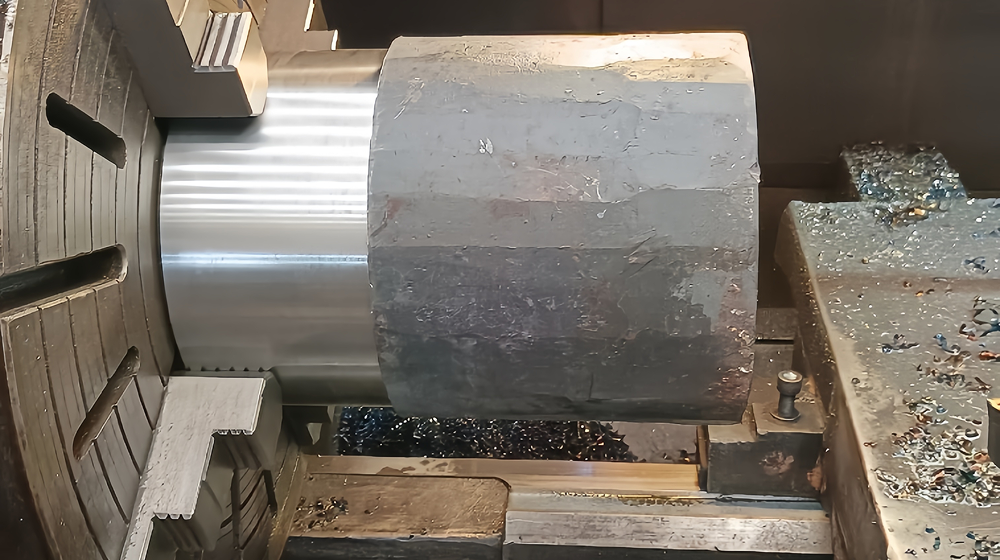
Turning

This is the process of cutting and shaping solid materials into precise parts. It uses tools like lathes, mills, and drills to remove excess material. Machining transforms a simple block of metal into a finished, functional component.
Large-module-lapping-bevel-gear-custom-gear-manufacturer-gear-supplier-Belon

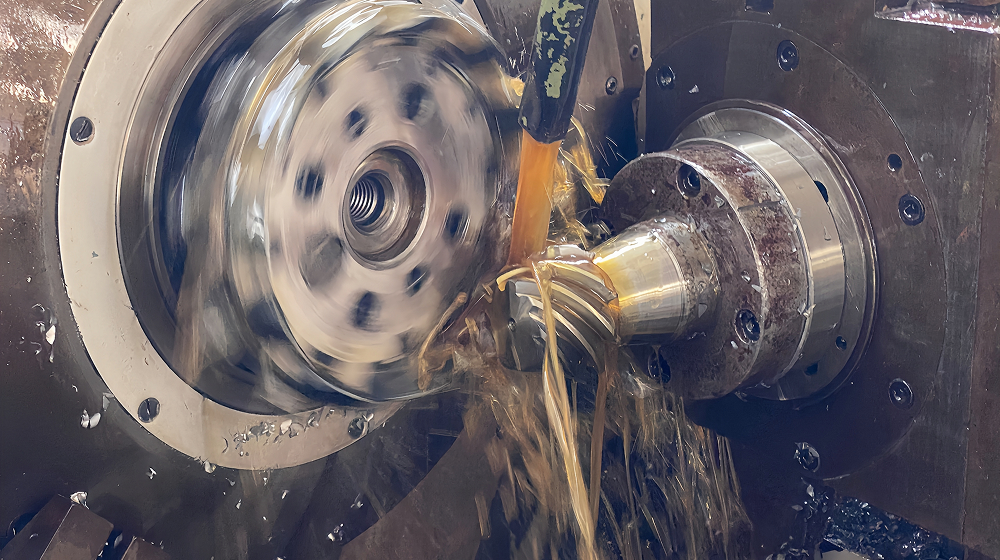
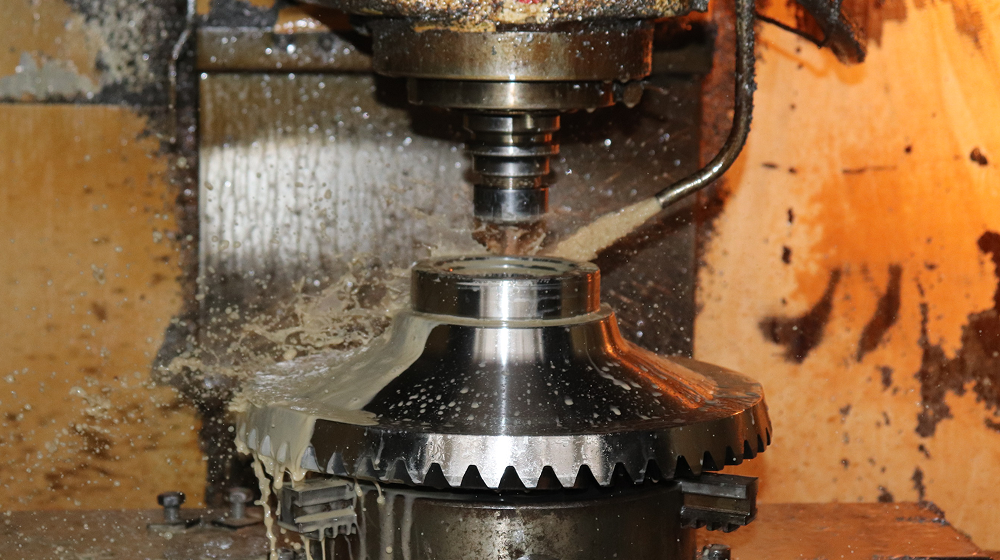
Gear Milling

Gear Milling is a gear cutting process that used a rotating from cutter shaped to match the exact space between two gear teeth is plunged into the gear blank. After cutting one tooth space, the blank is indexed to the next position .
Gear-Heat-Treatment-process-Belon-gear-manufacturer

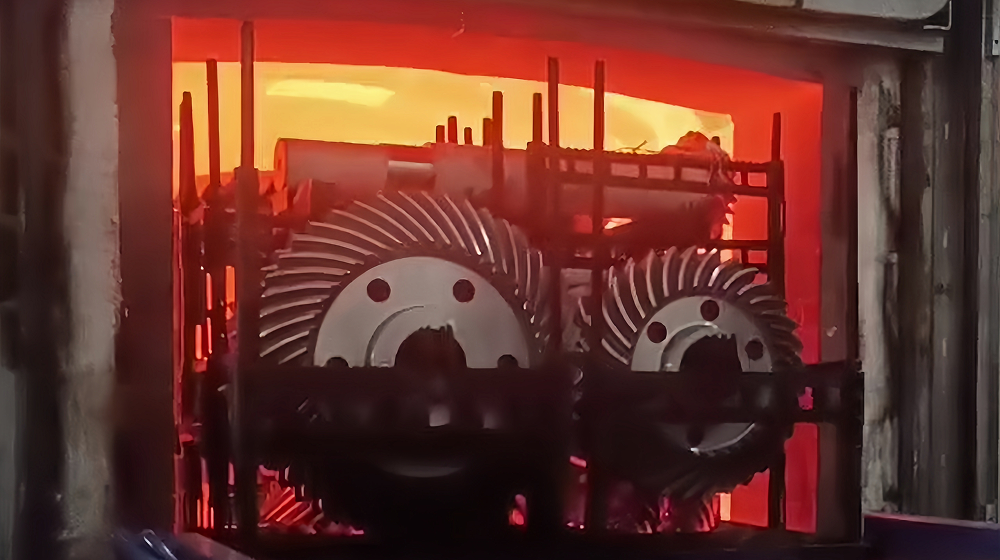
Heat Treatment

Gears need to be running with two gears or above two gears, that makes them easy to be worn-out. That’s why most types of gears need to be harden through heat treatment.
Large-module-lapping-bevel-gear-OD-grinding-process-gear-manufacturer-Belon

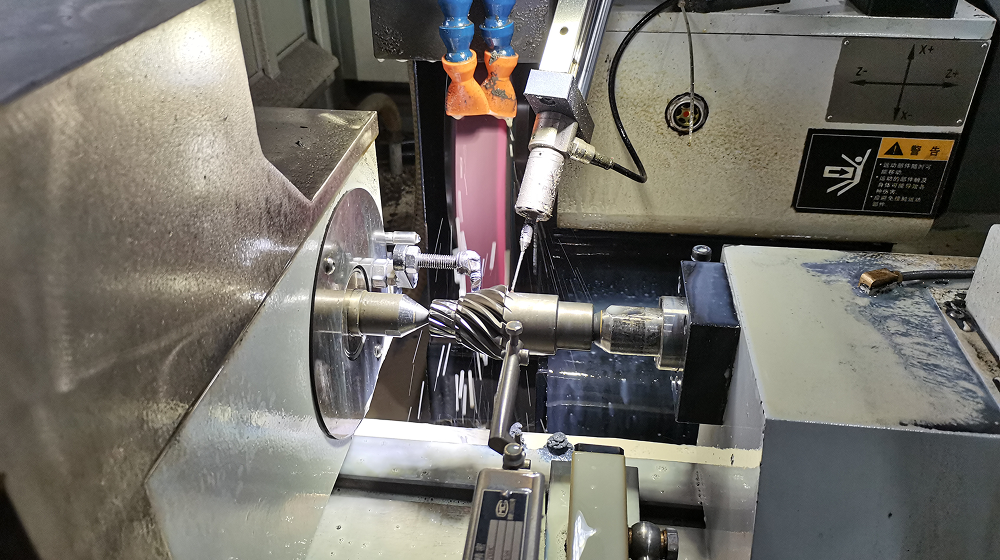
ID & OD Grinding

ID grinding, OD grinding, Surface grinding are all belonging to CNC grinding which are the foundational precision abrasive machining processes used to achieve exceptional dimensional accuracy and surface finishes, especially on hardened materials.
Lapping-bevel-gear-Lapped-bevel-gear-supplier-custom-gear-manufacturer-Belon

CNC Machining

CNC machining is a an automated manufacturing process controlled by pre-programmed computer software and code. Normally gears are designed in CAD software. CAM software translates the CAD model into G-Code, a machine language that dictates tools paths, speeds, feeds, and all movements.
Lapping-bevel-gear-supplier-custom-gear-manufacturer-gear-lapping-process-Belon

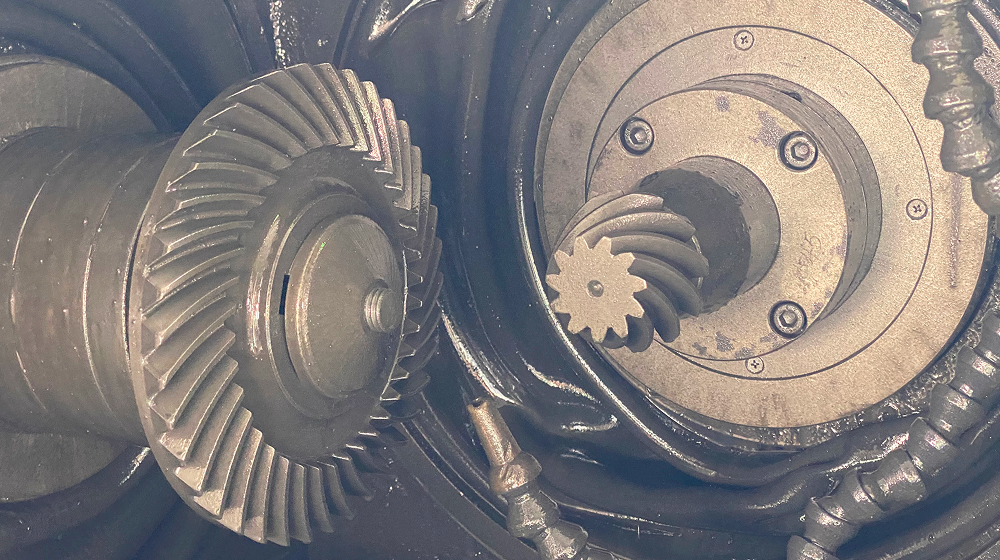
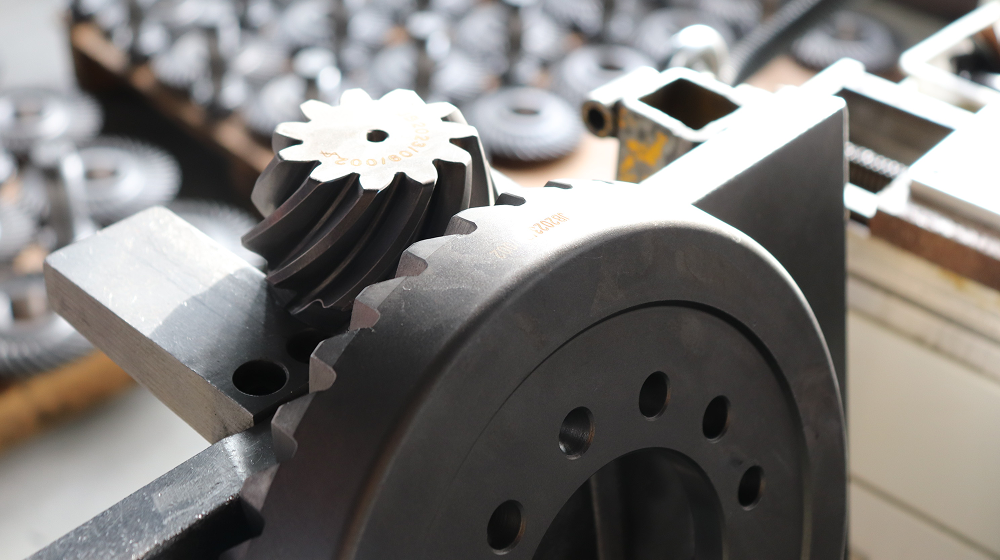
Gear Lapping

Gear lapping is a process for for finishing hardened bevel gears under gleason profile. This process can greatly improve surface finish and noise, however which could not correct geometric errors. It’s often done in paired sets (gears are lapped together and must remain matched). That is usual to use in high-volume bevel gears, where quiet operation is paramount.
Marking-process-straight-bevel-gear-supplier-custom-gear-manufacturer-Belon

Marking

Precision laser marking permanently engraves traceability data (part numbers, date codes, logos) onto gears, ensuring reliable identification and quality tracking throughout the product lifecycle.
Carton-outside-straight-bevel-gear-manufacturer-gear-solutions-Belon

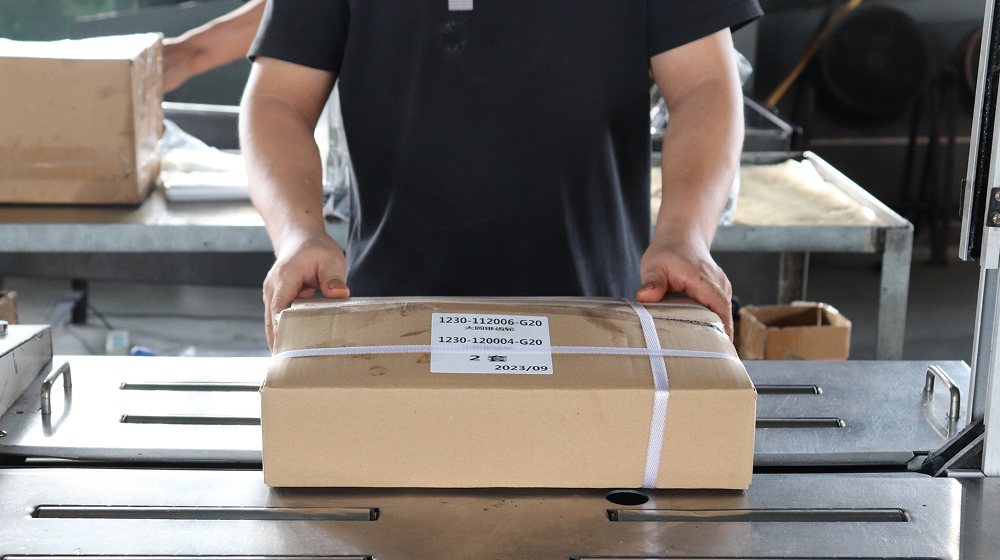
Clean & Package

Before shipment, every gear is carefully cleaned, dried, and rust-protected – ensuring they arrive in optimal condition, ready for immediate installation.
Inspection

Strict Quality Inspection

Dimension-inspection-gear-manufacturing-process-equipment-Belon

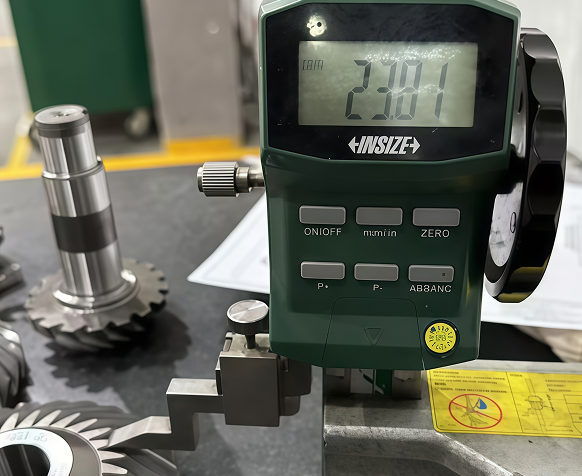
Dimension Inspection

Material-testing-gear-manufacturing-process-equipment-Belon

Material Testing

Hardness-inspection-gear-manufacturing-process-belon

Hardness Inspection

Heat-treatment-testing-gear-manufacturing-quality-control-process-Belon

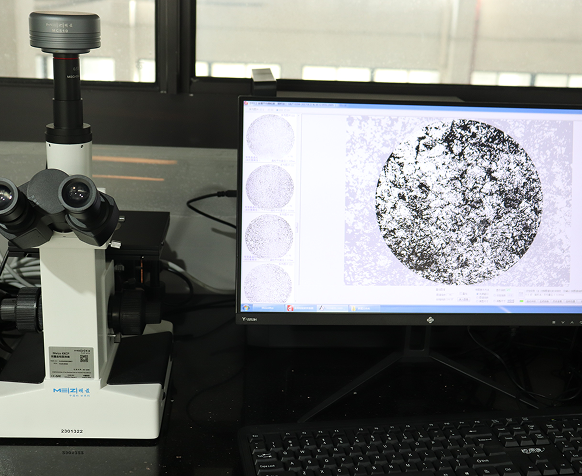
Heat Treatment Testing

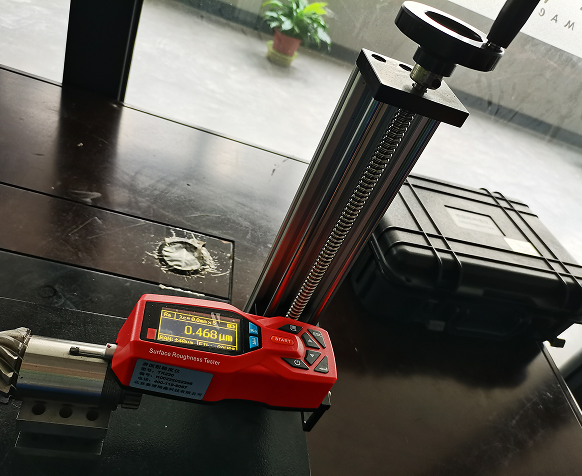
Roughness-test-lapped-bevel-gear-manufacturing-company-gear-supplier-Belon

Roughness Testing

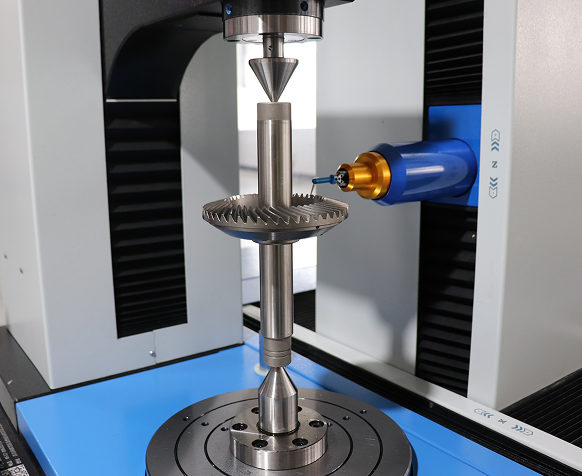
Accuracy-inspection-lapped-bevel-gear-manufacturing-company-Belon

Accuracy Inspection

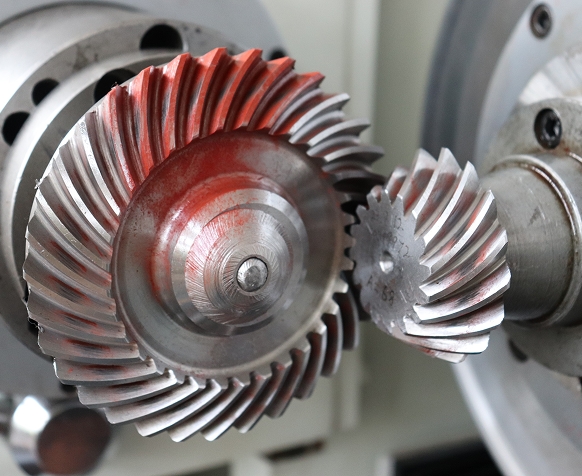
Lapped-bevel-gear-meshing-testing-gear-manufacturing-company-Belon

Meshing Testing

Dimension-inspection-gear-manufacturing-process-equipment-Belon

Dimension Inspection

Material-testing-gear-manufacturing-process-equipment-Belon

Material Testing

Hardness-inspection-gear-manufacturing-process-belon

Hardness Inspection

Heat-treatment-testing-gear-manufacturing-quality-control-process-Belon

Heat Treatment Testing

Roughness-test-lapped-bevel-gear-manufacturing-company-gear-supplier-Belon

Roughness Testing

Accuracy-inspection-lapped-bevel-gear-manufacturing-company-Belon

Accuracy Inspection

Lapped-bevel-gear-meshing-testing-gear-manufacturing-company-Belon

Meshing Testing

Packages

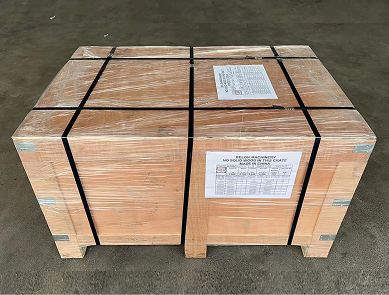
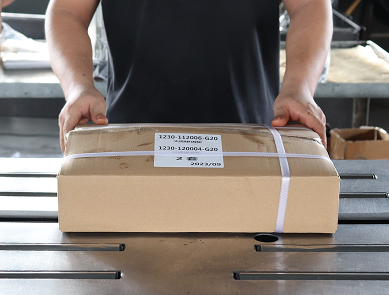
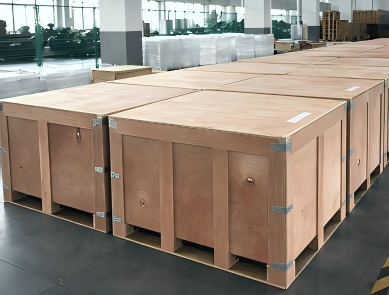
Professional Packaging Safe Arrival

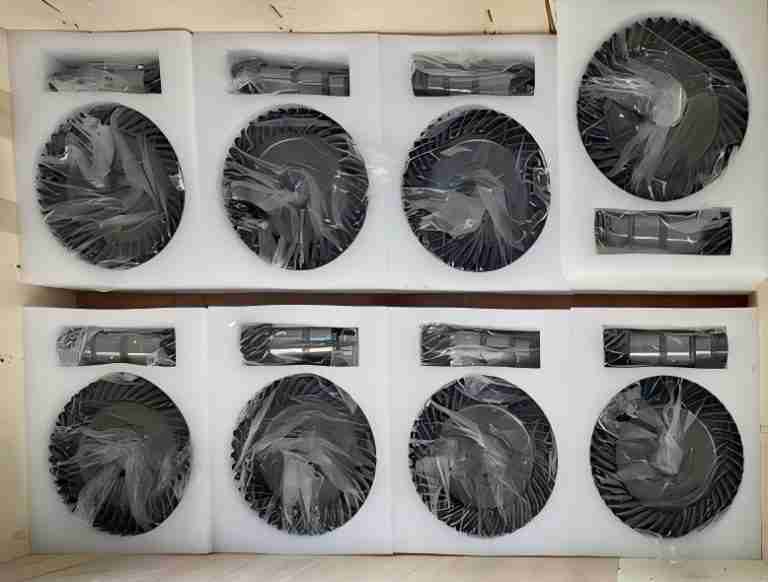
Customized cost-effective packages for products protection. We select multi-model solutions, combining air, sea, or land freight for the optimal balance of cost, speed, and reliability.
Gear-product-inner-package-custom-gear-manufacturer-Belon

Inner Package

Crate-straight-bevel-gear-custom-gear-manufacturer-gear-solutions-Belon

Out Package

Carton-Package-Gear-Manufacturing-Company-Belon

Carton

Wooden-package-gear-manufacturer-gear-solutions-Belon

Wooden Package

Similar products

You May Be Interested In

Bevel-gear-wheel-for-gearbox-custom-gear-supplier-belon-machinery

Bevel Gear Wheels For Gearbox

  • Material: 20CrMnTi
  • Heat treatment: Carburization 58-62 HRC
  • Accuracy: DIN 7
bevel-gears-used-in-gearbox-custom-gear-belon

Bevel Gears Used In Gearbox

  • Material: 18CrNiMo7-6
  • Heat treatment: Carburizing 58-62HRC
  • Accuracy: DIN 8
lapped-bevel-gears-for-gearbox-custom-lapping-gears-belon

Lapped Bevel Gears For Gearbox

  • Material: 20MnCr5
  • Heat treatment: Carburization
  • Accuracy: DIN 7
heavy-duty-gears-lapped-bevel-gears-custom-gear-belon

Heavy Duty Gear

  • Material: 20CrMnTi
  • Heat treatment: Carburization 58-62HRC
  • Accuracy: DIN 8
View all product

Your Precision
Transmission Partner

Do you have drawings to be implemented, or problems to be solved? Please feel free to contact us. From initial inquiry and technical specification confirmation to production and delivery, our dedicated team will provide you with one-on-one service, ensuring that every step meets your stringent requirements for precision.
Contact Us